Loading Page
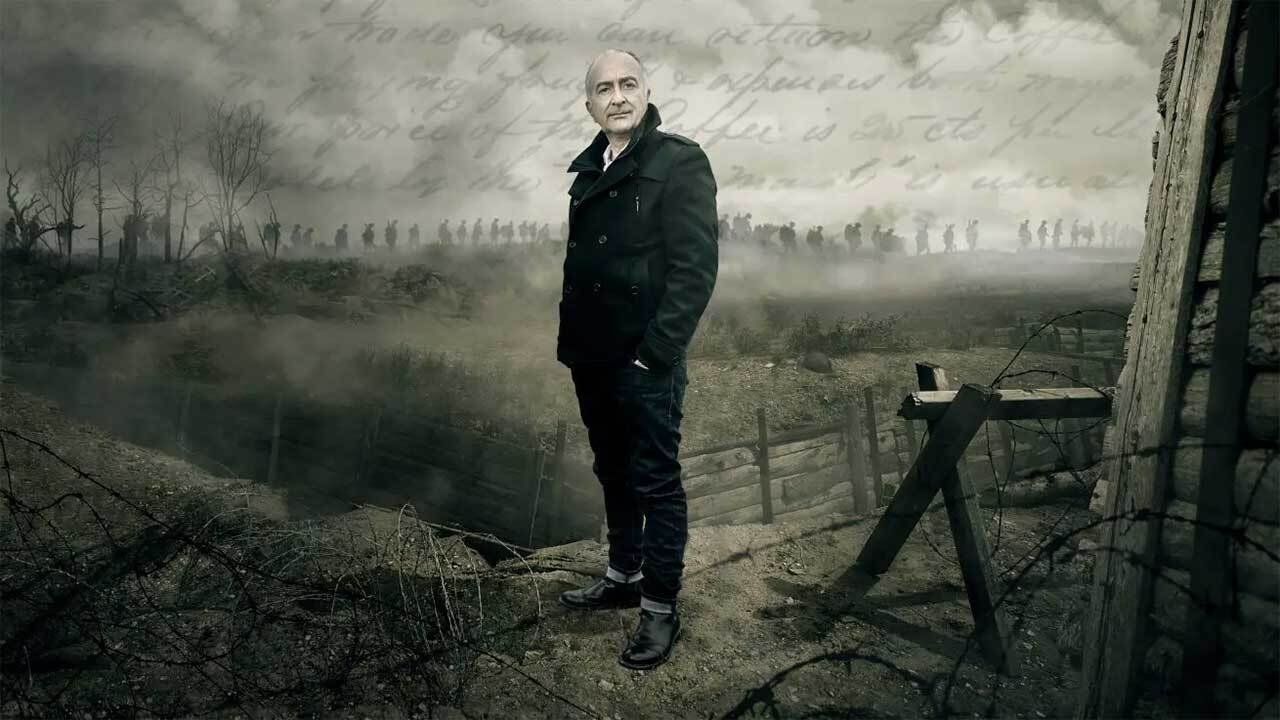
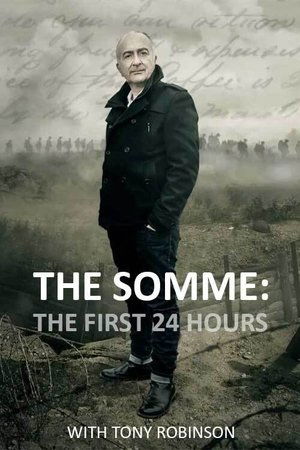
The Somme: The First 24 Hours with Tony Robinson(2016)
Status: Released
Date: 2016-07-03
0%
0 Votes
Time: 0h 45m
Overview:
Hosted by actor and historian Sir Tony Robinson, this one-off special tells the powerful and moving story of five men, all members of a unique volunteer army – the Sheffield City battalion – as it recounts the soldiers’ last days, leaving their homes and loved ones to go and serve alongside their friends and neighbours, completely unaware of what lay ahead of them. Central to the programme is the story of Private Frank Meakin, who recorded his unique personal testimony of the war. Frank and his friends could never have anticipated what they would experience, but 100 years on we know in detail, thanks to his diary – an account that shouldn’t have existed, because keeping one was forbidden for servicemen on active duty on the Western Front. Frank’s diary, which was smuggled back from the Front, reveals the intimate details and dramatic stories of one battalion – and one British city – in the words of one man.
Languages: English.
Countries:
Movie: The Somme: The First 24 Hours with Tony Robinson
Top 6 Billed Cast
Tony Robinson
Presenter
Carl Wharton
Captain William Folley
HomePage
Overview
Hosted by actor and historian Sir Tony Robinson, this one-off special tells the powerful and moving story of five men, all members of a unique volunteer army – the Sheffield City battalion – as it recounts the soldiers’ last days, leaving their homes and loved ones to go and serve alongside their friends and neighbours, completely unaware of what lay ahead of them. Central to the programme is the story of Private Frank Meakin, who recorded his unique personal testimony of the war. Frank and his friends could never have anticipated what they would experience, but 100 years on we know in detail, thanks to his diary – an account that shouldn’t have existed, because keeping one was forbidden for servicemen on active duty on the Western Front. Frank’s diary, which was smuggled back from the Front, reveals the intimate details and dramatic stories of one battalion – and one British city – in the words of one man.
Release Date
2016-07-03
Average
0
Rating:
0.0 startsTagline
Genres
Languages:
EnglishKeywords
Similar Movies

67%
Workers Leaving the Lumière Factory(fr)
1895-03-22
Working men and women leave through the main gate of the Lumière factory in Lyon, France. Filmed on 22 March 1895, it is often referred to as the first real motion picture ever made, although Louis Le Prince's 1888 Roundhay Garden Scene pre-dated it by seven years. Three separate versions of this film exist, which differ from one another in numerous ways. The first version features a carriage drawn by one horse, while in the second version the carriage is drawn by two horses, and there is no carriage at all in the third version. The clothing style is also different between the three versions, demonstrating the different seasons in which each was filmed. This film was made in the 35 mm format with an aspect ratio of 1.33:1, and at a speed of 16 frames per second. At that rate, the 17 meters of film length provided a duration of 46 seconds, holding a total of 800 frames.

60%
The Pity of War(en)
2014-02-28
Professor Niall Ferguson argues that Britain's decision to enter the First World War was a catastrophic error that unleashed an era of totalitarianism and genocide.

0%
Major Raoul Lufbery: Fighter Ace(en)
2018-01-01
The story of WWI Pilot Gervais Raoul Lufbery, a triple confirmed WWI ace, mechanic and world traveler. Explores the Lafayette Escadrille squadron, a formation of volunteer pilots serving in France on behalf of the United States whose service marked the early origins of the U.S. Air Force.

0%
John Henry Balch: Congressional Medal of Honor(en)
2018-01-01
John Henry Balch was a Pharmacist's Mate attached to the 3rd Battalion 6th Marine Regiment when his unit entered the Belleau Wood. His dedication to the Marines under his care earned him the Medal of Honor.

0%
Nurse Helen Fairchild: Killed in Action?(en)
2018-01-01
Bravery, compassion and the will to save lives motivated the young Nurse Helen Fairchild to leave home in Pennsylvania and embark on a journey to Europe, where she served as a surgical nurse during World War I before dying on the front lines.

0%
Cheshire Territorials at Abergaveny(xx)
1913-12-01
A holiday of sorts for Stockport army reserves, fitting high-jinks between drills over two weeks of summer training in South Wales.

64%
Roundhay Garden Scene(en)
1888-10-14
The earliest surviving motion-picture film, and believed to be one of the very first moving images ever created, was shot by Louis Aimé Augustin Le Prince using the LPCCP Type-1 MkII single-lens camera. It was taken on paper-based photographic film in the garden of Oakwood Grange, the Whitley family house in Roundhay, Leeds, West Riding of Yorkshire (UK), on 14 October 1888. The film shows Adolphe Le Prince (Le Prince’s son), Mrs. Sarah Whitley (Le Prince’s mother-in-law), Joseph Whitley, and Miss Harriet Hartley walking around in circles, laughing to themselves, and staying within the area framed by the camera. Roundhay Garden Scene is often associated with a recording speed of around 12 frames per second and runs for about 2 to 3 seconds.

0%
Ballymanus(en)
2023-09-13
10 May 1943. Something is spotted drifting ashore off the coast of Northwest Donegal, Ireland. Something that would change the lives of the local people forever.


59%
Beyond Zero: 1914-1918(en)
2014-11-27
A response in music and film to the conflict that launched a century of war, and a celebration of the power of art to keep us sane and offer us comfort. Beyond Zero: 1914-1918 brings together three of the world's most pioneering artists: the Kronos Quartet, known for decades for their trailblazing performances and collaborations; acclaimed Serbian composer Aleksandra Vrebalov; and filmmaker Bill Morrison, respected for his work with rare and even partially destroyed archive images.

0%
YOU WILL NOT REPLACE US(en)
2024-04-06
A documentary drama addressing the shared tribulations and historical unity between Black and Jewish Americans.

0%
The First World War(en)
1934-11-08
Produced by the Fox Movietone News arm of Fox Film Corporation and based on the book by Lawrence Stallings, this expanded newsreel, using stock-and-archive footage, tells the story of World War I from inception to conclusion. Alternating with scenes of trench warfare and intimate glimpses of European royalty at home, and scenes of conflict at sea combined with sequences of films from the secret archives of many of the involved nations.

0%
Grandpa's Still in the Tuff Shed(en)
2003-05-24
Award winning documentary filmmakers, Robin, Kathy and Shelly Beeck, with the help of filmmaker Michael Moore, have spent the last five years filming a 60-minute feature-length documentary on Bredo Morstoel, a Norweigan who was frozen by his grandson in 1983. Since then, the world famous...well...stiff has been lying under 800 pounds of dry ice in a TUFF SHED behind his grandsons' castle-like house in the 9000-ft Colorado ski town of Nederland. The grandson, Trygve Bauge, has long since been deported back to Norway, but Grandpa Bredo has remained, unwittingly becoming a worldwide symbol of the legal rights of the temporarily dead....


0%
The Millionaires' Unit(en)
2015-05-24
A documentary about the First Yale Unit, a group of Yale students who trained for World War I.

0%
Heroes' War in Snow and Ice(de)
1917-09-12
Heroic Struggle in Snow and Ice is a 1917 Austro-Hungarian propaganda newsreel film produced by Sascha-Film for the Imperial and Royal War Press Headquarters. The film is hand-colored and presented in two parts. It depicts the fighting on the Alpine Front between Italy and Austria-Hungary.

0%
The Man with the Lantern(it)
2018-01-22
To discover the truth behind the mysterious objects her uncle brought back from the Far East during her childhood, filmmaker Francesca Lixi embarks on a journey to those places through archival footage.

64%
Mata Hari: The Naked Spy(en)
2017-10-15
100 years ago Mata Hari faced the firing squad as a convicted Dutch spy. It was at this moment that the legend of Mata Hari, the seductive spy, was born. Newly-discovered documents cast doubt on her guilt and reveal startling truths about her life. Mata Hari was a self-made woman whose boldness and sexuality threatened the male establishment. Most of what we've known about her until now has largely been myth. Mata Hari's challenges as an abused wife, single mother and a creative independent woman are familiar to women around the world. At the turn of the century, her struggles to attain sexual freedom, artistic expression, and liberation from the constraints of conventional society are the same ones women face today. She graced the cover of Vogue, performed all over Europe and left a coterie of smitten admirers in her wake.

62%
The Lost JFK Tapes: The Assassination(en)
2009-11-23
President John F. Kennedy's 1963 assassination in Dallas has sparked decades of questions and controversy. The "lost" JFK recordings made available for this documentary -- including local TV and radio reports -- shed new light on the tragedy. The rarely seen material has been organized to capture the drama as it unfolded, including the shocked reactions of Dallas citizens, many of whom were caught up directly in the sweep of events.