Loading Page

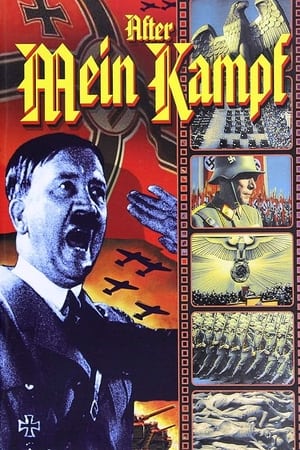
After Mein Kampf(1940)
Status: Released
Date: 1940-09-13
100%
1 Votes
Time: 0h 55m
Overview:
Allied propaganda in the form of cartoons and newsreels shows the rise of Adolf Hitler and the Nazis.
Languages: English.
Countries:
United Kingdom
ProductionCompanies: 
Movie: After Mein Kampf
Top 6 Billed Cast
Robert Beatty

Derek Blomfield
Herbert Lom

Henry Oscar
Peter Ustinov
Marinus van der Lubbe
HomePage
Overview
Allied propaganda in the form of cartoons and newsreels shows the rise of Adolf Hitler and the Nazis.
Release Date
1940-09-13
Average
10
Rating:
5.0 startsTagline
Genres
Languages:
EnglishKeywords
Recommendations Movies
62%
The Bunker(en)
1981-04-15
Dramatization depicting the events surrounding Adolf Hitler's last weeks in and around his underground bunker in Berlin before and during the battle for the city.

76%
Night Will Fall(en)
2014-06-07
When Allied forces liberated the Nazi concentration camps in 1944-45, their terrible discoveries were recorded by army and newsreel cameramen, revealing for the first time the full horror of what had happened. Making use of British, Soviet and American footage, the Ministry of Information’s Sidney Bernstein (later founder of Granada Television) aimed to create a documentary that would provide lasting, undeniable evidence of the Nazis’ unspeakable crimes. He commissioned a wealth of British talent, including editor Stewart McAllister, writer and future cabinet minister Richard Crossman – and, as treatment advisor, his friend Alfred Hitchcock. Yet, despite initial support from the British and US Governments, the film was shelved, and only now, 70 years on, has it been restored and completed by Imperial War Museums under its original title "German Concentration Camps Factual Survey".
77%
Nazi Concentration Camps(en)
1945-11-29
Produced and presented as evidence at the Nuremberg war crimes trial of Hermann Göring and twenty other Nazi leaders, this film consists primarily of dead and surviving prisoners and of facilities used to kill and torture during the World War II.
66%
Mother Night(en)
1996-11-01
An American spy behind the lines during WWII serves as a Nazi propagandist, a role he cannot escape in his future life as he can never reveal his real role in the war.
64%
Why We Fight: Prelude to War(en)
1942-05-27
Prelude to War was the first film of Frank Capra's Why We Fight propaganda film series, commissioned by the Pentagon and George C. Marshall. It was made to convince American troops of the necessity of combating the Axis Powers during World War II. This film examines the differences between democratic and fascist states.
69%
The Secret of Santa Vittoria(en)
1970-01-02
During World War II, Italian villagers hide their wine from the German army.
80%
Truth & Treason(en)
2025-10-16
When loyalty to country becomes loyalty to a lie, one teen risks everything to expose the truth. With the Gestapo closing in, he must decide what it really means to be a good German.
60%
Eichmann(en)
2007-09-22
Based upon the final confession of Adolf Eichmann, made before his execution in Israel, of his role in Hitler's plan for the final solution.
68%
Watch on the Rhine(en)
1943-08-27
On the eve of World War II, the German Kurt Müller, his American-born wife Sara, and their three children, having lived in Europe for years, visit Sara's wealthy mother near Washington, DC. Kurt secretly works for the anti-Nazi resistance. A visiting Romanian count, becoming aware of this, seeks to blackmail him.
79%
Where Hands Touch(en)
2018-09-14
Germany, 1944. Leyna, the 15-year old daughter of a white German mother and a black African father, meets Lutz, a compassionate member of the Hitler Youth whose father is a prominent Nazi soldier, and they form an unlikely connection in this quickly changing world.

61%
The Battle of San Pietro(en)
1945-05-03
This documentary movie is about the battle of San Pietro, a small village in Italy. Over 1,100 US soldiers were killed while trying to take this location, that blocked the way for the Allied forces from the Germans. Preserved by the Academy Film Archive in 2005.
66%
The Last Rifleman(en)
2023-12-07
A WWII veteran escapes his care home in Northern Ireland and embarks on an arduous but inspirational journey to France to attend the 75th anniversary of the D-Day landings, finding the courage to face the ghosts of his past.
68%
God on Trial(en)
2008-09-03
In the Jewish tradition of arguing with God, Jewish prisoners in Auschwitz decide to put God on Trial.
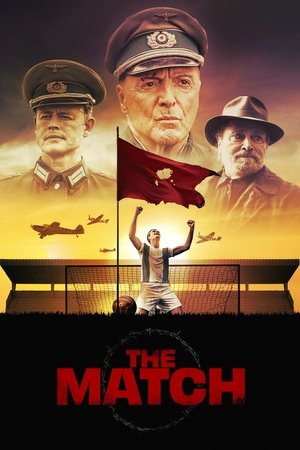
61%
The Match(en)
2021-07-10
Inspired by true events from the spring of 1944 when the Nazis organized a football match between a team of camp inmates and an elite Nazi team on Adolf Hitler's birthday. A match the prisoners are determined to win, no matter what happens.
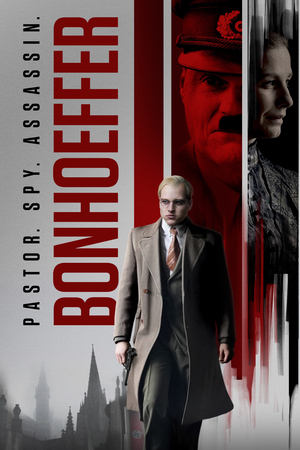
67%
Bonhoeffer: Pastor. Spy. Assassin(en)
2024-11-20
As the world teeters on the brink of annihilation, Dietrich Bonhoeffer joins a deadly plot to assassinate Hitler, risking his faith and fate to save millions of Jews from genocide.
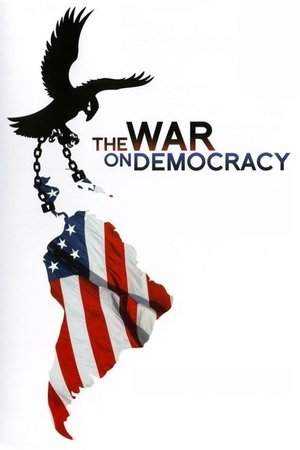
75%
The War on Democracy(en)
2007-06-15
Set both in Latin America and the United States, the film explores the historic and current relationship of Washington with countries such as Venezuela, Bolivia and Chile. Pilger says that the film "...tells a universal story... analysing and revealing, through vivid testimony, the story of great power behind its venerable myths. It allows us to understand the true nature of the so-called "war on terror". According to Pilger, the film’s message is that the greed and power of empire is not invincible and that people power is always the "seed beneath the snow".
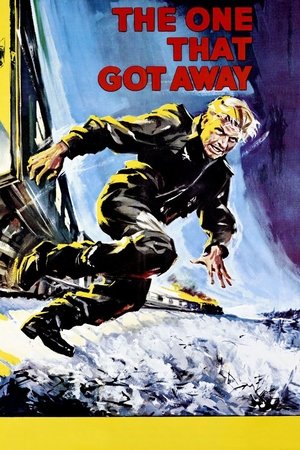
68%
The One That Got Away(en)
1957-11-22
Based on the true story of Oberleutnant Franz von Werra, the only German prisoner of war captured in Britain to escape back to Germany during the Second World War.
66%
The Grey Zone(en)
2001-09-13
The story of Auschwitz's twelfth Sonderkommando — one of the thirteen consecutive "Special Squads" of Jewish prisoners placed by the Nazis in the excruciating moral dilemma of assisting in the extermination of fellow Jews in exchange for a few more months of life.
66%
The Eichmann Show(en)
2015-01-20
The behind-the-scenes true life story of a groundbreaking producer, Milton Fruchtman, and blacklisted TV director Leo Hurwitz who, overcoming enormous obstacles, set out to capture the testimony of one of the war's most notorious Nazis, Adolf Eichmann, who is accused of executing the 'final solution' and organising the murder of 6 million Jews. This is the extraordinary story of how the trial came to be televised and the team that made it happen.
Similar Movies
81%
Casablanca(en)
1943-01-15
In Casablanca, Morocco in December 1941, a cynical American expatriate meets a former lover, with unforeseen complications.
69%
Defying the Nazis: The Sharps' War(en)
2016-09-20
Join an American couple’s courageous mission in 1939 to help refugees escape Nazi-occupied Europe. Over the course of two years, the pair will risk their lives so that hundreds can live in freedom.
80%
Rome, Open City(it)
1945-10-08
During the Nazi occupation of 1944 Rome, Resistance leader Giorgio Manfredi is pursued by the Nazis as he seeks refuge and a means of escape.
73%
Everything Is Illuminated(en)
2005-09-05
A young Jewish American man endeavors—with the help of eccentric, distant relatives—to find the woman who saved his grandfather during World War II—in a Ukrainian village which was ultimately razed by the Nazis.
72%
The Edukators(de)
2004-10-25
Three activists cobble together a kidnapping plot after they encounter a businessman in his home.
86%
Schindler's List(en)
1993-12-15
The true story of how businessman Oskar Schindler saved over a thousand Jewish lives from the Nazis while they worked as slaves in his factory during World War II.

77%
Batman Begins(en)
2005-06-10
Driven by tragedy, billionaire Bruce Wayne dedicates his life to uncovering and defeating the corruption that plagues his home, Gotham City. Unable to work within the system, he instead creates a new identity, a symbol of fear for the criminal underworld - The Batman.

84%
The Pianist(en)
2002-09-17
The true story of pianist Władysław Szpilman's experiences in Warsaw during the Nazi occupation. When the Jews of the city find themselves forced into a ghetto, Szpilman finds work playing in a café; and when his family is deported in 1942, he stays behind, works for a while as a laborer, and eventually goes into hiding in the ruins of the war-torn city.
83%
Night and Fog(fr)
1956-01-29
Filmmaker Alain Resnais documents the atrocities behind the walls of Hitler's concentration camps.
80%
Judgment at Nuremberg(en)
1961-12-18
In 1947, four German judges who served on the bench during the Nazi regime face a military tribunal to answer charges of crimes against humanity. Chief Justice Haywood hears evidence and testimony not only from lead defendant Ernst Janning and his defense attorney Hans Rolfe, but also from the widow of a Nazi general, an idealistic U.S. Army captain and reluctant witness Irene Wallner.
73%
The Mortal Storm(en)
1940-06-20
The Roth family leads a quiet life in a small village in the German Alps during the early 1930s. After the Nazis come to power, the family is divided and Martin Breitner, a family friend, is caught up in the turmoil.
70%
The Tin Drum(de)
1979-05-02
In 1924, Oskar Matzerath is born in the Free City of Danzig. At age three, he falls down a flight of stairs and stops growing. In 1939, World War II breaks out.
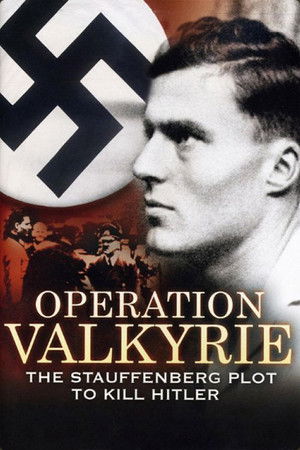
62%
Operation Valkyrie: The Stauffenberg Plot to Kill Hitler(en)
2008-11-04
July, 1944. As WWII raged on, a group of conspirators, led by Claus von Stauffenberg, plotted to assassinate Hitler and end his reign of terror. Using rare color footage, painstakingly recreated dramatizations, detailed CG reconstructions and exclusive interviews with leading historians, this thrilling documentary presents the definitive record of what happened before, during and after these pivotal events.
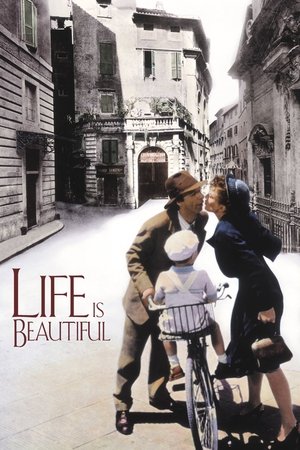
84%
Life Is Beautiful(it)
1997-12-20
A touching story of an Italian book seller of Jewish ancestry who lives in his own little fairy tale. His creative and happy life would come to an abrupt halt when his entire family is deported to a concentration camp during World War II. While locked up he tries to convince his son that the whole thing is just a game.
79%
Where Hands Touch(en)
2018-09-14
Germany, 1944. Leyna, the 15-year old daughter of a white German mother and a black African father, meets Lutz, a compassionate member of the Hitler Youth whose father is a prominent Nazi soldier, and they form an unlikely connection in this quickly changing world.
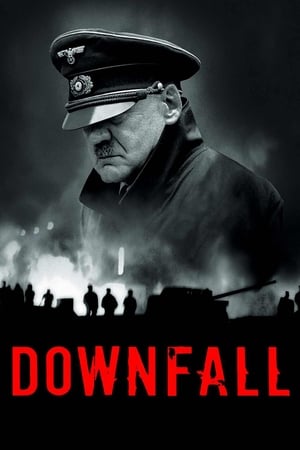
79%
Downfall(de)
2004-09-16
In April of 1945, Germany stands at the brink of defeat with the Russian Army closing in from the east and the Allied Expeditionary Force attacking from the west. In Berlin, capital of the Third Reich, Adolf Hitler proclaims that Germany will still achieve victory and orders his generals and advisers to fight to the last man. When the end finally does come, and Hitler lies dead by his own hand, what is left of his military must find a way to end the killing that is the Battle of Berlin, and lay down their arms in surrender.
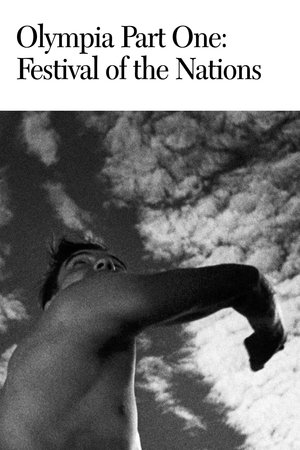
69%
Olympia Part One: Festival of the Nations(de)
1938-04-21
Starting with a long and lyrical overture, evoking the origins of the Olympic Games in ancient Greece, Riefenstahl covers twenty-one athletic events in the first half of this two-part love letter to the human body and spirit, culminating with the marathon, where Jesse Owens became the first track and field athlete to win four gold medals in a single Olympics.

67%
Olympia Part Two: Festival of Beauty(de)
1938-06-02
Part two of Leni Riefenstahl's monumental examination of the 1938 Olympic Games, the cameras leave the main stadium and venture into the many halls and fields deployed for such sports as fencing, polo, cycling, and the modern pentathlon, which was won by American Glenn Morris.
71%
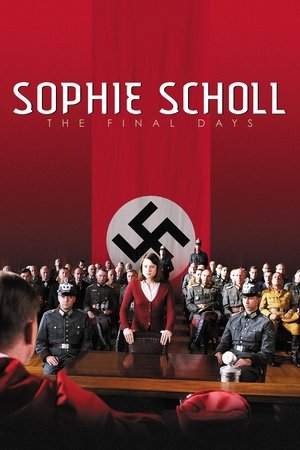
Sophie Scholl: The Final Days(de)
2005-02-13
In 1943, as Hitler continues to wage war across Europe, a group of college students mount an underground resistance movement in Munich. Dedicated expressly to the downfall of the monolithic Third Reich war machine, they call themselves the White Rose. One of its few female members, Sophie Scholl is captured during a dangerous mission to distribute pamphlets on campus with her brother Hans. Unwavering in her convictions and loyalty to the White Rose, her cross-examination by the Gestapo quickly escalates into a searing test of wills as Scholl delivers a passionate call to freedom and personal responsibility.
85%
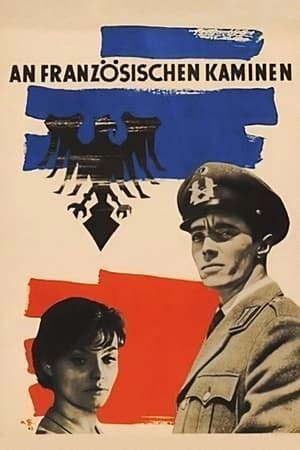
At a French Fireside(de)
1962-09-17
Bundeswehr soldier Klaus’ regiment is stationed in France, to take part in NATO maneuvers. The soldiers are ordered to be kind to the populace, since the West German High Command wishes the French to forget the atrocities that were committed during the Second World War. Klaus falls in love with Jeanne, the daughter of the local mayor. He discovers that his commanders intend to demolish the ruins of a local church, in which civilians were murdered by the German occupation forces at 1944. A local journalist who researches the event discovers that West German General Rucker ordered the massacre, but he is mysteriously murdered. Klaus defies his commanding officer Siebert, who instructs him to steal the documents indicting Rucker, and hands the evidence over to Jeanne.