Loading Page


The Voices of the Silenced(2024)
Status: Released
Date: 2024-11-13
0%
0 Votes
Time: 2h 17m
As the films are restored, these stories come back to life before our eyes and resonate in our eyes.
Overview:
Director Park Soo-nam, a second-generation Korean resident in Japan who is losing his eyesight, decides to digitally restore 16mm film she shot a long time ago, relying on her daughter Park Ma-eui's eyesight. The blood, tears, and numerous corpses of Koreans living in Japan are clearly engraved in the film filmed over 50 years.
Languages: English, Korean, Japanese.
Countries:
Japan,
South Korea
Movie: The Voices of the Silenced
Top 2 Billed Cast
Loading Photos
Photo Type :Total items
Recommendations Movies

65%
Downloaded(en)
2013-06-20
A documentary that explores the downloading revolution; the kids that created it, the bands and the businesses that were affected by it, and its impact on the world at large.

71%
The Class of ‘92(en)
2013-12-01
A detailing of the rise to prominence and global sporting superstardom of six supremely talented young Manchester United football players (David Beckham, Nicky Butt, Ryan Giggs, Paul Scholes, Phil and Gary Neville). The film covers the period 1992-1999, culminating in Manchester United's European Cup triumph.

72%
Burma VJ: Reporting from a Closed Country(en)
2008-11-12
Going beyond the occasional news clip from Burma, the acclaimed filmmaker, Anders Østergaard, brings us close to the video journalists who deliver the footage. Though risking torture and life in jail, courageous young citizens of Burma live the essence of journalism as they insist on keeping up the flow of news from their closed country.

65%
Heart of a Dog(en)
2015-10-21
Lyrical and powerfully personal essay film that reflects on the deaths of her husband Lou Reed, her mother, her beloved dog, and such diverse subjects as family memories, surveillance, and Buddhist teachings.

72%
To Be Takei(en)
2014-08-22
Over seven decades, actor and activist George Takei journeyed from a World War II internment camp to the helm of the Starship Enterprise, and then to the daily news feeds of five million Facebook fans. Join George and his husband, Brad, on a wacky and profound trek for life, liberty, and love.
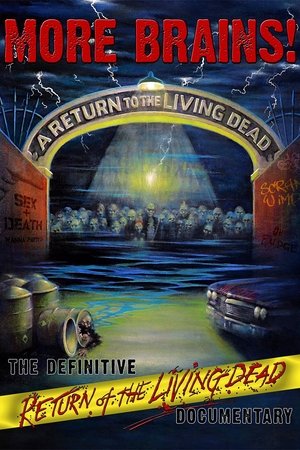
74%
More Brains! A Return to the Living Dead(en)
2011-10-18
Retrospective documentary about the making of the horror cult classic "The Return of the Living Dead."

61%
Naqoyqatsi(en)
2002-09-02
A visual montage portrait of our contemporary world dominated by globalized technology and violence.

64%
Ex Libris: The New York Public Library(en)
2017-09-13
A documentary about how a dominant cultural and demographic institution both sustains their traditional activities and adapts to the digital revolution.

73%
The Crash Reel(en)
2013-06-10
The Crash Reel tells the story of a sport and the risks that athletes face in reaching the pinnacle of their profession. This is Kevin Pearce’s story, a celebrated snowboarder who sustained a brain injury in a trick gone wrong and who now aims, against all the odds, to get back on the snow.


78%
Being James Bond(en)
2021-08-29
Daniel Craig candidly reflects on his 15 year adventure as James Bond. Including never-before-seen archival footage from Casino Royale to the upcoming 25th film No Time To Die, Craig shares his personal memories in conversation with 007 producers, Michael G Wilson and Barbara Broccoli.

66%
Love, Marilyn(en)
2013-05-30
Using the book 'Fragments', which collects Marilyn Monroe's poems, notes and letters, and with participation from the Arthur Miller and Truman Capote estates who have contributed more material, each of the actresses will embody the legend at various stages in her life.

72%
Hitchcock/Truffaut(en)
2015-09-05
Filmmakers discuss the legacy of Alfred Hitchcock and the book “Hitchcock/Truffaut” (“Le cinéma selon Hitchcock”), written by François Truffaut and published in 1966.
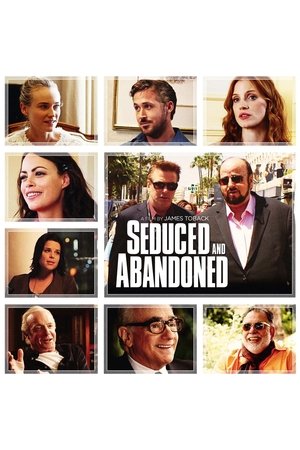
62%
Seduced and Abandoned(en)
2013-05-20
SEDUCED AND ABANDONED combines acting legend Alec Baldwin with director James Toback as they lead us on a troublesome and often hilarious journey of raising financing for their next feature film. Moving from director to financier to star actor, the two players provide us with a unique look behind the curtain at the world's biggest and most glamourous film festival, shining a light on the bitter-sweet relationship filmmakers have with Cannes and the film business. Featuring insights from directors Martin Scorsese, 'Bernando Bertolucci' and Roman Polanski; actors Ryan Gosling and Jessica Chastain and a host of film distribution luminaries.

69%
Halloween: 25 Years of Terror(en)
2006-07-26
Follow the evolution of the 'Halloween' movies over the past twenty-five years. It examines why the films are so popular and revisits many of the original locations used in the films - seeing the effects on the local community. For the first time, cast, crew, critics and fans join together in the ultimate 'Halloween' retrospective.

70%
Lake of Fire(en)
2006-09-09
An unflinching look at the how the battle over abortion rights has played out in the United States over the last 15 years.
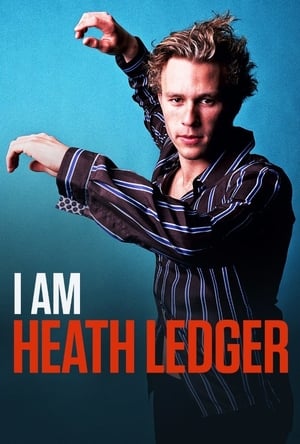
74%
I Am Heath Ledger(en)
2017-04-23
The life and career of an actor, artist, and icon. His own journey through his own camera.

68%
Obi-Wan Kenobi: A Jedi's Return(en)
2022-09-07
This special explores the return of Obi-Wan Kenobi and Anakin Skywalker to the screen, as well as Ewan McGregor and Hayden Christensen to their classic roles. Director Deborah Chow leads the cast and crew as they create new heroes and villains that live alongside new incarnations of beloved Star Wars characters, and an epic story that dramatically bridges the saga films.
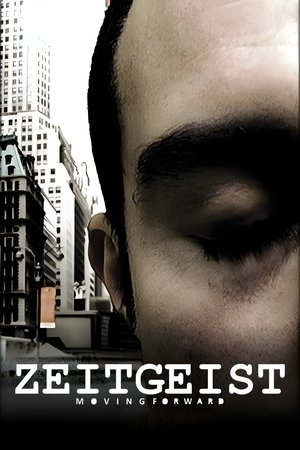
71%
Zeitgeist: Moving Forward(en)
2011-01-15
A presentation of a case for a needed transition out of the current socioeconomic monetary paradigm which governs the entire world society. This subject matter will transcend the issues of cultural relativism and traditional ideology and move to relate the core, empirical 'life ground' attributes of human and social survival, extrapolating those immutable natural laws into a new sustainable social paradigm called a 'Resource-Based Economy'.
71%
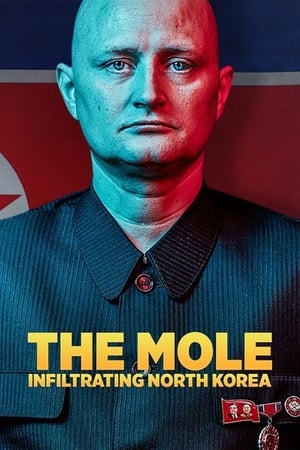
The Mole: Undercover in North Korea(en)
2020-10-11
A real-life undercover thriller about two ordinary men who embark on an outrageously dangerous ten-year mission to penetrate the world's most secretive and brutal dictatorship: North Korea.
Similar Movies
0%
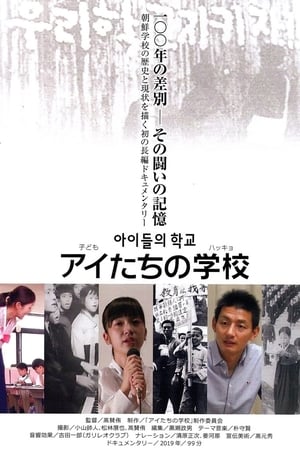
Korean Schools in Japan(ja)
2018-11-27
In 1948, after the Japan’s defeat, the General Headquarters and Japanese government ordered that the Chosen gakko, schools for Koreans in Japan,ō be shut down. Koreans in Osaka strongly resisted, and 16-year-old Kim Taeil was even shot and killed by the police. This was the Hanshin Education Incident. 70 years have passed, but the Japanese oppression continues. They've removed the Chosen gakkoō from being eligible for free education. Gaining strength from the growing hatred from the conservatives, the Abe administration is misusing the educational issue as a means to cause political strife. In the midst of ongoing conflicts in Japan, nonfiction writer KO Chanyu has directed Korean Schools in Japan, compiling a history of the Koreans' fight for education.

0%
One for All, All for One(ko)
2014-09-18
Osaka Korean High School has provided education for the past six decades to the children of pro-North Korean residents in Japan. This school is located only about 20 minutes away from Hanazono Stadium, the mecca of Japan’s high school rugby, but it was not until 1994, 18 years after the foundation of a rugby team at the high school, that the Japanese education ministry approved the team’s entry into the official league. Since then, the team has run in the national league as a representative of the Osaka area and been considered a front-runner ever since. The team has strong players and passionate supporters, but it faces difficulties just before winning the league.

0%
Ikaino(ko)
2025-09-19
‘Ikaino’ refers to a neighborhood in Osaka, Japan, home to a large community of Zainichi Koreans. Though erased from official records over fifty years ago, its name still carries memories and stories.
100%
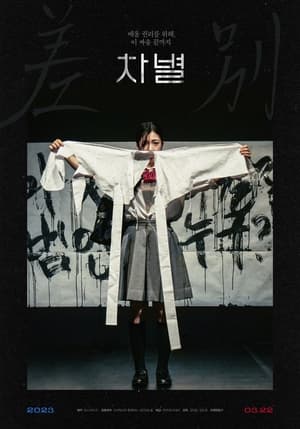
Discrimination(ko)
2023-03-22
Since 2013, Japan has implemented the free high school policy. However, only 10 Chongryon Korean high schools are excluded from this policy. The reason is that there are suspicions that the grant for free education will be misused by Chochongryon and others. Five of these schools protested about this measure and filed a claim for damages against the government in 2013. After four years of hearings, the first trial decision was made on July 19, 2017, starting with the case of Hiroshima Chongryon Korean high school.
90%
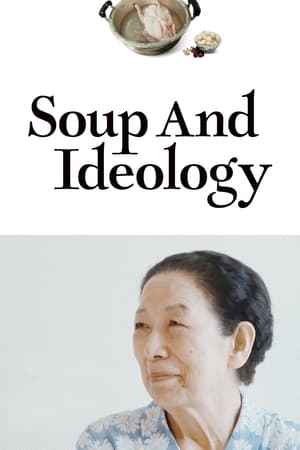
Soup and Ideology(ko)
2022-06-11
Confronting half of her mother’s life—her mother who had survived the Jeju April 3 Incident—the director tries to scoop out disappearing memories. A tale of family, which carries on from Dear Pyongyang, carving out the cruelty of history, and questioning the precarious existence of the nation-state.
0%
Arirang Rhapsody(ja)
2024-02-17
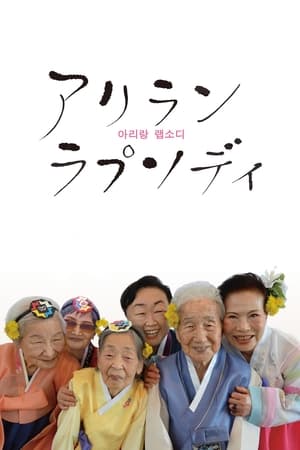
The protagonists of the film are the Zainichi Korean women living in Kawasaki. They were tossed about by the war, and after many trips to and fro across the sea in search of a place to live, they finally arrived in Kawasaki, where they have lived modestly and vigorously.

0%
Memories Showers Seas(ko)
2025-05-02
The late Kim Dong-il, a Jeju April 3 refugee in Japan, left behind over 2,000 crocheted items and pieces of clothing that preserved her memories, identity, and history. As the film traces the redistribution of her belongings, it illuminates the still-unhealed lives of various Zainichi Koreans who lived through the same era, sharing and connecting their intertwined memories.

0%
Shiso(ko)
2025-05-02
A Japanese herb called 'shiso' looks like a perilla leaf but has a unique fragrance. It's like how I have a Korean name and nationality but still feel a sense of alienation in Korean society. The death of my grandmother, a first-generation Zainichi, raises a question for me: Does death also mark the end of the life of an outsider? In the end, where do we return to?

57%
Our School(ko)
2007-03-29
This documentary is about the 3rd and 4th generation Korean residents of Japan who are students of Chosen elementary, middle, and high school in Hokkaido. It follows the students through one year of the eventual 11 years` national education. Rather than focusing on special occasions or issues, it reveals what it is like to live in Japan as Korean-Japanese by describing their everyday lives.
0%
Reclaiming Our Names(ko)
1998-09-26
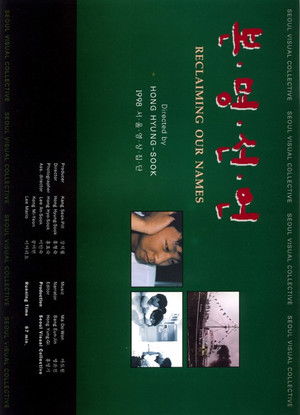
Matsuda Shunji, a freshman of Amagasaki High School in Osaka faces a difficult decision regarding the revelation of his Korean name, Lee Jun-Chi. The teenager is aware of the difficulties of living in Japan with a Korean name, and so dreads the day when he is supposed to make this decision. He ultimately meets a loneliness whereby we are left to witness the outcome of his dilemma.
71%
Dear Pyongyang(ja)
2006-01-23
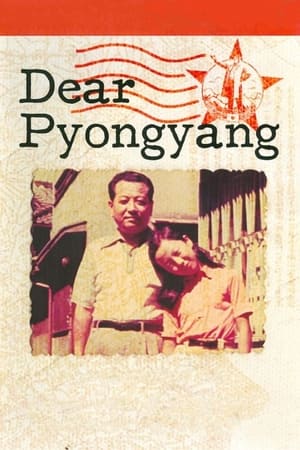
Dear Pyongyang is a documentary film by Zainichi Korean director Yang Yong-hi (Korean: 양영희, Hanja: 梁英姬) about her own family. It was shot in Osaka Japan (Yang's hometown) and Pyongyang, North Korea, In the 1970s, Yang's father, an ardent communist and leader of the pro-North movement in Japan, sent his three sons from Japan to North Korea under a repatriation campaign sponsored by ethnic activist organisation and de facto North Korean embassy Chongryon; as the only daughter, Yang herself remained in Japan. However, as the economic situation in the North deteriorated, the brothers became increasingly dependent for survival on the care packages sent by their parents. The film shows Yang's visits to her brothers in Pyongyang, as well as conversations with her father about his ideological faith and his regrets over breaking up his family.

0%
Horoomon(ko)
2025-05-01
One woman. One racist lie. One lawsuit that shook Japan. Korean Japanese entrepreneur Shin Sugok takes on major media in this electro-shock legal thriller about refusing to be silenced.
0%
Zainichi: The Story of Koreans in Postwar Japan(ja)
1998-12-05
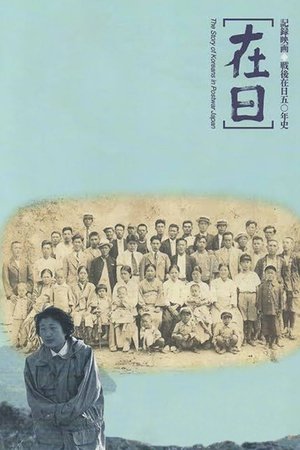
Portraying the fifty-year history of zainichi (long-term residents in Japan) Koreans after the liberation of Korea, traces of zainichi evoked in this film question the concepts of 'post-war democracy' and 'pacifism' in Japan. With copious stock footage and testimony, the first half of the film, "History," chronologically traces the various experiences of zainichi from Japan's defeat (Korean liberation) through 1990. The latter half, "People," focuses on first, second and third-generation zainichi respectively, vividly depicting how they live.
0%
Strangers on the Field(ko)
2015-03-19
In April 2013, unfamiliar faces appear at the Jamsil Baseball Stadium during the opening matches between Doosan and SK. The nervous middle-aged men throwing and batting the first ball are, in fact, Korean-Japanese former team members that played on that same spot in the 1982 finals of the Bong-hwang-dae-ki games.
0%
The Hanbok on the Court(ko)
2020-09-20
0%
Chang Akio, Fallen leaves in sea(ko)
2026-04-30
1983 KBO 30-win legend Chang Myeong-bu and his hidden yakuza brother, Yong-bu. Divided by the mound's light and alley shadows, they fought to survive Zainichi discrimination. Through Yong-bu's eyes, this tragic saga weaves unseen records and KBO archives into a forgotten diaspora's requiem.

0%
Yakiniku ToRaJi(ko)
2025-06-05
After graduating from Joseon school, ✕✕ enters a South Korean university. Jihoon meets ✕✕’s family and friends, sharing meals, drinks, and songs together. Through these interactions, he naturally grows closer to ○○, △△, and ◇◇, listening to their memories of Joseon school and their lives in Japan. These exchanges erase the space of everyday life and question the sense of mission imposed in its place: For whom is it really when we label those living ordinary lives with ‘identity’?
73%
I Am From Chosun(ko)
2021-12-09
After 15 years of knowing Chosun people in Japan I met on Mt. Geumgang in 2002, I face the history of colonization and division that I had not known before. They’ve been to North Korea many times, but never to South Korea. They tell us why they want to live as Chosun people despite the discrimination in Japanese society.