Loading Page
Le Grand Désert(1950)
Status: Released
Date: 1950-12-01
100%
1 Votes
Time: 1h 25m
Overview:
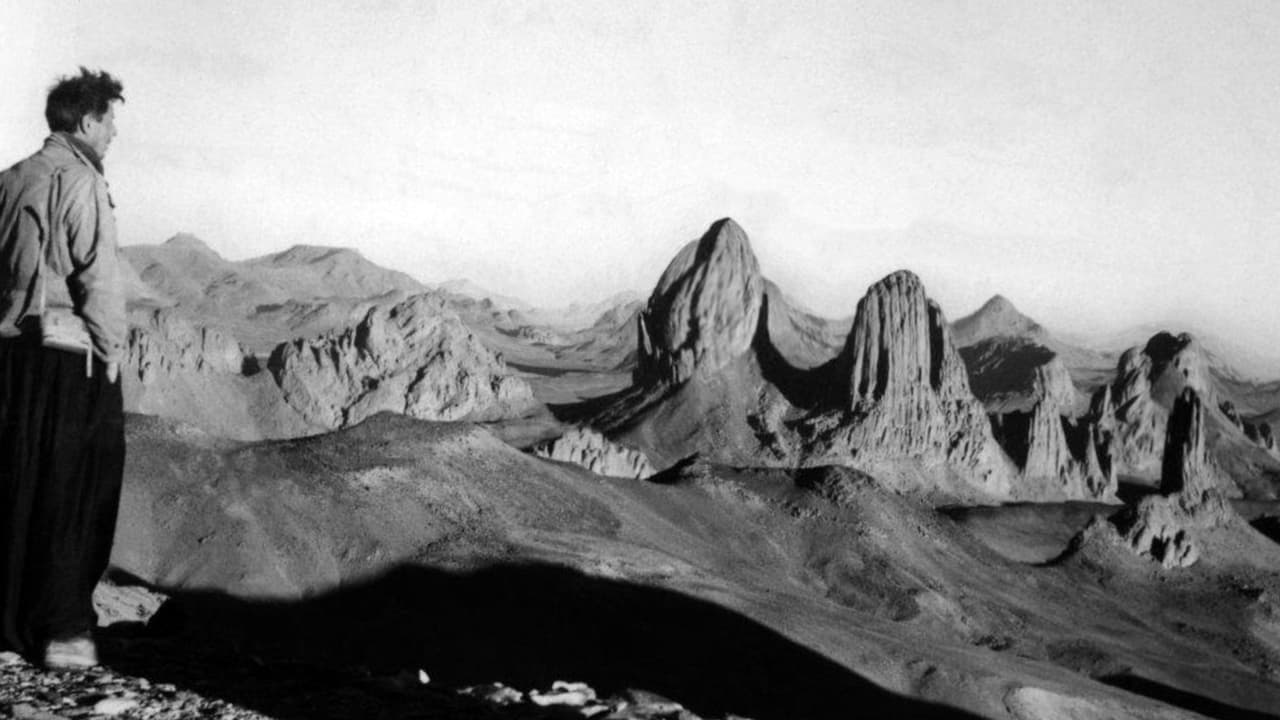
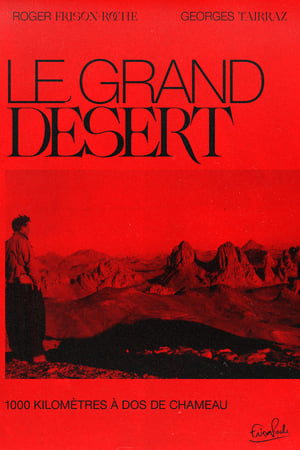
In 1950, the explorer Roger Frison-Roche made a crossing of more than a thousand kilometers on the back of a camel with the photographer Georges Tairraz II, in the heart of the Sahara, from Hoggar then Djanet in Algeria to Ghat in Libya. From their journey they brought back a large number of color films and documents. Among thousands of photos, they selected 47 images which reflect the various aspects of these immense spaces which occupy a third of Africa in the book "The Great Desert". “The Great Desert, 1000 kilometers on camelback” is the eponymous 85-minute documentary of this epic, released in 1950.
Languages: French.
Countries:
France
Movie: Le Grand Désert
Top 2 Billed Cast
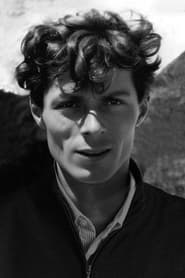
Roger Frison-Roche
Self
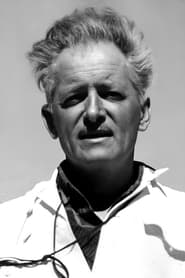
Georges Tairraz II
Self
HomePage
Overview
In 1950, the explorer Roger Frison-Roche made a crossing of more than a thousand kilometers on the back of a camel with the photographer Georges Tairraz II, in the heart of the Sahara, from Hoggar then Djanet in Algeria to Ghat in Libya. From their journey they brought back a large number of color films and documents. Among thousands of photos, they selected 47 images which reflect the various aspects of these immense spaces which occupy a third of Africa in the book "The Great Desert". “The Great Desert, 1000 kilometers on camelback” is the eponymous 85-minute documentary of this epic, released in 1950.
Release Date
1950-12-01
Average
10
Rating:
5.0 startsTagline
Genres
Languages:
FrançaisKeywords
Recommendations Movies
70%
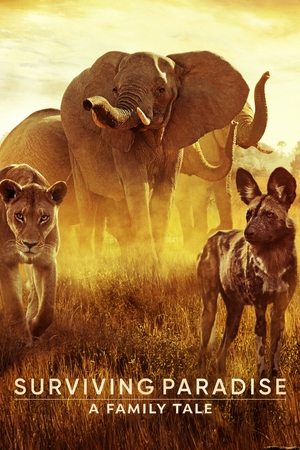
Surviving Paradise: A Family Tale(en)
2022-03-02
In this wildlife drama, a worsening dry season in the Kalahari Desert leaves prides, packs and herds to rely on the power of family to survive.
73%
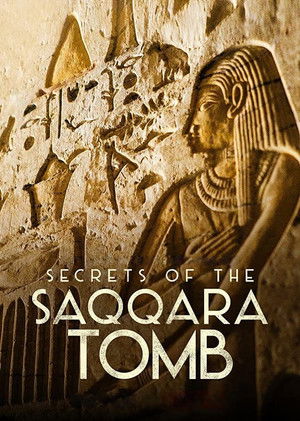
Secrets of the Saqqara Tomb(en)
2020-10-28
This documentary follows a team of local archaeologists excavating never before explored passageways, shafts, and tombs, piecing together the secrets of Egypt’s most significant find in almost 50 years in Saqqara.
76%
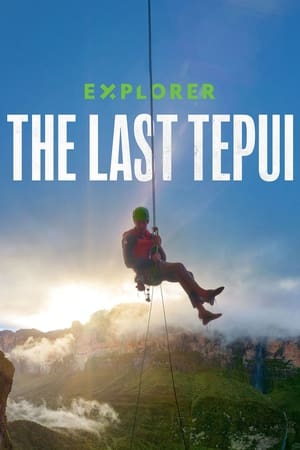
Explorer: The Last Tepui(en)
2022-04-06
This documentary starring climber Alex Honnold and famous biologist Bruce Means document their expedition to the South American sky islands in search of new species and discoveries. Follows elite climber Alex Honnold and a world-class climbing team led by National Geographic Explorer and climber Mark Synnott on a grueling mission deep in the Amazon jungle as they attempt a first-ascent climb up a 1000 foot sheer cliff.
71%
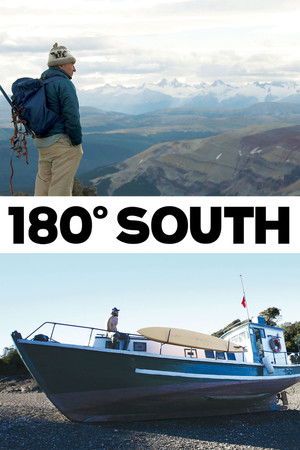
180° South(en)
2010-02-10
The film follows adventurer Jeff Johnson as he retraces the epic 1968 journey of his heroes Yvon Chouinard and Doug Tompkins to Patagonia.

74%
14 Peaks: Nothing Is Impossible(en)
2021-11-12
In 2019, Nepalese mountain climber Nirmal “Nims” Purja set out to do the unthinkable by climbing the world’s fourteen highest summits in less than seven months. (The previous record was eight years). He called the effort “Project Possible 14/7” and saw it as a way to inspire others to strive for greater heights in any pursuit. The film follows his team as they seek to defy naysayers and push the limits of human endurance.

80%
My Mom Jayne(en)
2025-06-20
Through deeply personal interviews with her siblings and an examination of the photographs, letters, and belongings left behind, Mariska assembles a new portrait of her mother Jayne Mansfield, an extraordinary and complex woman.
69%
Mountain(en)
2017-11-30
An epic cinematic and musical collaboration between SHERPA filmmaker Jennifer Peedom and the Australian Chamber Orchestra, that explores humankind's fascination with high places.
80%
The Dawn Wall(en)
2017-11-01
The definitive film on the climb that captured headlines and ignited imaginations worldwide. Tommy Caldwell and Kevin Jorgeson ascend the hardest big wall of all time: a 19 day ascent of The Dawn Wall, on the 3,000 foot vertical face of El Capitan, in Yosemite National Park. The film travels deeper than the climb, digging into the history of the climbers and painting an intimate portrait of Caldwell's harrowing life experiences that culminated in a single-minded drive to complete this impossible climb. The Dawn Wall is a heart-warming and inspiring movie that celebrates perseverance, camaraderie, and the universal spirit of dreaming big, and never giving up.
76%
Living with Leopards(en)
2024-05-09
A film crew follows two leopard cubs as they make the fascinating journey from infancy into adulthood in this up-close-and-personal nature documentary.
72%
The Crimson Wing: Mystery of the Flamingos(en)
2008-12-17
In the remote and forgotten wilderness of Lake Natron, in northern Tanzania, one of nature's last great mysteries unfolds: the birth, life and death of a million crimson-winged flamingos.
74%
Unknown: The Lost Pyramid(en)
2023-07-02
Egyptian archaeologists dig into history, discovering tombs and artifacts over 4,000 years old as they search for a buried pyramid in this documentary.
66%
Return to Jurassic Park(en)
2011-02-05
A multi-part documentary about the making of the Jurassic Park trilogy. Each part walks through the making of part of one of the films, including the hurricane during the shooting of the first film, and how advances in CGI for Jurassic Park helped change the world of special effects forever. All interviews for these retrospective documentaries come with comments from Spielberg, Johnston, Neill, Dern, Goldblum, the effects crews, the child actors, and Peter Stormare. This documentary is broken into six parts: Dawn of a New Era (25 min), Making Prehistory (20 min), The Next Step in Evolution (15 min), Finding the Lost World (28 min), Something Survived (16 min), and The Third Adventure (25 min).

74%
Animals Are Beautiful People(en)
1974-01-31
Animals Are Beautiful People (also called Beautiful People) is a 1974 South African nature documentary written, produced, directed, filmed and edited by Jamie Uys, about the wildlife in Southern Africa, presented with comedic elements. It was filmed in the Namib Desert, the Kalahari Desert and at the Okavango River and Okavango Delta. It was the recipient of the 1974 Golden Globe Award for Best Documentary Film. The film, a critical and commercial success, was independently made by Uys, also known for his later African comedy The Gods Must Be Crazy (1980).
74%
African Cats(en)
2011-04-21
African Cats captures the real-life love, humor and determination of the majestic kings of the savanna. The story features Mara, an endearing lion cub who strives to grow up with her mother’s strength, spirit and wisdom; Sita, a fearless cheetah and single mother of five mischievous newborns; and Fang, a proud leader of the pride who must defend his family from a once banished lion.
77%
Elephant(en)
2020-03-14
Disneynature’s Elephant follows African elephant Shani and her spirited son Jomo as their herd make an epic journey hundreds of miles across the vast Kalahari Desert. Led by their great matriarch, Gaia, the family faces brutal heat, dwindling resources and persistent predators, as they follow in their ancestors’ footsteps on a quest to reach a lush, green paradise.
66%
Deepsea Challenge 3D(en)
2014-08-08
Described as being a film about determination, danger and the ocean’s greatest depths, James Cameron's "Deepsea Challenge 3D" tells the story of Cameron’s journey to fulfill his boyhood dream of becoming an explorer. The movie offers a unique insight into Cameron's world as he makes that dream reality – and makes history – by becoming the first person to travel solo to the deepest point on the planet.
66%
Everest(en)
1998-03-06
An international team of climbers ascends Mt. Everest in the spring of 1996. The film depicts their lengthy preparations for the climb, their trek to the summit, and their successful return to Base Camp. It also shows many of the challenges the group faced, including avalanches, lack of oxygen, treacherous ice walls, and a deadly blizzard.
76%
Our Planet: Behind the Scenes(en)
2019-04-05
Years spent recording footage of creatures from every corner of the globe is bound to produce a bit of drama. Here's a behind-the-scenes look.
78%
The Alpinist(en)
2021-02-07
Marc-André Leclerc, an exceptional climber, has made solo his religion and ice his homeland. When filmmaker Peter Mortimer begins his film, he places his camera at the base of a British Columbia cliff and waits patiently for the star climber to come down to answer his questions. Marc André, a little uncomfortable, prefers to return to the depths of the forest where he lives in a tent with his girlfriend Brette Harrington. In the heart of winter, Peter films vertiginous solos on fragile ice. He tries to make appointments with the climber who is never there and does not seem really concerned by this camera pointed at him "For me, it would not be a solo if there was someone else" . Marc-André is thus, the "pure light" of the mountaineers of his time, which marvel Barry Blanchard, Alex Honnold or Reinhold Messner, interviewed in the film. An event film for an extraordinary character.
73%
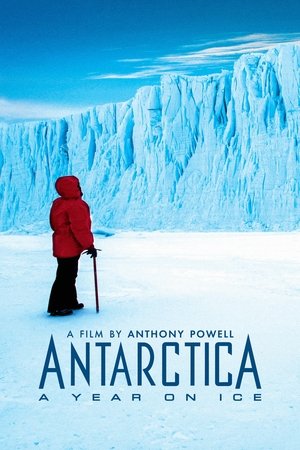
Antarctica: A Year on Ice(en)
2013-09-05
Filling the giant screen with stunning time-lapse vistas of Antarctica, and detailing year-round life at McMurdo and Scott Base, Anthony Powell’s documentary is a potent hymn to the icy continent and the heavens above.
Similar Movies
100%
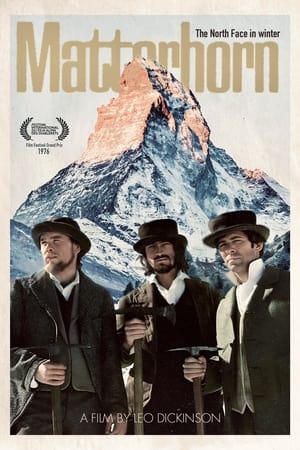
Matterhorn - The North Face In Winter(en)
1976-08-24
The first filmed winter ascent of the north face of the Matterhorn. To set the scene, the tragic story of Edward Whymper's first ascent is skillfully pieced together. The modern expedition, a team of three British climbers, is also plagued with epics: Eric Jones is hit by an avalanche and can only come to a dangerous stop at the edge of a 1000 foot drop. Then the worst storm ever recorded in Zermatt hits the Matterhorn. With time and weather against them, the team is forced to climb in the dark as thunderstorms rumble around them. This adventure captures the skill and courage of the climbers, their agony and tension, and the beauty of the assault on this spectacular mountain. Grand Prize at the Les Diablerets festival (Switzerland) in 1976.
0%
A Day in Death Valley(en)
1944-01-22
A tour of the arid, inhospitable region of the southern California desert known as Death Valley, originally named because of the many travelers in the 1840s who died of thirst, starvation and/or exposure trying to cross it.
100%
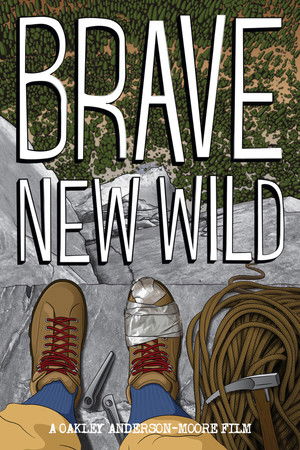
Brave New Wild(en)
2014-07-26
BRAVE NEW WILD is an offbeat chronicle of America’s Golden Age of rock climbing before and after the controversial ascent of the Dawn Wall in 1970. Some forty years later, Oakley Anderson-Moore, the daughter of a pioneering climber, stumbles upon her father's old hi8 tapes, and sets out to answer the question: why climb when there's nothing to gain -- and everything to lose? Wry humor and an eclectic original soundtrack punctuate the delinquent antics of the Vulgarians in the ‘Gunks, the larger-than-life rivalry of Yosemite’s rock gods, and the fruit tramping, freight train hopping hobodom of her dad’s climbing life. This film is quintessential viewing for those who long for adventure.
100%
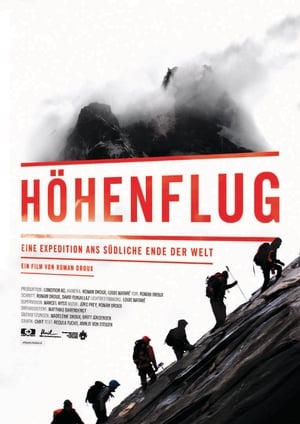
Fly High(de)
2008-08-29
Twelve talented young mountaineers, five geologists from the University of Lausanne and four mountain guides take an unprecedented risk in Patagonia. Trained by the great climbers Ralf Weber, Ueli Steck, Denis Burdet and David Fasel, the young people are collecting rock samples from the granite walls of the Paine Towers, which are up to 1000 meters high, on behalf of science. The challenges are enormous: Climbing a big wall at the highest level of difficulty, cloudy weather, relentless wind that tears at material and nerves - and an urgency that also pushes the group to their emotional limits. "Flying High" not only documents an extraordinary undertaking, but also shows up close what happens when something happens that can happen after every meter of altitude climbed: a fall.
63%
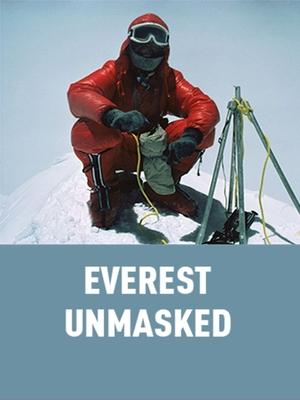
Everest Unmasked(en)
1978-01-02
Record of the first ascent of Everest made without the use of oxygen equipment, made in May 1978 by Reinhold Messner and Peter Habeler. Could it be done? Would their blood vessels burst? Would they suffer brain damage leading to madness? Nobody was sure. Messner: 'I would never come here for trying Everest with oxygen. That is not a challenge for me.' A fascinating piece of history, well filmed by Leo Dickinson and Eric Jones (above the South Col Messner used a cine camera to continue the filming), featuring Messner and Habeler's thoughts. The film follows the usual sequence from Namche to Base Camp, through the Icefall, to Camps I, II and III. It also shows historical footage of the pioneering Mallory and Shipton expeditions.
60%
Many Beautiful Things(en)
2015-10-17
In an age when women were incapable of joining the artistic dialogue, Lilias Trotter managed to win the favour of celebrated critics.

100%
Frantz Fanon: His Life, His Struggle, His Work(fr)
2001-11-30
It is the evocation of a life as brief as it is dense. An encounter with a dazzling thought, that of Frantz Fanon, a psychiatrist of West Indian origin, who will reflect on the alienation of black people. It is the evocation of a man of reflection who refuses to close his eyes, of the man of action who devoted himself body and soul to the liberation struggle of the Algerian people and who will become, through his political commitment, his fight, and his writings, one of the figures of the anti-colonialist struggle. Before being killed at the age of 36 by leukemia, on December 6, 1961. His body was buried by Chadli Bendjedid, who later became Algerian president, in Algeria, at the Chouhadas cemetery (cemetery of war martyrs ). With him, three of his works are buried: “Black Skin, White Masks”, “L’An V De La Révolution Algérien” and “The Wretched of the Earth”.
100%
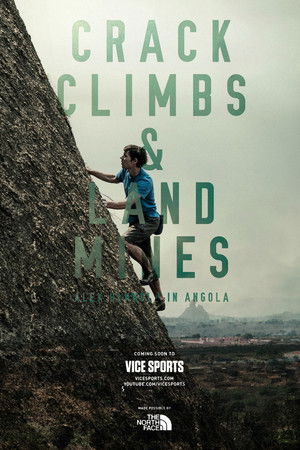
Crack Climbs and Land Mines, Alex Honnold in Angola(en)
2015-12-15
Alex Honnold is the most accomplished free climber in the world. Angola is a southwest African country that recently emerged from 27 years of bloody civil war. What brings together these strange bedfellows you ask? Some of the most epic unclimbed rocks in the world, and a community needing help to diffuse the hidden land mines leftover from the conflict. (Plus a shadowy local hotel magnate, but we'll get into that later). This is Alex Honnold in Angola, for one of the most unique adventures of his storied climbing career this far.
50%
Accidental Climber(en)
2019-07-27
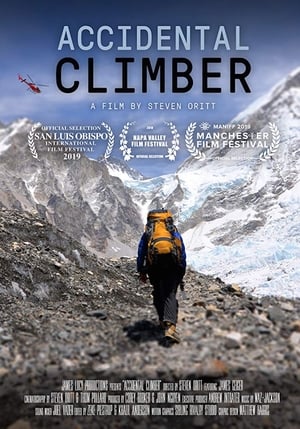
Jim Geiger, a retired forest ranger and amateur mountaineer, attempts to become the oldest American and first great grandfather to summit Mt. Everest, aged 68. His transformation from a weekend hiker to attempting one of the most extreme and physically demanding feats known to man is driven by a desire to prove that age is just a number. What ensued, however, forever changed Jim's life.
66%
Stars at Noon(fr)
1959-01-01
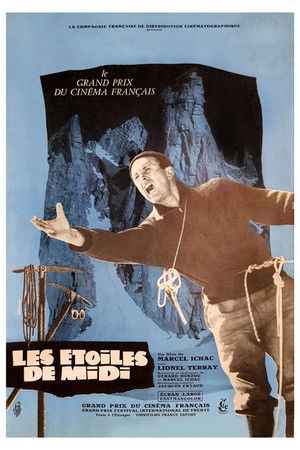
Les Etoiles de Midi is an engaging docudrama about some of the more spectacular exploits of French mountain climbers over the last several decades. In one re-enacted story, there is a wartime escape through the mountains, and in another, a daring rescue of a pair of climbers who had been missing. The actors themselves are adept at the sport of climbing, and they give the scenes an immediacy and real daring that brings the stories alive. A combination of their acrobatics and skill and the outstanding episodes in the history of French climbing creates a winning 78 minutes.
0%
In the Shadow of Karakorum(de)
1955-08-03
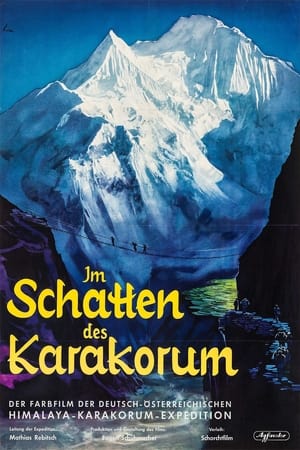
In 1954, a German-Austrian expedition led by Mathias Rebitsch set off for the difficult-to-access Karakoram Mountains, geographically north of the Himalayas. They come across the Hunza, a people who live in the valley of the same name and believe they are descended from the soldiers of Alexander the Great. The documentary conveys impressions of the poor life of the Hunza people, the harvest, a court hearing, festivals and the children's everyday school life. Finally, the expedition sets off again and sets up its main camp on the moraine ridge of a glacier, where they measure the glacier and the earth's magnetic field. Finally, some men from the research community set off for a sub-peak of Batura.
70%
143 Sahara Street(fr)
2021-06-16
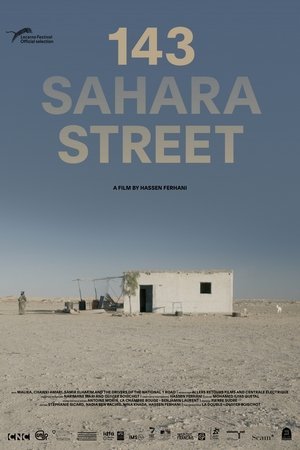
Alone in a small white house on the edge of national road 1, the Trans-Saharan road, which connects Algiers to Tamanrasset crossing the immensity of the desert, Malika, 74, one day opened her door to the director Hassen Ferhani, who came there to scout with his friend Chawki Amari, journalist at El Watan and author of the story Nationale 1 which relates his journey on this north-south axis of more than 2000 km. The Malika of Amari's novel, which Ferhani admits to having first perceived as a "literary fantasy", suddenly takes on an unsuspected human depth in this environment naturally hostile to man. She lends herself to the film project as she welcomes her clients, with an economy of gestures and words, an impression reinforced by the mystery that surrounds her and the rare elements of her biography which suggest that she is not from the region, that she left the fertile north of Algeria to settle in the desert where she lives with a dog and a cat.
39%
Miracle on Everest(en)
2008-07-01
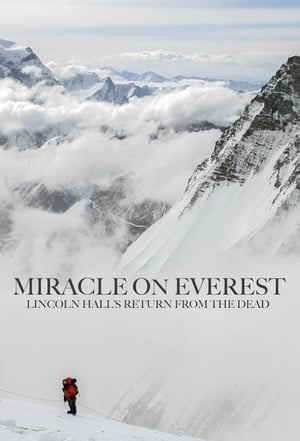
2006 was one of the deadliest Everest seasons on record. Experienced mountaineer Lincoln Hall was invited to join an expedition as a high altitude cameraman. It was his second attempt to summit the mountain, having turned back just short 22 years earlier. Shortly after reaching the summit, Hall began to behave irrationally, suffering from lack of oxygen. Aided by his loyal Sherpas for over 9 hours, he eventually collapsed and they declared him dead. His family were informed and the news hit headlines. But something happened that night that science cannot explain. The next morning Lincoln Hall was found alive by approaching climbers and his dramatic rescue began. Never before has a man been declared dead so high on Everest and survived. This is the remarkable true story of Lincoln Hall’s extraordinary journey back from beyond.

100%
Bouzareah(fr)
1950-01-01
Arriving aboard the liner “Ville d’Alger”, young French citizens go to Bouzareah to follow a one-year professional training course at the École Normale. After acquiring the basics of the Arabic language and culture, the future teachers are trained to teach the population the basics of modern agriculture, manual work and hygiene. A study trip concludes the training. The teachers are then sent to the regions of their choice, where they will put their knowledge at the service of the inhabitants.
61%
The Hunters(en)
1957-03-21
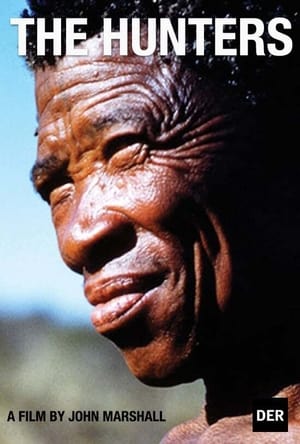
An ethnographic documentary following four Ju/’hoansi (!Kung) men during a multi-day giraffe hunt in the Kalahari Desert, filmed during the Smithsonian–Harvard Peabody expedition of 1952–53.
100%
Flood in the Desert(en)
2022-05-03
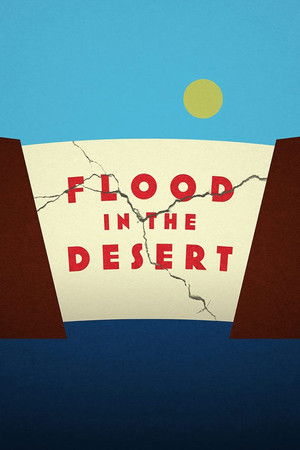
Explore the 1928 collapse of the St. Francis Dam, the second deadliest disaster in California history. A colossal engineering and human failure, the dam was built by William Mulholland, a self-taught engineer who ensured the growth of Los Angeles by bringing the city water via aqueduct. The catastrophe killed more than 400 people and destroyed millions of dollars of property.
58%
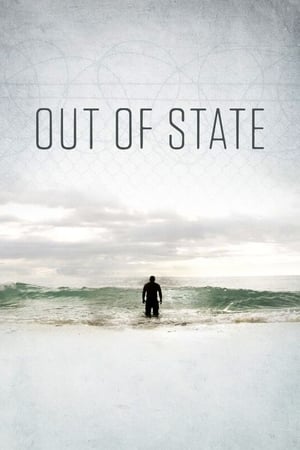
Out of State(en)
2017-11-04
Out of State is the unlikely story of native Hawaiians men discovering their native culture as prisoners in the desert of Arizona, 3,000 miles, and across the ocean, from their island home.