Loading Page
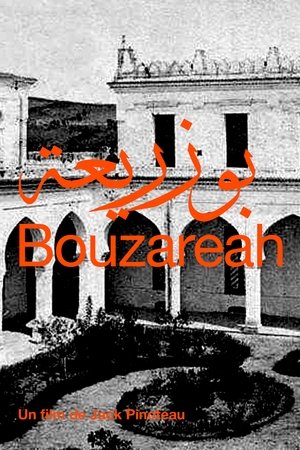
Bouzareah
Loading Trailer Videos...
HomePage
Overview
Arriving aboard the liner “Ville d’Alger”, young French citizens go to Bouzareah to follow a one-year professional training course at the École Normale. After acquiring the basics of the Arabic language and culture, the future teachers are trained to teach the population the basics of modern agriculture, manual work and hygiene. A study trip concludes the training. The teachers are then sent to the regions of their choice, where they will put their knowledge at the service of the inhabitants.
Release Date
1950-01-01
Average
10
Rating:
5.0 startsTagline
Genres
Languages:
FrançaisKeywords
Similar Movies

60%
Glimpses of Morocco and Algiers(en)
1951-08-04
This FitzPatrick Traveltalk short visits the cities of Casablanca, Rabat, and Marrakesh in Morocco, as well as the city of Algiers in Algeria.
100%
Algeria, Memoirs of Raï(fr)
2001-01-02
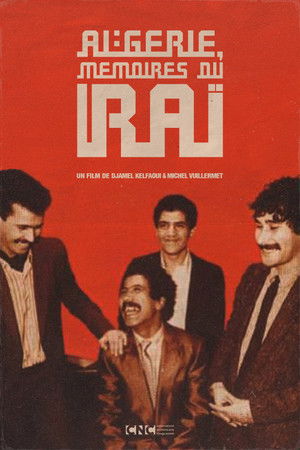
In the 1980s, Algeria experienced a tumultuous social context which reached its peak during the riots of October 88. This wave of protest, with youth as its figurehead, echoed the texts of raï singers. Thirst for freedom, misery of life and the aspirations of youth are among the main themes of their works which will inspire an entire generation. More than music, raï celebrates the Arabic language and becomes a vector of Algerian culture, thus providing the cultural weapons of emerging Algerian nationalism With Cheb Khaled, Cheb Mami and Chaba Fadela as leaders of the movement, raï is also a way of telling and reflecting the essence of Algeria in these difficult times. While the threat weighs on artists in Algeria, their exile allows raï to be exported internationally and thus, to bring the colors of Algeria to life throughout the world.
100%
Algérie Tours Détours(fr)
2007-11-11
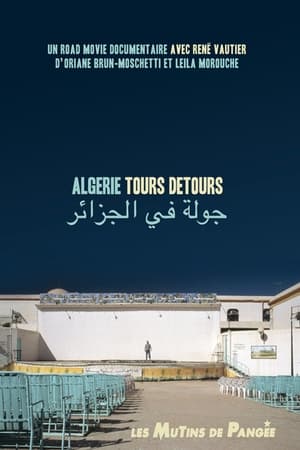
A documentary road movie with René Vautier In the aftermath of Algeria's independence, René Vautier, a militant filmmaker, considered "the dad" of Algerian cinema, set up the cine-pops. We recreate with him the device of itinerant projections and we travel the country in ciné-bus (Algiers, Béjaïa, Tizi Ouzou, Tébessa) to hear the voices of the spectators on the political situation, youth and living conditions of men and Of women today.

60%
The Panafrican Festival in Algiers(ar)
1969-01-01
Festival panafricain d'Alger is a documentary by William Klein of the music and dance festival held 40 years ago in the streets and in venues all across Algiers. Klein follows the preparations, the rehearsals, the concerts… He blends images of interviews made to writers and advocates of the freedom movements with stock images, thus allowing him to touch on such matters as colonialism, neocolonialism, colonial exploitation, the struggles and battles of the revolutionary movements for Independence.
100%
Séfar, A City of Mysteries(fr)
2021-11-20
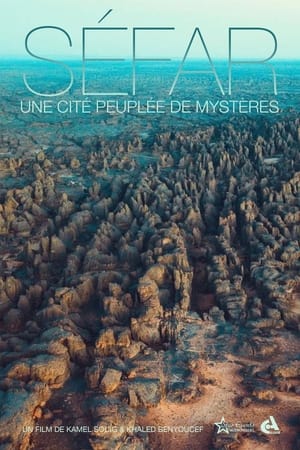
Séfar (in Arabic: سيفار) is an ancient city in the heart of the Tassili n'Ajjer mountain range in Algeria, more than 2,400 km south of Algiers and very close to the Libyan border. Séfar is the largest troglodyte city in the world, with several thousand fossilized houses. Very few travelers go there given its geographical remoteness and especially because of the difficulties of access to the site. The site is full of several paintings, some of which date back more than 12,000 years, mostly depicting animals and scenes of hunting or daily life which testify that this hostile place has not always been an inhabited desert. Local superstition suggests that the site is inhabited by djins, no doubt in connection with the strange paintings found on the site.
60%
Many Beautiful Things(en)
2015-10-17
In an age when women were incapable of joining the artistic dialogue, Lilias Trotter managed to win the favour of celebrated critics.
100%
Frantz Fanon: His Life, His Struggle, His Work(fr)
2001-11-30
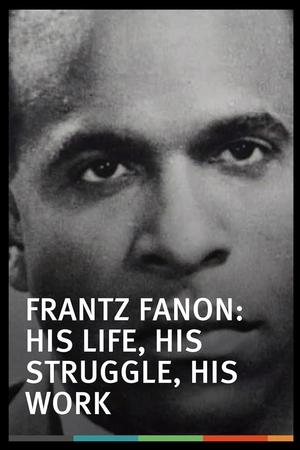
It is the evocation of a life as brief as it is dense. An encounter with a dazzling thought, that of Frantz Fanon, a psychiatrist of West Indian origin, who will reflect on the alienation of black people. It is the evocation of a man of reflection who refuses to close his eyes, of the man of action who devoted himself body and soul to the liberation struggle of the Algerian people and who will become, through his political commitment, his fight, and his writings, one of the figures of the anti-colonialist struggle. Before being killed at the age of 36 by leukemia, on December 6, 1961. His body was buried by Chadli Bendjedid, who later became Algerian president, in Algeria, at the Chouhadas cemetery (cemetery of war martyrs ). With him, three of his works are buried: “Black Skin, White Masks”, “L’An V De La Révolution Algérien” and “The Wretched of the Earth”.
100%
Algeria, Year Zero(fr)
1965-10-01
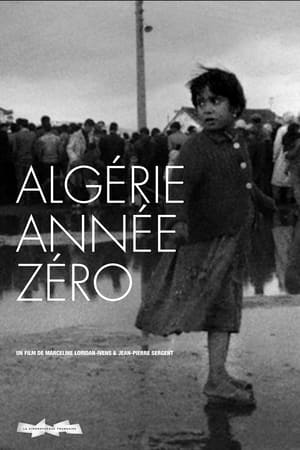
Documentary on the beginnings of Algerian independence filmed during the summer of 1962 in Algiers. The film was banned in France and Algeria but won the Grand Prize at the Leipzig International Film Festival in 1965. Out of friendship, the production company Images de France sent an operator, Bruno Muel, who later declared: "For those who were called to Algeria (for me, 1956-58), participating in a film on independence was a victory over horror, lies and absurdity. It was also the beginning of my commitment to the cinema."
76%
The Zerda or the Songs of Forgetting(fr)
1983-02-27
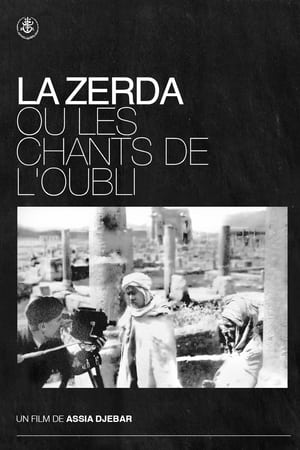
“La Zerda and the songs of oblivion” (1982) is one of only two films made by the Algerian novelist Assia Djebar, with “La Nouba des femmes du mont Chenoua” (1977). Powerful poetic essay based on archives, in which Assia Djebar – in collaboration with the poet Malek Alloula and the composer Ahmed Essyad – deconstructs the French colonial propaganda of the Pathé-Gaumont newsreels from 1912 to 1942, to reveal the signs of revolt among the subjugated North African population. Through the reassembly of these propaganda images, Djebar recovers the history of the Zerda ceremonies, suggesting that the power and mysticism of this tradition were obliterated and erased by the predatory voyeurism of the colonial gaze. This very gaze is thus subverted and a hidden tradition of resistance and struggle is revealed, against any exoticizing and orientalist temptation.
70%
143 Sahara Street(fr)
2021-06-16
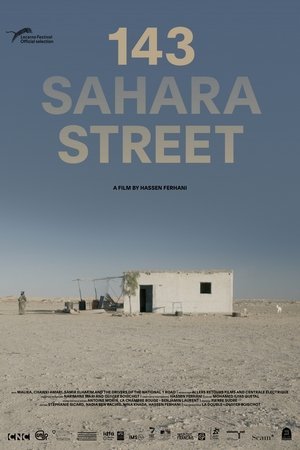
Alone in a small white house on the edge of national road 1, the Trans-Saharan road, which connects Algiers to Tamanrasset crossing the immensity of the desert, Malika, 74, one day opened her door to the director Hassen Ferhani, who came there to scout with his friend Chawki Amari, journalist at El Watan and author of the story Nationale 1 which relates his journey on this north-south axis of more than 2000 km. The Malika of Amari's novel, which Ferhani admits to having first perceived as a "literary fantasy", suddenly takes on an unsuspected human depth in this environment naturally hostile to man. She lends herself to the film project as she welcomes her clients, with an economy of gestures and words, an impression reinforced by the mystery that surrounds her and the rare elements of her biography which suggest that she is not from the region, that she left the fertile north of Algeria to settle in the desert where she lives with a dog and a cat.
100%
Woman of Courage - Louisa Ighilahriz(ar)
2003-01-21
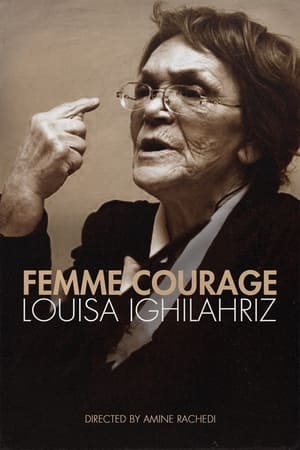
The autobiographical account of the tormented life of a witness of the century: Louisa Ighilahriz, activist and leading figure in Algerian independence. A student, she joined the independence struggle at the age of 20, joining the ranks of the FLN on the eve of the Battle of Algiers in late 1956 under the name Lila. She took part in the high school students' strike, then fled into the maquis when she was actively sought after. She was part of the French FLN support network of "suitcase carriers" during the Battle of Algiers. Seriously wounded alongside her network leader, Saïd Bakel, during an ambush in 1957, hospitalized and then imprisoned, she suffered numerous tortures in French prisons. She will be saved from certain death by an anonymous person, she will seek, for forty years, to find him just to show him her gratitude... Emblematic of the painful Franco-Algerian history, Louisa's story is poignant and imbued with humanism.
40%
Moudjahidate(fr)
2008-11-03
100%
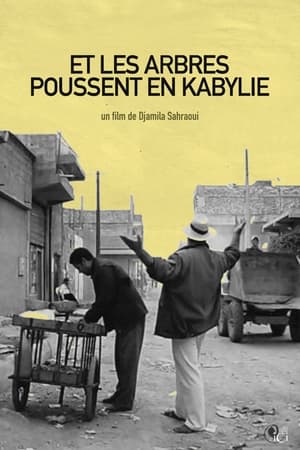
Et les arbres poussent en Kabylie(fr)
2003-08-25
A warm, attentive chronicle of everyday life in a small Algerian town, with the backdrop of the inhabitants' development and beautification of one of the neighborhoods. We meet an amateur mechanic, a retired man from France, a doctor, old women and young men. Everyone plays... in front of the camera of one of the youngsters. Even when the riots in Kabylia disrupt the course of daily life in the Cité des Martyrs.
100%
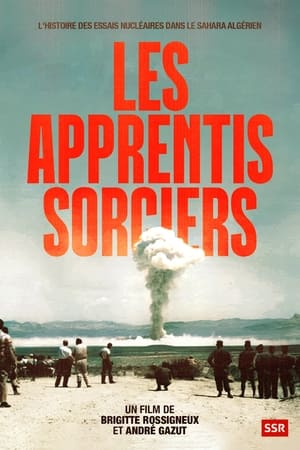
The Sorcerer's Apprentice(fr)
1996-01-01
60 years ago, in the Algerian desert, an atomic bomb, equivalent to three or even four times Hiroshima, exploded. Named the “Blue Gerboise”, it was the first atomic bomb tested by France, and of hitherto unrivaled power. This 70 kiloton plutonium bomb was launched in the early morning, in the Reggane region, in southern Algeria, during the French colonial era. If this test allowed France to become the 4th nuclear power in the world, it had catastrophic repercussions. France had, at the time, certified that the radiation was well below the standard safety threshold. However, in 2013, declassified files revealed that the level of radioactivity had been much higher than announced, and had been recorded from West Africa to the south of Spain.
100%
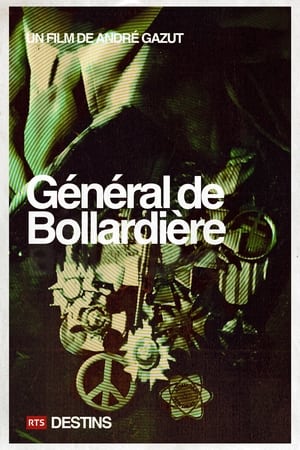
Destins: Général De Bollardière(fr)
1975-03-24
The exceptional portrait of a pacifist general, the only senior officer to have spoken out against torture. This precious testimony still remains censored in France, since no national channel has to date decided to program this documentary. Son and brother of a soldier, General Pâris de Bollardière was destined for a career in arms. He was, for many years, one of the most brilliant representatives of this adventurer career in France, from Narvik to the Algerian War. After fighting in the French maquis, he reached Indochina, where he suddenly found himself in the aggressor's camps. His beliefs are strongly shaken. But it is in Algeria, where the French army practices torture and summary executions, that he takes the big turn. He expresses his contempt to Massu, and is relieved of his command. Until his death in 1986, Jacques de Bollardière fought for world peace, from the Larzac plateaus to the Mururoa atolls.

100%
Alger Et Ses Environs(fr)
1945-01-01
The film, shot in 1938, is part of a series entitled “The true face of Algeria”. The film highlights the proximity of Algiers to Paris and promotes air travel. The commentary supporting the images highlights the urban dynamism (“Every day, a new skyscraper replaces a wasteland”) and the comparison with Paris (“Algiers is often nicknamed the Paris of North Africa because of its elegance become proverbial). Contemporary architectural achievements are described as the sign of “grandiose modernism”: “we love the new, the bold”. But the point does not forget the buildings illustrating “the Moorish, classic and attractive style”. The description of the Casbah also attempts to understand the architectural organization but also the diversity and even the atmosphere.
100%
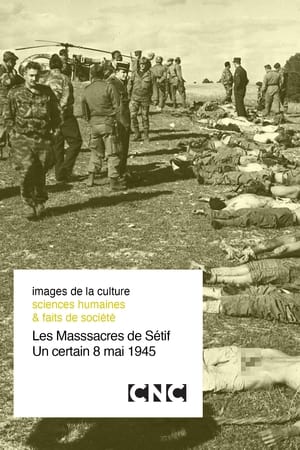
The Setif Massacres, a certain May 8, 1945(fr)
1995-05-10
May 8, 1945, the day of victory over Nazism, is also a day of mourning. In Algiers, thanks to demonstrations for victory, the Algerian flag appears for the first time, thus claiming independence. But in Sétif, the standard bearer is shot dead at the head of the procession and a riot breaks out. The colonial massacre that followed would extend to all of Constantine. The commission of inquiry never delivered its conclusions and an amnesty law erased the traces of this savage repression. Fifty years later, the file is open.

65%
Fata Morgana(de)
1972-02-01
Shot under extreme conditions and inspired by Mayan creation theory, the film contemplates the illusion of reality and the possibility of capturing for the camera something which is not there. It is about the mirages of nature—and the nature of mirage.
Recommendations Movies

68%
Spider-Man: All Roads Lead to No Way Home(en)
2022-05-03
JB Smoove and Martin Starr host a celebration of 20 years of "Spider-Man" movies, from the Sam Raimi trilogy to Marc Webb's movies and the trio from Jon Watts.
71%
Zeitgeist: Moving Forward(en)
2011-01-15
A presentation of a case for a needed transition out of the current socioeconomic monetary paradigm which governs the entire world society. This subject matter will transcend the issues of cultural relativism and traditional ideology and move to relate the core, empirical 'life ground' attributes of human and social survival, extrapolating those immutable natural laws into a new sustainable social paradigm called a 'Resource-Based Economy'.
73%
To Be and to Have(fr)
2002-08-28
The documentary's title translates as "to be and to have", the two auxiliary verbs in the French language. It is about a primary school in the commune of Saint-Étienne-sur-Usson, Puy-de-Dôme, France, the population of which is just over 200. The school has one small class of mixed ages (from four to twelve years), with a dedicated teacher, Georges Lopez, who shows patience and respect for the children as we follow their story through a single school year.
72%
4 Little Girls(en)
1997-07-09
On September 15, 1963, a bomb destroyed a black church in Birmingham, Alabama, killing four young girls who were there for Sunday school. It was a crime that shocked the nation--and a defining moment in the history of the civil-rights movement. Spike Lee re-examines the full story of the bombing, including a revealing interview with former Alabama Governor George Wallace.
74%
Sidney(en)
2022-09-10
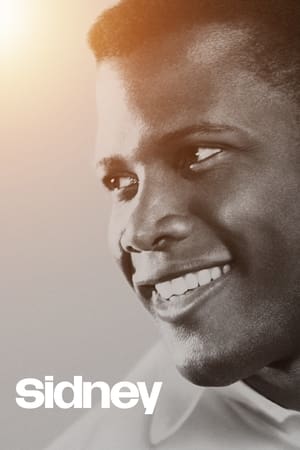
This revealing documentary honors the legendary Sidney Poitier—iconic actor, filmmaker, and civil rights activist. Featuring interviews with Denzel Washington, Spike Lee, Halle Berry, and more.
75%
Sans Soleil(fr)
1983-03-02
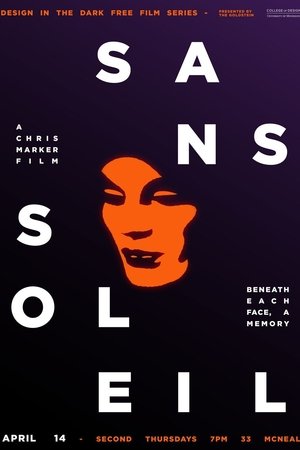
A woman narrates the thoughts of a world traveler, meditations on time and memory expressed in words and images from places as far-flung as Japan, Guinea-Bissau, Iceland, and San Francisco.

60%
Anna Nicole Smith: You Don't Know Me(en)
2023-05-16
From the heights of her modeling fame to her tragic death, this documentary reveals Anna Nicole Smith through the eyes of the people closest to her.
85%
Human(fr)
2015-09-12
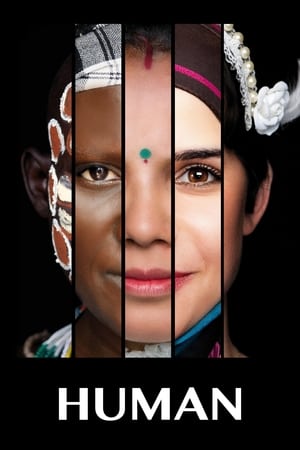
A collection of stories about and images of our world, offering an immersion to the core of what it means to be human. Through these stories full of love and happiness, as well as hatred and violence, it brings us face to face with the Other, making us reflect on our lives. From stories of everyday experiences to accounts of the most unbelievable lives, these poignant encounters share a rare sincerity and underline who we are – our darker side, but also what is most noble in us, and what is universal. Our Earth is shown at its most sublime through never-before-seen aerial images accompanied by soaring music, resulting in an ode to the beauty of the world, providing a moment to draw breath and for introspection. This film is a politically engaged work which allows us to embrace the human condition and to reflect on the meaning of our existence.

64%
Showrunners: The Art of Running a TV Show(en)
2014-10-17
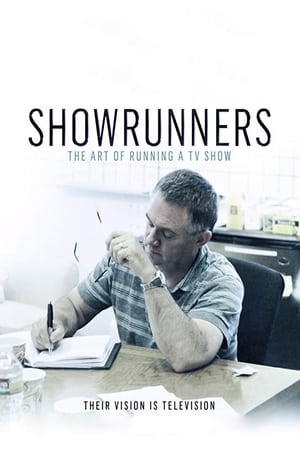
“Showrunners” is the first ever feature length documentary film to explore the fascinating world of US television showrunners and the creative forces aligned around them. These are the people responsible for creating, writing and overseeing every element of production on one of the United State’s biggest exports – television drama and comedy series. Often described as the most complex job in the entertainment business, a showrunner is the chief writer / producer on a TV series and, in most instances, the show’s creator. Battling daily between art and commerce, showrunners manage every aspect of a TV show’s development and production: creative, financial and logistical.

61%
Freakonomics(en)
2010-10-01
Some of the world's most innovative documentary filmmakers will explore the hidden side of everything.
74%
Oceans(en)
2010-01-22
An ecological drama/documentary, filmed throughout the globe. Part thriller, part meditation on the vanishing wonders of the sub-aquatic world.
64%
Avatar: Creating the World of Pandora(en)
2010-02-07
The Making-of James Cameron's Avatar. It shows interesting parts of the work on the set.
75%
The Battered Bastards of Baseball(en)
2014-01-20
Hollywood veteran Bing Russell creates the only independent baseball team in the country—alarming the baseball establishment and sparking the meteoric rise of the 1970s Portland Mavericks.
72%
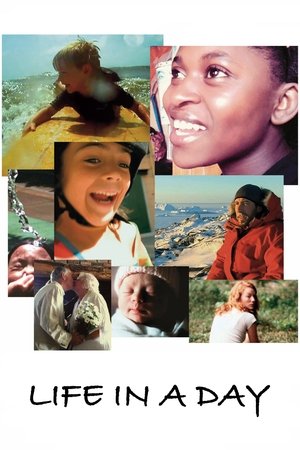
Life in a Day(en)
2011-01-27
A documentary shot by filmmakers all over the world that serves as a time capsule to show future generations what it was like to be alive on the 24th of July, 2010.

81%
Beyoncé: Life Is But a Dream(en)
2013-06-10
Life Is But a Dream is a HBO documentary about the life of US singer Beyoncé Knowles during the years 2011 and 2012 and on the recording of her fifth album. The film was directed by Beyoncé herself. The film shows Beyoncé from intimate moments of her pregnancy to behind the scenes and rehearsals of the main concerts of that time.
72%
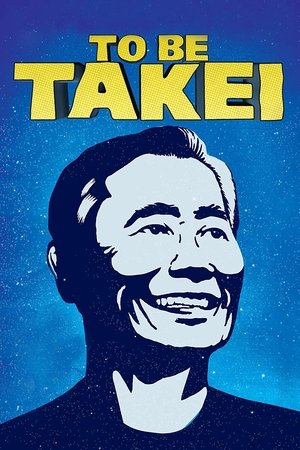
To Be Takei(en)
2014-08-22
Over seven decades, actor and activist George Takei journeyed from a World War II internment camp to the helm of the Starship Enterprise, and then to the daily news feeds of five million Facebook fans. Join George and his husband, Brad, on a wacky and profound trek for life, liberty, and love.

77%
Woman(fr)
2020-03-01
The film is based on interviews with 2,000 women from 50 countries, and covers the status of women all over the world. The topics covered include forced marriages, sexual assault, female genital mutilation, acid attacks, motherhood, sexuality, menstruation, education and the professional success of women.
69%
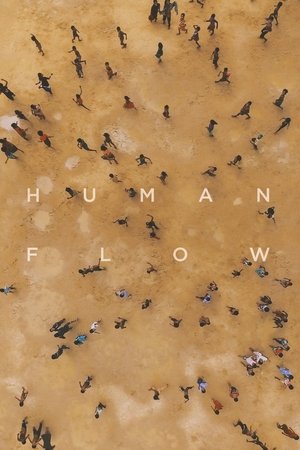
Human Flow(en)
2017-10-02
More than 65 million people around the world have been forced from their homes to escape famine, climate change and war, the greatest displacement since World War II. Filmmaker Ai Weiwei examines the staggering scale of the refugee crisis and its profoundly personal human impact. Over the course of one year in 23 countries, Weiwei follows a chain of urgent human stories that stretch across the globe, including Afghanistan, France, Greece, Germany and Iraq.