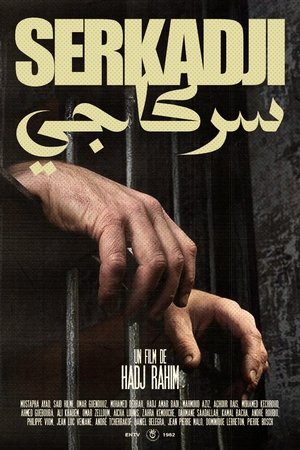
Serkadji(1982)
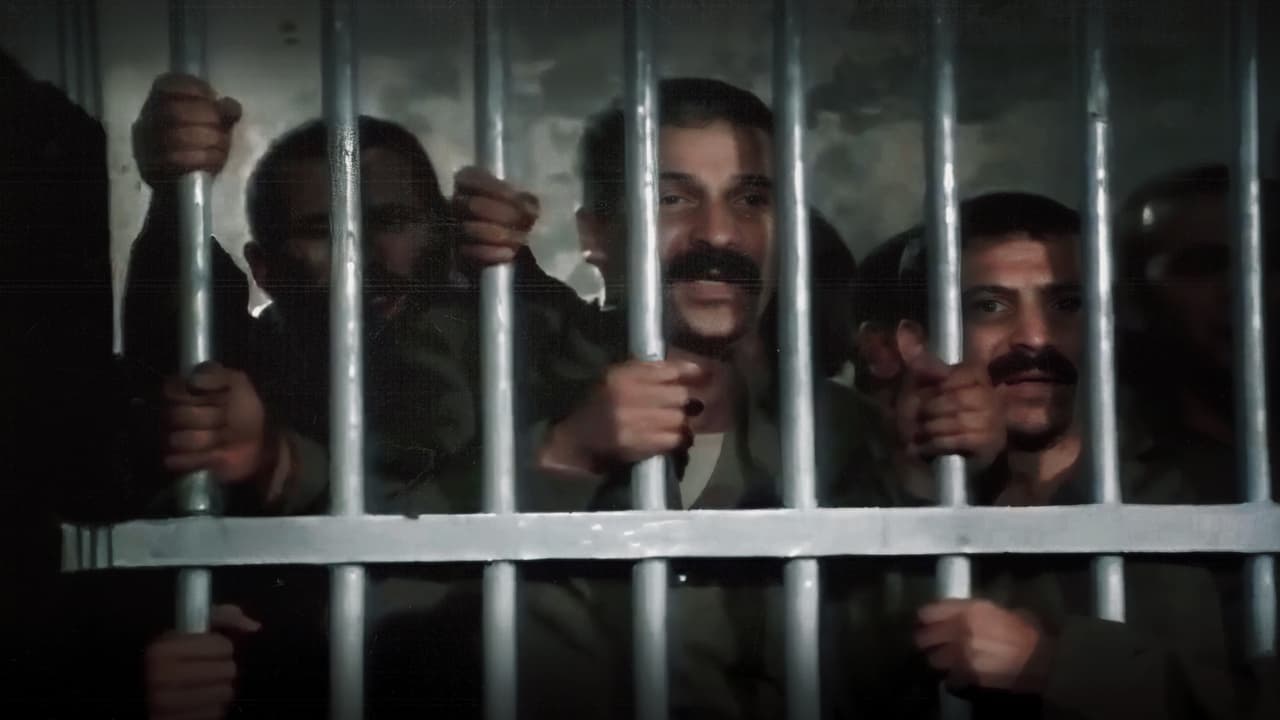
In 1982, Hadj Rahim directed "Serkadji", a fiction film about the men's quarters of the Barberousse military prison in Algiers, where hundreds of FLN fighters were incarcerated and executed during the war of independence. Algeria between 1954 and 1962.

Movie: Serkadji
Top 9 Billed Cast


HomePage
Overview
In 1982, Hadj Rahim directed "Serkadji", a fiction film about the men's quarters of the Barberousse military prison in Algiers, where hundreds of FLN fighters were incarcerated and executed during the war of independence. Algeria between 1954 and 1962.
Release Date
1982-01-01
Average
10
Rating:
5.0 startsTagline
Genres
Languages:
العربيةFrançaisKeywords
Recommendations Movies
The Hill(en)
North Africa, World War II. British soldiers on the brink of collapse push beyond endurance to struggle up a brutal incline. It's not a military objective. It's The Hill, a manmade instrument of torture, a tower of sand seared by a white-hot sun. And the troops' tormentors are not the enemy, but their own comrades-at-arms.
Cadence(en)
As punishment for drunken, rebellious behavior, a young white soldier is thrown into a stockade populated entirely by black inmates. But instead of falling victim to racial hatred, the soldier joins forces with his fellow prisoners and rises up against the insanely tyrannical and bigoted prison warden.
The Last Castle(en)
A court-martialed general rallies together 1200 inmates to rise against the system that put him away.
Karmouz War(ar)
Alexandria, Egypt, 1940. Three young Egyptians come to the aid of a woman being attacked by three British soldiers. One of them is arrested and thrown in jail. When the military surrounds the police station and begins an all-out assault, it's up to one man, Gen. Youssef al-Masri, to defend his prison and protect his people.
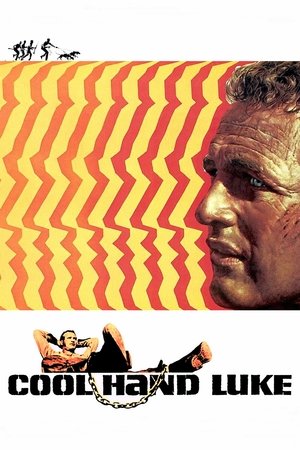
Cool Hand Luke(en)
When petty criminal Luke Jackson is sentenced to two years in a Florida prison farm, he doesn't play by the rules of either the sadistic warden or the yard's resident heavy, Dragline, who ends up admiring the new guy's unbreakable will. Luke's bravado, even in the face of repeated stints in the prison's dreaded solitary confinement cell, "the box," make him a rebel hero to his fellow convicts and a thorn in the side of the prison officers.
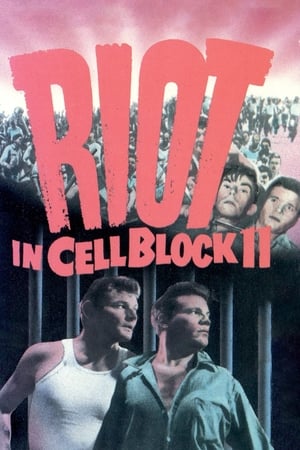
Riot in Cell Block 11(en)
A prisoner leads his counterparts in a protest for better living conditions which turns violent and ugly.
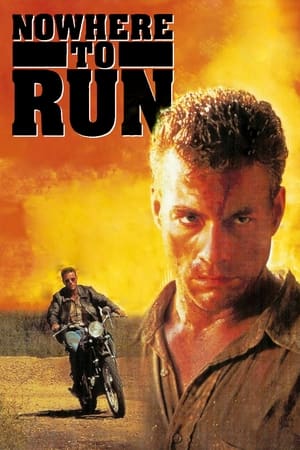
Nowhere to Run(en)
Escaped convict Sam Gillen single-handedly takes on ruthless developers who are determined to evict a widow with two young children.
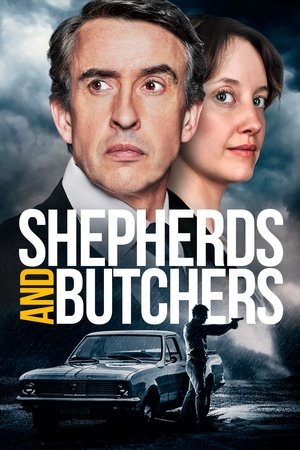
Shepherds and Butchers(en)
A lawyer takes on a case of a prison guard in South Africa who is traumatized by the executions he's witnessed.
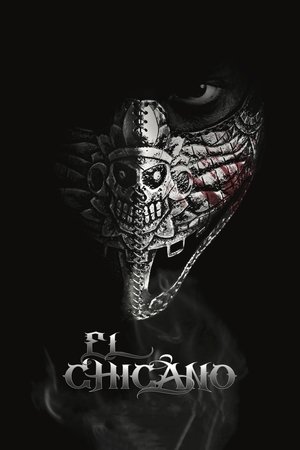
El Chicano(en)
A pair of twin brothers from East L.A. choose to live their lives differently and end up on opposite sides of the law.

Puncture(en)
A lawyer who is a drug addict fights a medical-supplies corporation in court while battling his personal demons.
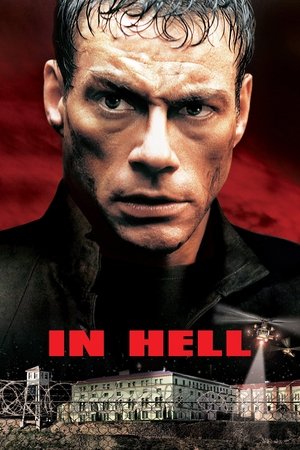
In Hell(en)
A man must survive a prison where hardened criminals battle to the death for the warden's entertainment.
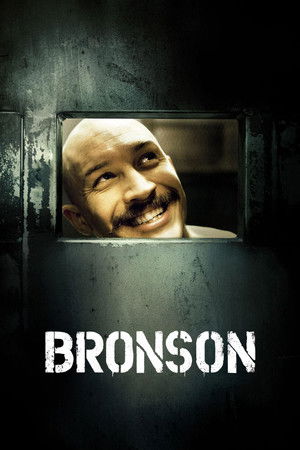
Bronson(en)
A young man who was sentenced to 7 years in prison for robbing a post office ends up spending 30 years in solitary confinement. During this time, his own personality is supplanted by his alter ego, Charles Bronson.
Against the Wall(en)
In 1971, a warden at Attica Penitentiary is caught up in a hostage crisis when inmates take over the prison to demand better living conditions.
Murder in the First(en)
A young, inexperienced public defender is assigned to defend an inmate accused of committing murder while behind bars.
Son of the South(en)
In civil rights era Montgomery, Alabama, Klansman's grandson Bob Zellner must choose which side of history to be on during the Movement. Defying his family and white Southern norms, he fought against social injustice, repression and violence to change the world around him
Brute Force(en)
Timeworn Joe Collins and his fellow inmates live under the heavy thumb of the sadistic, power-tripping guard Captain Munsey. Only Collins' dreams of escape keep him going, but how can he possibly bust out of Munsey's chains?
Gandhi(en)
In the early years of the 20th century, Mohandas K. Gandhi, a British-trained lawyer, forsakes all worldly possessions to take up the cause of Indian independence. Faced with armed resistance from the British government, Gandhi adopts a policy of 'passive resistance', endeavouring to win freedom for his people without resorting to bloodshed.

In My Country(en)
An American reporter and an Afrikaans poet meet and fall in love while covering South Africa's Truth and Reconciliation Commission hearings.
Similar Movies

Lumières(ar)
Long quest for a director specializing in commissioned films, who after a depression rediscovers his loved ones, his Casbah district, himself. Taken in hand, for a while, by his Islamist neighbor, it is above all the meeting with an old projectionist giving him a censored history of cinema and Algeria, which helps him to change, and to accept his own fantasies, embodied by Marilyn Monroe and the Andalusian.
A Captain's Honor(fr)
During a televised debate on the Algerian war in the early 1980s, Professor Paulet denounced the methods of Captain Caron, killed in action in 1957. The widow of the captain, Patricia, decided to file a defamation suit.
Les Enfants de Novembre(ar)
In the streets of the Casbah of Algiers, an FLN fighter pursued by the colonial police hands over confidential documents to Mourad, an Algerian child shouting newspapers who must at all costs pass them on to the resistance. But the police are on their trail and will do anything to get them back.
Les Avocats du Diable(fr)
In 1958 in Paris, during the Algerian War, a young trainee lawyer, Maître Chabrier, was assigned to defend an Algerian garbage collector against paratroopers who had beaten him. Stay out of Algerian affairs, his peers advise him because the trial is taking a political turn. Chabrier acquired the reputation of the Fellaghas' lawyer.
Krim Belkacem(ar)
This film retraces the combat journey of Krim Belkacem, one of the leading figures of the Algerian War. When he left the Dellys barracks in October 1945, the day after the Second World War, Krim Belkacem was 23 years old. He is a man revolted by the May massacres in Sétif, Guelma, Kherrata and several other localities in the ravaged country. But it is also and above all a young Algerian who questions the future of Algeria. On March 21, 1947, Krim at the age of 25, he dug up his "Sten" submachine gun, he took action against the boss of his douar who was none other than his cousin. He goes into hiding with six companions. He meshes this entire part of Algeria with a dense and dense network with the sole objective of taking action which will lead to the outbreak of the armed struggle on November 1, 1954.
Enough!(ar)
Set amidst the civil war of Algeria in the 1990s, Enough! is the story of two women. Emel is a Westerner whose husband, a journalist, is missing - perhaps kidnapped or even killed for articles he's written.
Boualem Zid El Goudam(ar)
Two travelers, Boualem and Sekfali, cross the hostile and endless desert. Boualem pulls a cart on which old books, pictures, relics and memories of Sekfali are piled up. Two men, two attitudes towards life, two visions of the world. Where do they come from, where are they going? The journey would be completely calm and happy if each of them were not inhabited by their pasts, determining their different visions of the future. Boualem's childhood was marked by the Algerian war of liberation. His dream is to achieve a socialist society, which is for him the only path to salvation. Sekfali, who tries to dissuade Boualem from continuing the journey, has the attitude of an aristocrat. For him, socialism is a heresy and people do not like responsibility, they only act if a leader gives them the injunction.
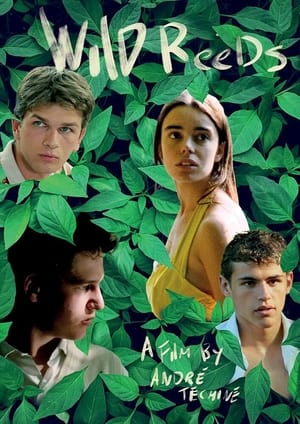
Wild Reeds(fr)
As the Algerian War draws to a close, a teenager with a girlfriend starts feeling homosexual urges for two of his classmates: a country boy, and a French-Algerian intellectual.
The Hill(en)
North Africa, World War II. British soldiers on the brink of collapse push beyond endurance to struggle up a brutal incline. It's not a military objective. It's The Hill, a manmade instrument of torture, a tower of sand seared by a white-hot sun. And the troops' tormentors are not the enemy, but their own comrades-at-arms.
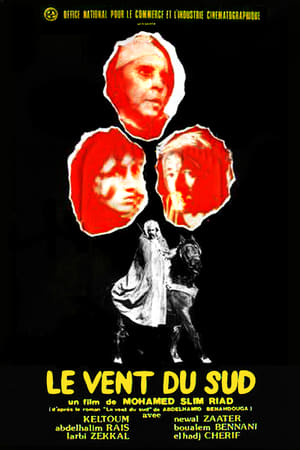
Wind from the South(ar)
Néfissa, a student in Algiers, returns to her village in the south in the summer. Her father wants her to marry the mayor but she wants to continue her studies. Confronting her father and the opinion of the villagers who do not understand her, she decides to flee to Algiers. The shepherd Rabah discovering her wounded and lost in the mountains, has her treated by her mother. In contact with Nefissa, Rabat becomes aware of his exploited condition and discovers the possibilities offered to him by the cooperatives of the agrarian revolution. The two young people will go through the decisive stage together which will allow them to escape obscurantism and exploitation. Based on the novel "Le vent du sud" by Abdelhamid Benahouga
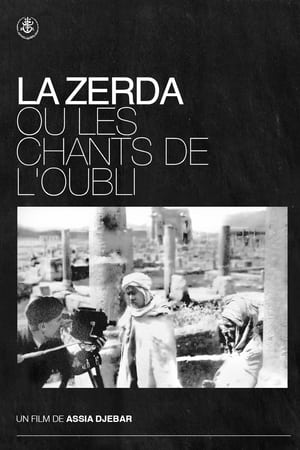
The Zerda or the Songs of Forgetting(fr)
“La Zerda and the songs of oblivion” (1982) is one of only two films made by the Algerian novelist Assia Djebar, with “La Nouba des femmes du mont Chenoua” (1977). Powerful poetic essay based on archives, in which Assia Djebar – in collaboration with the poet Malek Alloula and the composer Ahmed Essyad – deconstructs the French colonial propaganda of the Pathé-Gaumont newsreels from 1912 to 1942, to reveal the signs of revolt among the subjugated North African population. Through the reassembly of these propaganda images, Djebar recovers the history of the Zerda ceremonies, suggesting that the power and mysticism of this tradition were obliterated and erased by the predatory voyeurism of the colonial gaze. This very gaze is thus subverted and a hidden tradition of resistance and struggle is revealed, against any exoticizing and orientalist temptation.
Lover for a Day(fr)
After a bad breakup, a college-aged Parisian moves into her father's flat only to discover that he is living with his new girlfriend - a young woman her age.
The Battle of Algiers(it)
Paratrooper commander Colonel Mathieu, a former French Resistance fighter during World War II, is sent to Algeria to reinforce efforts to squelch the uprisings of the Algerian War. There he faces Ali la Pointe, a former petty criminal who, as the leader of the Algerian Front de Liberation Nationale, directs terror strategies against the colonial French government occupation. As each side resorts to ever-increasing brutality, no violent act is too unthinkable.
Mesrine: Killer Instinct(fr)
Jacques Mesrine, a loyal son and dedicated soldier, is back home and living with his parents after serving in the Algerian War. Soon he is seduced by the neon glamour of sixties Paris and the easy money it presents. Mentored by Guido, Mesrine turns his back on middle class law-abiding and soon moves swiftly up the criminal ladder.
Pépé le Moko(fr)
Pépé le Moko, one of France's most wanted criminals, hides out in the Casbah section of Algiers. He knows police will be waiting for him if he tries to leave the city. When Pépé meets Gaby, a gorgeous woman from Paris who is lost in the Casbah, he falls for her.
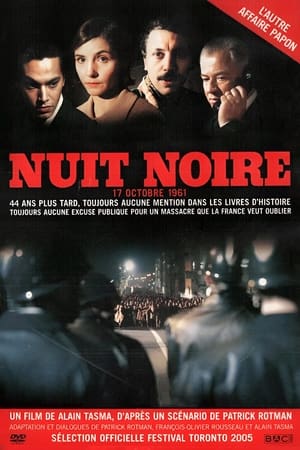
Dark Night, October 17, 1961(fr)
Parisian authorities clash with the Front de Libération Nationale (FLN) in director Alain Tasma’s recounting of one of the darkest moments of the Algerian War of Independence. As the war wound to a close and violence persisted in the streets of Paris, the FLN and its supporters adopted the tactic of murdering French policemen in hopes of forcing a withdrawal. When French law enforcement retaliated by brutalizing Algerians and imposing a strict curfew, the FLN organizes a peaceful demonstration that drew over 11,000 supporters, resulting in an order from the Paris police chief to take brutal countermeasures. Told through the eyes of both French policemen as well as Algerian protestors, Tasma’s film attempts to get to the root of the tragedy by presenting both sides of the story.
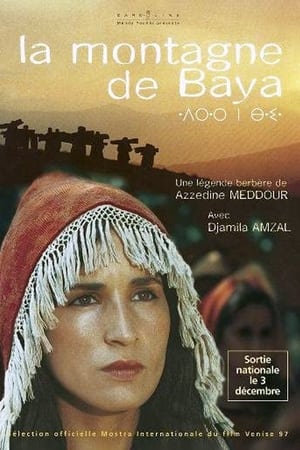
Baya's Mountain(ar)
Set in the 1800s among the Berbers of North Africa, this 1997 Algerian feature concerns a noble widow who receives a customary purse of gold coins from the enemy tribe that murdered her husband; the gift puts her in conflict with her kinsmen, who want the money to buy back land taken by the enemy in cahoots with French colonials.
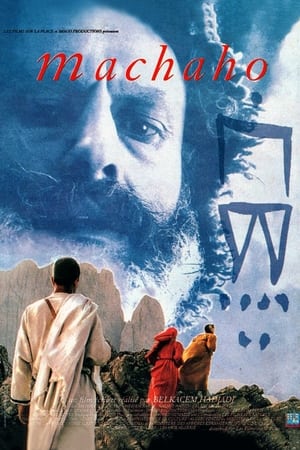
Machaho(ar)
In Kabylie, rude mountain region in the north of Algeria. Arezki finds the young Larbi exhausted, buried under the snow. He takes him in and nurses him until he's recovered. The host seduces Arezki's daughter. She is pregnant. This is an unsupportable shame to the father of the female sinner. Arezki claims vengeance. He leaves his house and takes the oath not to come back before having killed Larbi who betrayed him under his own roof.
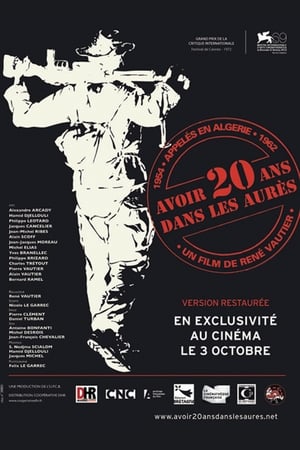
To Be Twenty in the Aures(fr)
A group of refractory and pacifist Bretons is sent to Algeria. These beings confronted with the horrors of war gradually become killing machines. One of them did not accept it and deserted, taking with him an FLN prisoner who was to be executed the next day.