
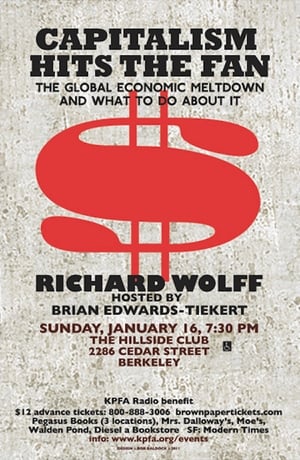
Capitalism Hits the Fan(2009)
With breathtaking clarity, renowned University of Massachusetts Economics Professor Richard Wolff breaks down the root causes of today's economic crisis, showing how it was decades in the making and in fact reflects seismic failures within the structures of American-style capitalism itself. Wolff traces the source of the economic crisis to the 1970s, when wages began to stagnate and American workers were forced into a dysfunctional spiral of borrowing and debt that ultimately exploded in the mortgage meltdown. By placing the crisis within this larger historical and systemic frame, Wolff argues convincingly that the proposed government "bailouts," stimulus packages, and calls for increased market regulation will not be enough to address the real causes of the crisis, in the end suggesting that far more fundamental change will be necessary to avoid future catastrophes.
Movie: Capitalism Hits the Fan
Top 1 Billed Cast
Recommendations Movies
The Shock Doctrine(en)
An investigation of "disaster capitalism", based on Naomi Klein's proposition that neo-liberal capitalism feeds on natural disasters, war and terror to establish its dominance.
Saving Capitalism(en)
Former Secretary of Labor Robert Reich meets with Americans from all walks of life as he chronicles a seismic shift in the nation's economy.
Collapse(en)
From the acclaimed director of American Movie, the documentary follows former Los Angeles police officer turned independent reporter Michael Ruppert. He recounts his career as a radical thinker and spells out his apocalyptic vision of the future, spanning the crises in economics, energy, environment and more.
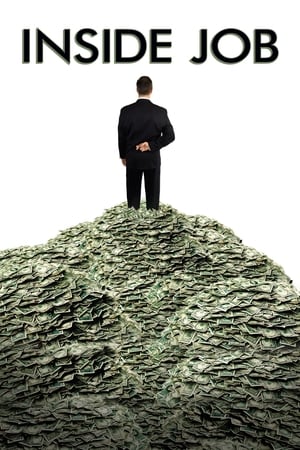
Inside Job(en)
A film that exposes the shocking truth behind the economic crisis of 2008. The global financial meltdown, at a cost of over $20 trillion, resulted in millions of people losing their homes and jobs. Through extensive research and interviews with major financial insiders, politicians and journalists, Inside Job traces the rise of a rogue industry and unveils the corrosive relationships which have corrupted politics, regulation and academia.
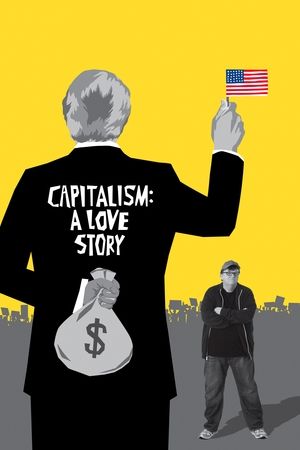
Capitalism: A Love Story(en)
Michael Moore comes home to the issue he's been examining throughout his career: the disastrous impact of corporate dominance on the everyday lives of Americans (and by default, the rest of the world).
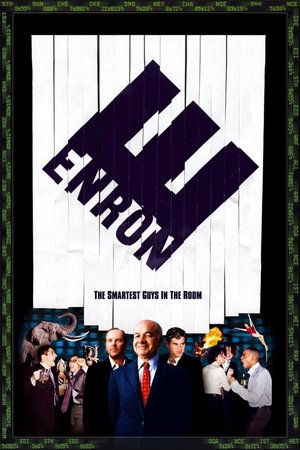
Enron: The Smartest Guys in the Room(en)
A documentary about the Enron corporation, its faulty and corrupt business practices, and how they led to its fall.
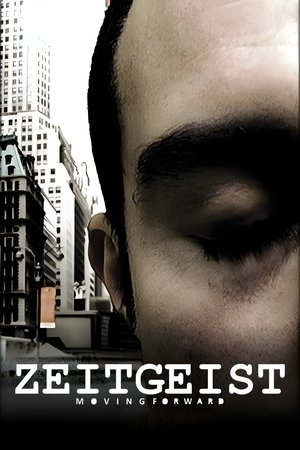
Zeitgeist: Moving Forward(en)
A presentation of a case for a needed transition out of the current socioeconomic monetary paradigm which governs the entire world society. This subject matter will transcend the issues of cultural relativism and traditional ideology and move to relate the core, empirical 'life ground' attributes of human and social survival, extrapolating those immutable natural laws into a new sustainable social paradigm called a 'Resource-Based Economy'.

Roger & Me(en)
A documentary about the closure of General Motors' plant at Flint, Michigan, which resulted in the loss of 30,000 jobs. Details the attempts of filmmaker Michael Moore to get an interview with GM CEO Roger Smith.
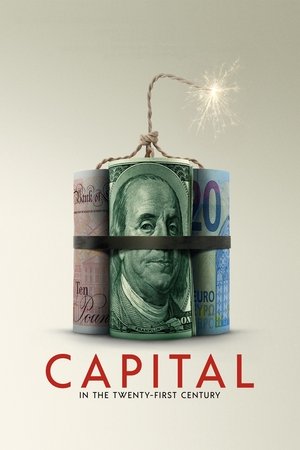
Capital in the Twenty-First Century(en)
Film adaptation of French economist Thomas Piketty's ground-breaking global bestseller of the same name: an eye-opening journey through wealth and power.
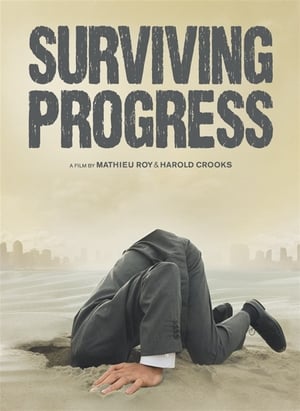
Surviving Progress(en)
Humanity’s ascent is often measured by the speed of progress. But what if progress is actually spiraling us downwards, towards collapse? Ronald Wright, whose best-seller, “A Short History Of Progress” inspired “Surviving Progress”, shows how past civilizations were destroyed by “progress traps”—alluring technologies and belief systems that serve immediate needs, but ransom the future. As pressure on the world’s resources accelerates and financial elites bankrupt nations, can our globally-entwined civilization escape a final, catastrophic progress trap? With potent images and illuminating insights from thinkers who have probed our genes, our brains, and our social behaviour, this requiem to progress-as-usual also poses a challenge: to prove that making apes smarter isn’t an evolutionary dead-end.
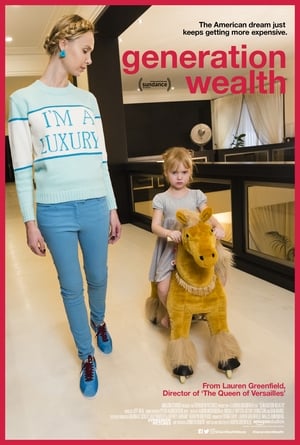
Generation Wealth(en)
Over the past 25 years, Lauren Greenfield's documentary photography and film projects have explored youth culture, gender, body image, and affluence. Underscoring the ever-increasing gap between the haves and the have-nots, portraits reveal a focus on cultivating image over substance, where subjects unable to attain actual wealth instead settle for its trappings, no matter their ability to pay for it.

The True Cost(en)
Film from Andrew Morgan. The True Cost is a documentary film exploring the impact of fashion on people and the planet.
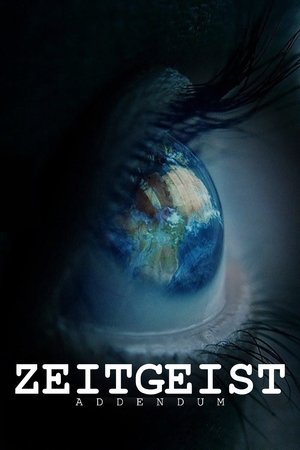
Zeitgeist: Addendum(en)
Zeitgeist: Addendum premiered at the 5th Annual Artivist Film Festival. Director Peter Joseph stated: "The failure of our world to resolve the issues of war, poverty, and corruption, rests within a gross ignorance about what guides human behavior to begin with. It address the true source of the instability in our society, while offering the only fundamental, long-term solution."
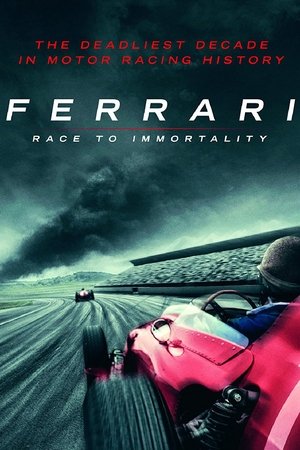
Ferrari: Race to Immortality(en)
The late 1950s were known as golden years in the world of motor racing, champions were made and lost on a Sunday, and no losses were greater than those of Enzo Ferrari’s Scuderia. Based on Chris Nixon’s bestselling biography Mon Ami Mate, Ferrari: Race to Immortality tells the story of the loves and losses, triumphs and tragedy of a turbulent era that shook the motor racing world.

Public Speaking(en)
Martin Scorsese’s portrait of writer and social commentator Fran Lebowitz, celebrated for her sharp wit and observations on modern life. Filmed at New York’s Waverly Inn and intercut with archival footage and interviews, the documentary captures Lebowitz’s distinctive worldview through her spontaneous monologues and public appearances.
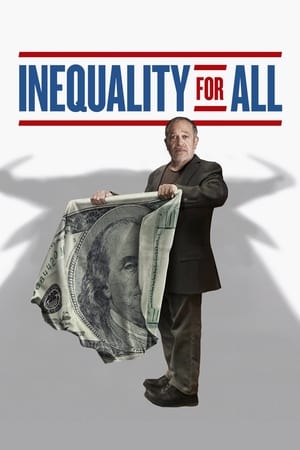
Inequality for All(en)
Based on Reich's 2010 book Aftershock: The Next Economy and America's Future, the film examines widening income inequality in the United States. U.S. Labor Secretary Robert Reich tries to raise awareness of the country's widening economic gap. He publicly argued about the issue for decades, and producing a film of his viewpoints was a "final frontier" for him. In addition to being a social issue documentary, Inequality for All is also partially a biopic regarding Reich's early life and his time as Secretary of Labor under Bill Clinton's presidency. Warren Buffett and Nick Hanauer, two entrepreneurs and investors in the top 1%, are interviewed in the film, supporting Reich's belief in an economy that benefits all citizens, including those of the middle and lower classes.


Downloaded(en)
A documentary that explores the downloading revolution; the kids that created it, the bands and the businesses that were affected by it, and its impact on the world at large.

Welcome to Chechnya(en)
This searing investigative work shadows a group of activists risking unimaginable peril to confront the ongoing anti-LGBTQ program raging in the repressive and closed Russian republic. Unfettered access and a remarkable approach to protecting anonymity exposes this under-reported atrocity–and an extraordinary group of people confronting evil.
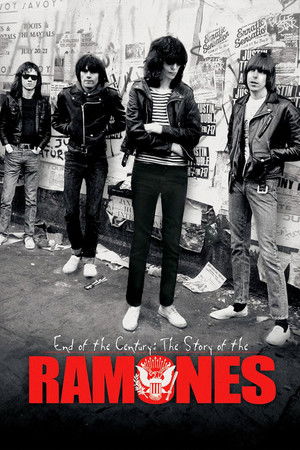
End of the Century: The Story of the Ramones(en)
A years-in-the-making documentary on the legendary punk band the Ramones. Through a mixture of archival footage, archival and new interviews with all members of the band's various lineups, and new interviews with a number of their contemporaries, the film traces the peaks and valleys the band experienced over the course of its 20-plus year career before disbanding in 1995.
Similar Movies
Roger & Me(en)
A documentary about the closure of General Motors' plant at Flint, Michigan, which resulted in the loss of 30,000 jobs. Details the attempts of filmmaker Michael Moore to get an interview with GM CEO Roger Smith.

El camino(es)

From Us To Me / Vom Wir zum Ich(de)
This first co-production between the GDR and Great Britain is intended to contribute to an understanding of the situation and attitudes of millions of working people in opposing social orders. Using the example of shipyard workers, fishermen, the brigade and family of a trade union active cook and unemployed person of various ages and professions in Newcastle on the one hand and a brigade of crane operators of the Warnowwerft and fishermen of the Warnemünde cooperative on the other hand, insights into the way of life and attitudes of people of our time are to be conveyed.

Leviathan(en)
Why is social trust breaking down, and how do we find it again? This is the question at the heart of Leviathan. Directed and produced by Alexander Beiner, it draws on sociology, myth, psychology, economics and systems theory to delve into the deep code of culture and make sense of the times we live in. It’s a journey that invites the viewer to confront the shadows lurking at the heart of our systems, and points the way toward hope, healing and action.

That's the Price(en)
What happens to two dying coal towns in British Columbia when an American corporation provides a contract for millions of tons of coking coal? The film follows the consequences for the towns of Natal and Michel, suggesting that industrial growth has its price, especially with regard to the environment.
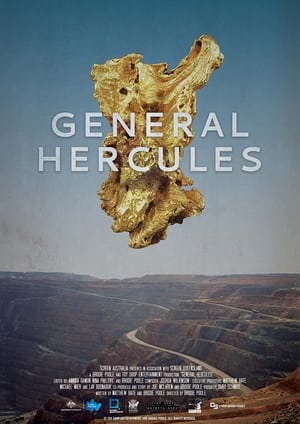
General Hercules(en)
In June 1893, European prospectors unlawfully took claim to ‘The Golden Mile’ on Aboriginal land. In little over a hundred years the natural landscape has been transformed into the industrial hellscape of Kalgoorlie-Boulder. As incumbent Mayor John Bowler starts to campaign for a second term, independent prospector John ‘General Hercules’ Katahanas decides to run against him on an anti-corruption ticket. What starts out as a quirky David-vs-Goliath political battle, unravels into a portrait of a man, a town and a country sent mad by the timeless cycles of exploitation, racism and greed.
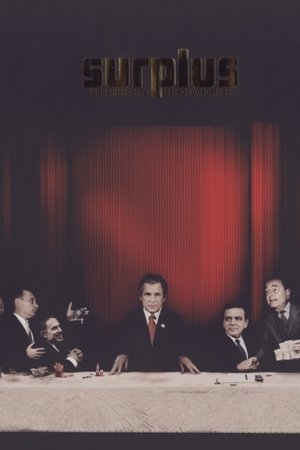
Surplus: Terrorized Into Being Consumers(en)
Swedish documentary film on consumerism and globalization, created by director Erik Gandini and editor Johan Söderberg. It looks at the arguments for capitalism and technology, such as greater efficiency, more time and less work, and argues that these are not being fulfilled, and they never will be. The film leans towards anarcho-primitivist ideology and argues for "a simple and fulfilling life".

Show Her the Money(en)
This is a story that’s never been told. SHOW HER THE MONEY addresses how women are getting less than 2% of venture capital funding and demystifies what venture capital is. Featuring rock-star female investors who invest in diverse women entrepreneurs with innovations that will change the world, Show Her The Money reminds us that money is power and women need it to achieve true equality.
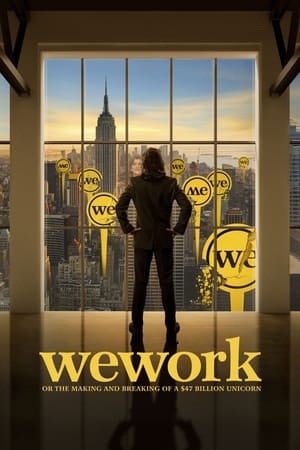
WeWork: or The Making and Breaking of a $47 Billion Unicorn(en)
Explore the rise and fall of one of the biggest corporate flameouts and venture capitalist bubbles in recent years – the story of WeWork, and its hippie-messianic leader Adam Neumann.
I.O.U.S.A.(en)
With the country's debt growing out of control, Americans by and large are unaware of the looming financial crisis. This documentary examines several of the ways America can get its economy back on the right track. In addition to looking at the federal deficit and trade deficit, the film also closely explores the challenges of funding national entitlement programs such as Social Security, Medicare and Medicaid.
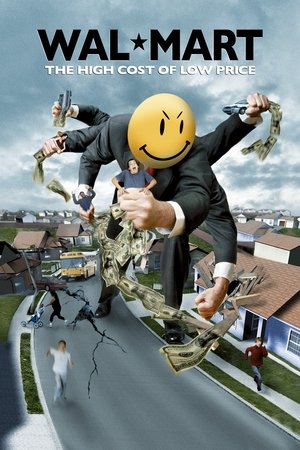
Wal-Mart: The High Cost of Low Price(en)
This documentary takes the viewer on a deeply personal journey into the everyday lives of families struggling to fight Goliath. From a family business owner in the Midwest to a preacher in California, from workers in Florida to a poet in Mexico, dozens of film crews on three continents bring the intensely personal stories of an assault on families and American values.

Who’s Counting? Marilyn Waring on Sex, Lies and Global Economics(en)
This documentary profiles economist and writer Marilyn Waring. In extensive interviews, Waring details her feminist approach to finances and challenges commonly accepted truths about the global economy. The filmmakers detail Waring's early rise to political prominence and her successful protests against nuclear arms. Waring also speaks candidly about wartime economies, suggesting that government policies tend to marginalize the fiscal contributions of women.


The 12th Tokyo May Day(ja)
On May 1st, unions all over Japan celebrate May Day, the international day for workers. Workers gather together at parks and hold demonstrations and parades. May Day has its origins in a strike that occurred in the United States on May 1, 1886, a strike that called for an eight-hour workday. Prokino recorded the May Day every year from 1927 to 1932. Among these films, this work is the only one that has survived. However, only its first part has survived. The original film depicts the march to the Ueno Park where the rally was dismissed. Iwasaki Akira coordinated the entire Tokyo Prokino organization as it photographed the 1931 May Day celebrations. They shot in both 16mm and 35mm (other 35mm productions were planned, but this is the only one that achieved completion). A 16mm print was circulated around the countryside by mobile projection units, and a 35mm print was shown at Soviet film nights in Tokyo and Osaka.
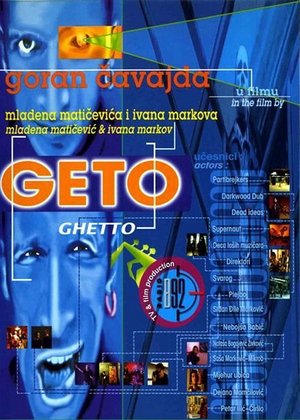
Ghetto - The Secret Life of the City(sr)
Belgrade in the 1990s seen through the eyes of Goran Čavajda 'Čavke', the late drummer of Serbian rock band "Electric Orgasm". Under dictatorship of Slobodan Milošević, his city became one of the worst places to live in Europe, while the country suffered highest inflation rate in its history, accompanied by mass poverty and political isolation. Documentary follows Čavke walking through the Belgrade streets where total chaos and decline of moral values rule. He finds his only shelter underground, where his friends - musicians and artists - live and work invisibly.