Loading Page
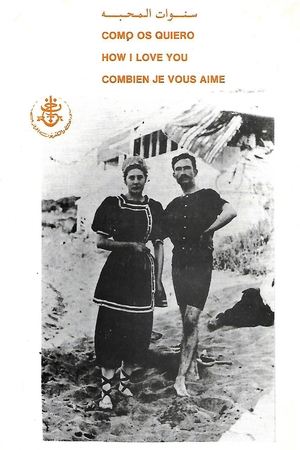
How Much I Love You(1985)
Status: Released
Date: 1985-05-05
100%
1 Votes
Time: 1h 45m
Overview:
Beginning with a promotional reel encouraging farming investments in Algeria and ending with the secret 1950s nuclear tests that France conducted using Algerian prisoners, How Much I Love You appropriates archival footage produced by the French colonial powers in Algeria. Meddour’s approach is disarmingly simple and yet awe-inspiring—his caustic undoing of colonial discourse is underscored by a liberating release of humor.
Languages: Arabic, French.
Countries:
Algeria
Movie: How Much I Love You
Top 1 Billed Cast
Abdelkader Alloula
Narrator
HomePage
Overview
Beginning with a promotional reel encouraging farming investments in Algeria and ending with the secret 1950s nuclear tests that France conducted using Algerian prisoners, How Much I Love You appropriates archival footage produced by the French colonial powers in Algeria. Meddour’s approach is disarmingly simple and yet awe-inspiring—his caustic undoing of colonial discourse is underscored by a liberating release of humor.
Release Date
1985-05-05
Average
10
Rating:
5.0 startsTagline
Genres
Languages:
العربيةFrançaisKeywords
Recommendations Movies

76%
Night Will Fall(en)
2014-06-07
When Allied forces liberated the Nazi concentration camps in 1944-45, their terrible discoveries were recorded by army and newsreel cameramen, revealing for the first time the full horror of what had happened. Making use of British, Soviet and American footage, the Ministry of Information’s Sidney Bernstein (later founder of Granada Television) aimed to create a documentary that would provide lasting, undeniable evidence of the Nazis’ unspeakable crimes. He commissioned a wealth of British talent, including editor Stewart McAllister, writer and future cabinet minister Richard Crossman – and, as treatment advisor, his friend Alfred Hitchcock. Yet, despite initial support from the British and US Governments, the film was shelved, and only now, 70 years on, has it been restored and completed by Imperial War Museums under its original title "German Concentration Camps Factual Survey".


61%
The Battle of San Pietro(en)
1945-05-03
This documentary movie is about the battle of San Pietro, a small village in Italy. Over 1,100 US soldiers were killed while trying to take this location, that blocked the way for the Allied forces from the Germans. Preserved by the Academy Film Archive in 2005.
64%
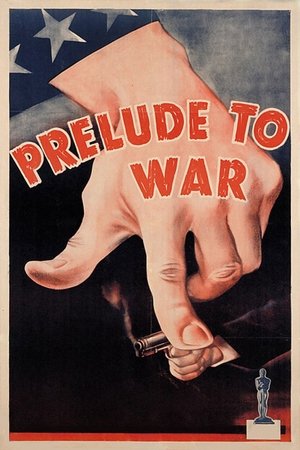
Why We Fight: Prelude to War(en)
1942-05-27
Prelude to War was the first film of Frank Capra's Why We Fight propaganda film series, commissioned by the Pentagon and George C. Marshall. It was made to convince American troops of the necessity of combating the Axis Powers during World War II. This film examines the differences between democratic and fascist states.
75%
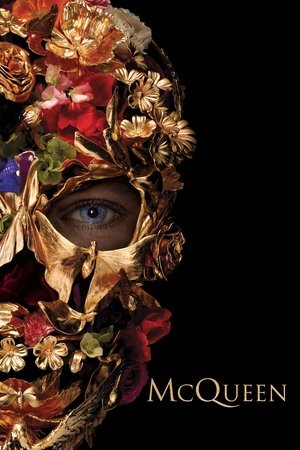
McQueen(en)
2018-06-08
Alexander McQueen's rags-to-riches story is a modern-day fairy tale, laced with the gothic. Mirroring the savage beauty, boldness and vivacity of his design, this documentary is an intimate revelation of McQueen's own world, both tortured and inspired, which celebrates a radical and mesmerizing genius of profound influence.
72%
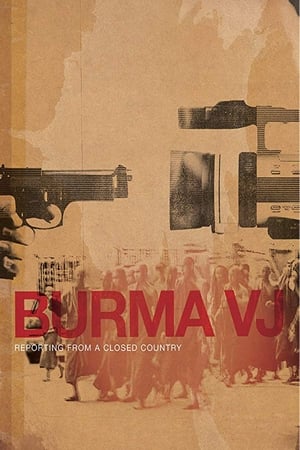
Burma VJ: Reporting from a Closed Country(en)
2008-11-12
Going beyond the occasional news clip from Burma, the acclaimed filmmaker, Anders Østergaard, brings us close to the video journalists who deliver the footage. Though risking torture and life in jail, courageous young citizens of Burma live the essence of journalism as they insist on keeping up the flow of news from their closed country.
67%
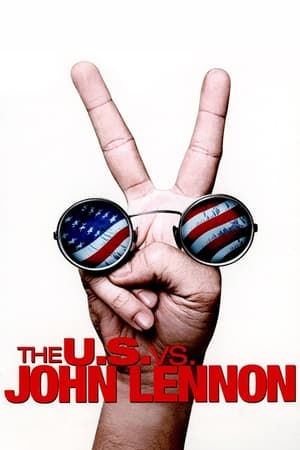
The U.S. vs. John Lennon(en)
2006-09-15
A documentary on the life of John Lennon, with a focus on the time in his life when he transformed from a musician into an antiwar activist.
60%
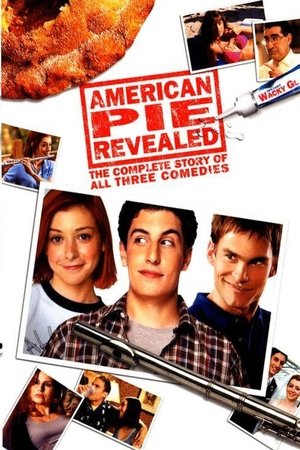
American Pie: Revealed(en)
2004-01-02
Documentary about the making of American Pie (1999), American Pie 2 (2001) and American Wedding (2003).
70%
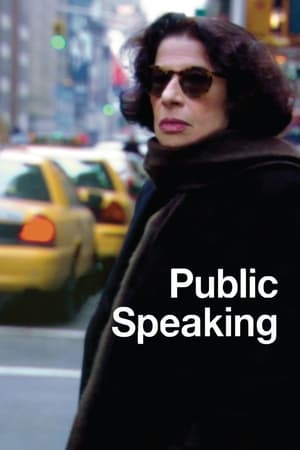
Public Speaking(en)
2011-02-23
Martin Scorsese’s portrait of writer and social commentator Fran Lebowitz, celebrated for her sharp wit and observations on modern life. Filmed at New York’s Waverly Inn and intercut with archival footage and interviews, the documentary captures Lebowitz’s distinctive worldview through her spontaneous monologues and public appearances.
61%
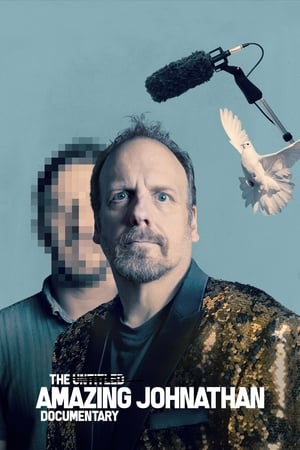
The Amazing Johnathan Documentary(en)
2019-08-16
What begins as a documentary following the final tour of a dying magician - "The Amazing Johnathan" - becomes an unexpected and increasingly bizarre journey as the filmmaker struggles to separate truth from illusion.
63%
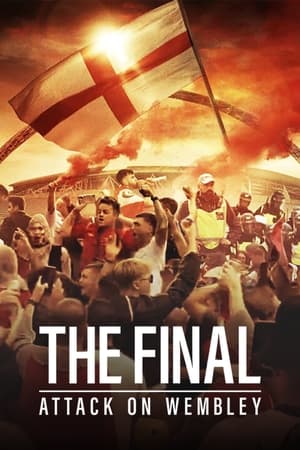
The Final: Attack on Wembley(en)
2024-05-07
As England reach the final of the Euros at last, 6,000 ticketless football fans storm Wembley stadium, leaving destruction in their wake.
69%
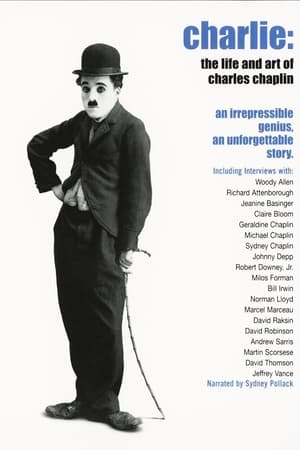
Charlie: The Life and Art of Charles Chaplin(en)
2003-05-01
Brilliant, long in-the-works story of the life and art of the world's greatest comedian and the cinema's first genius, Charlie Chaplin. Produced, written and directed by renowned film critic Richard Schickel.
67%
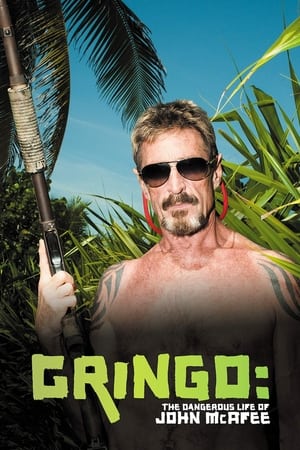
Gringo: The Dangerous Life of John McAfee(en)
2016-09-24
The strange story of John McAfee, who went from millionaire software mogul to yogi, Kurtz-like jungle recluse to potential murderer, and most recently a prospective presidential candidate for the American Libertarian Party.
73%
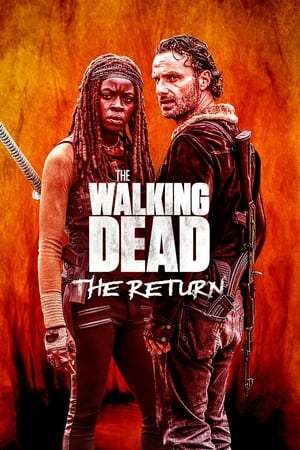
The Walking Dead: The Return(en)
2024-02-15
Stars of "The Walking Dead," Andrew Lincoln and Danai Gurira, walk down memory lane and visit iconic locations where pivotal moments between their characters, Rick and Michonne, were filmed.

71%
In the Realms of the Unreal(en)
2004-01-15
In the Realms of the Unreal is a documentary about the reclusive Chicago-based artist Henry Darger. Henry Darger was so reclusive that when he died his neighbors were surprised to find a 15,145-page manuscript along with hundreds of paintings depicting The Story of the Vivian Girls, in What is Known as the Realms of the Unreal, of the Glodeco-Angelinnian War Storm, Cased by the Child Slave Rebellion.
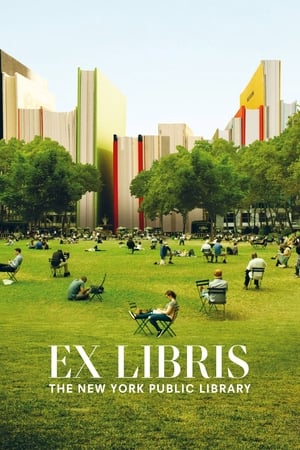
64%
Ex Libris: The New York Public Library(en)
2017-09-13
A documentary about how a dominant cultural and demographic institution both sustains their traditional activities and adapts to the digital revolution.
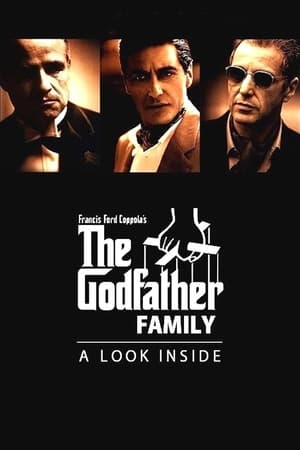
78%
The Godfather Family: A Look Inside(en)
1990-07-12
A documentary on the making of the three Godfather films, with interviews and recollections from the film makers and cast. This feature also includes the original screen tests of some of the actors for "The Godfather" film, and some candid moments on the set of "The Godfather: Part III."
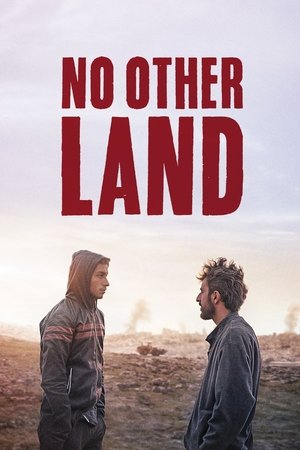
79%
No Other Land(ar)
2024-11-01
This film made by a Palestinian-Israeli collective shows the destruction of the occupied West Bank's Masafer Yatta by Israeli soldiers and the alliance which develops between the Palestinian activist Basel and Israeli journalist Yuval.
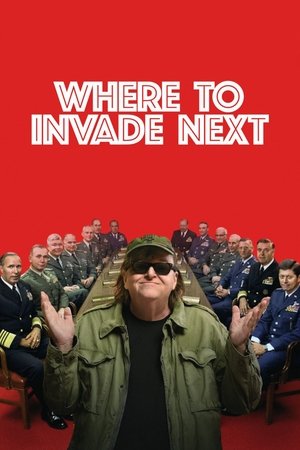
72%
Where to Invade Next(en)
2015-12-23
To understand firsthand what the United States of America can learn from other nations, Michael Moore playfully “invades” some to see what they have to offer.
Similar Movies
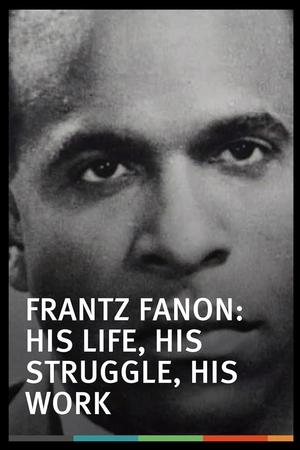
100%
Frantz Fanon: His Life, His Struggle, His Work(fr)
2001-11-30
It is the evocation of a life as brief as it is dense. An encounter with a dazzling thought, that of Frantz Fanon, a psychiatrist of West Indian origin, who will reflect on the alienation of black people. It is the evocation of a man of reflection who refuses to close his eyes, of the man of action who devoted himself body and soul to the liberation struggle of the Algerian people and who will become, through his political commitment, his fight, and his writings, one of the figures of the anti-colonialist struggle. Before being killed at the age of 36 by leukemia, on December 6, 1961. His body was buried by Chadli Bendjedid, who later became Algerian president, in Algeria, at the Chouhadas cemetery (cemetery of war martyrs ). With him, three of his works are buried: “Black Skin, White Masks”, “L’An V De La Révolution Algérien” and “The Wretched of the Earth”.
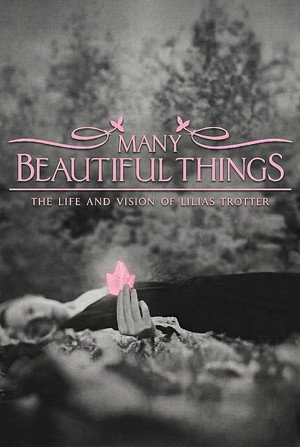
60%
Many Beautiful Things(en)
2015-10-17
In an age when women were incapable of joining the artistic dialogue, Lilias Trotter managed to win the favour of celebrated critics.
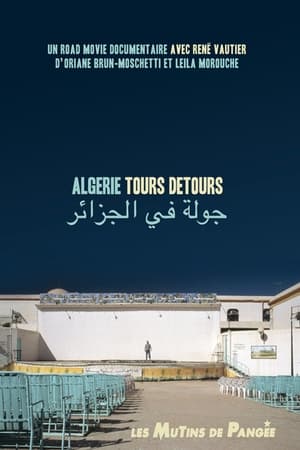
100%
Algérie Tours Détours(fr)
2007-11-11
A documentary road movie with René Vautier In the aftermath of Algeria's independence, René Vautier, a militant filmmaker, considered "the dad" of Algerian cinema, set up the cine-pops. We recreate with him the device of itinerant projections and we travel the country in ciné-bus (Algiers, Béjaïa, Tizi Ouzou, Tébessa) to hear the voices of the spectators on the political situation, youth and living conditions of men and Of women today.
70%
143 Sahara Street(fr)
2021-06-16
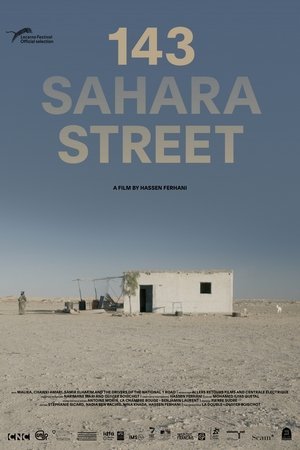
Alone in a small white house on the edge of national road 1, the Trans-Saharan road, which connects Algiers to Tamanrasset crossing the immensity of the desert, Malika, 74, one day opened her door to the director Hassen Ferhani, who came there to scout with his friend Chawki Amari, journalist at El Watan and author of the story Nationale 1 which relates his journey on this north-south axis of more than 2000 km. The Malika of Amari's novel, which Ferhani admits to having first perceived as a "literary fantasy", suddenly takes on an unsuspected human depth in this environment naturally hostile to man. She lends herself to the film project as she welcomes her clients, with an economy of gestures and words, an impression reinforced by the mystery that surrounds her and the rare elements of her biography which suggest that she is not from the region, that she left the fertile north of Algeria to settle in the desert where she lives with a dog and a cat.
100%
Algerian Refugees(fr)
1958-01-01
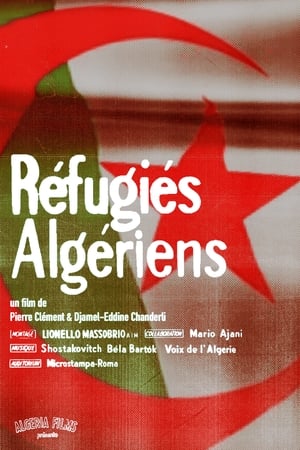
Directed by Pierre Clément and Djamel-Eddine Chanderli, produced by the FLN Information Service in 1958, this film is a rare document. Pierre Clément is considered one of the founders of Algerian cinema. In this film he shows images of Algerian refugee camps in Tunisia and their living conditions. A restored DVD version released in 2016, from the 35 mm original donated by Pierre Clément to the Contemporary International Documentation Library (BDIC).
100%
It's Bisan from Gaza and I'm Still Alive(ar)
2023-11-04
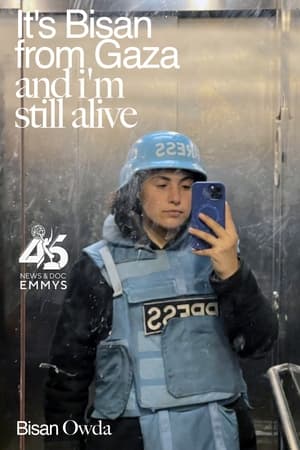
Bisan Owda, journalist and influencer collaborator of the media AJ+, is at the forefront of reporting by filming with her phone, the daily life of Palestinians to the world since October 7, 2023, the start of the war and devastation from Gaza. Owda's storytelling style and resilience have captured international attention, with his work widely covered by international media. She received an Emmy Award in 2024 for her outstanding coverage of the ongoing conflict in Gaza.
69%
The First 54 Years: An Abbreviated Manual for Military Occupation(he)
2021-04-25
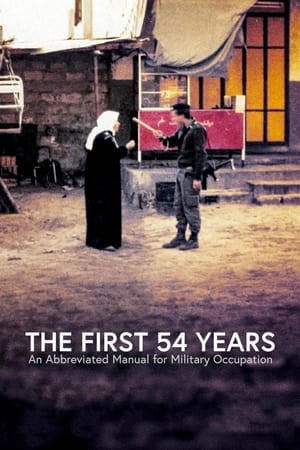
An exhaustive explanation of how the military occupation of an invaded territory occurs and its consequences, using as a paradigmatic example the recent history of Israel and the Palestinian territories, the West Bank and the Gaza Strip, from 1967, when the Six-Day War took place, to the present day; an account by filmmaker Avi Mograbi enriched by the testimonies of Israeli army veterans.
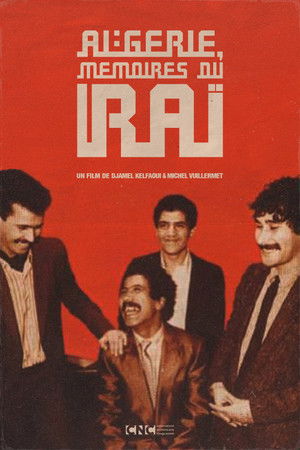
100%
Algeria, Memoirs of Raï(fr)
2001-01-02
In the 1980s, Algeria experienced a tumultuous social context which reached its peak during the riots of October 88. This wave of protest, with youth as its figurehead, echoed the texts of raï singers. Thirst for freedom, misery of life and the aspirations of youth are among the main themes of their works which will inspire an entire generation. More than music, raï celebrates the Arabic language and becomes a vector of Algerian culture, thus providing the cultural weapons of emerging Algerian nationalism With Cheb Khaled, Cheb Mami and Chaba Fadela as leaders of the movement, raï is also a way of telling and reflecting the essence of Algeria in these difficult times. While the threat weighs on artists in Algeria, their exile allows raï to be exported internationally and thus, to bring the colors of Algeria to life throughout the world.
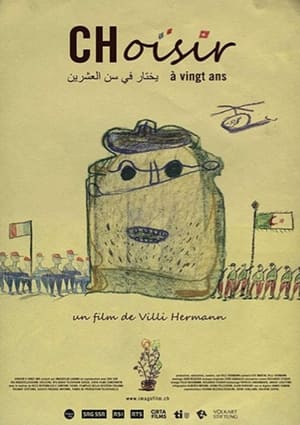
68%
CHoosing at Twenty(fr)
2017-08-24
Between 1954-1962, one hundred to three hundred young French people refused to participate in the Algerian war. These rebels, soldiers or conscripts were non-violent or anti-colonialists. Some took refuge in Switzerland where Swiss citizens came to their aid, while in France they were condemned as traitors to the country. In 1962, a few months after Independence, Villi Hermann went to a region devastated by war near the Algerian-Moroccan border, to help rebuild a school. In 2016 he returned to Algeria and reunited with his former students. He also met French refractories, now living in France or Switzerland.
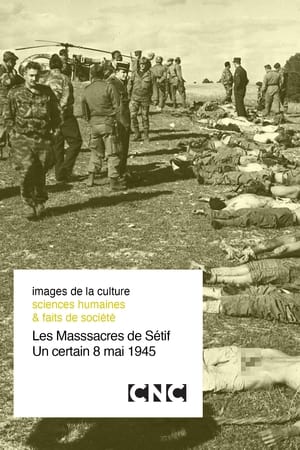
100%
The Setif Massacres, a certain May 8, 1945(fr)
1995-05-10
May 8, 1945, the day of victory over Nazism, is also a day of mourning. In Algiers, thanks to demonstrations for victory, the Algerian flag appears for the first time, thus claiming independence. But in Sétif, the standard bearer is shot dead at the head of the procession and a riot breaks out. The colonial massacre that followed would extend to all of Constantine. The commission of inquiry never delivered its conclusions and an amnesty law erased the traces of this savage repression. Fifty years later, the file is open.

100%
Manifesto of the 121(fr)
2011-01-01
On September 5, 1960, the trial of about twenty French activists from the "Jeanson Network" began, supporters in the metropolis of the action of the Algerian FLN independence activists. But after a few days, the situation was reversed and the trial transformed into a political arena, it was the government, the army, their policy, it was the entire Algerian war whose trial began. Accused, witnesses, lawyers, overflowing a stunned court, transformed the courtroom into a tribune of the opposition. The trial coincided with the publication of the "Manifesto of the 121" on the right to insubordination, signed among others by Jean Paul Sartre, Arthur Adamov, Simone de Beauvoir, André Breton, Marguerite Duras, Pierre Boulez, René Dumont, François Chatelet…
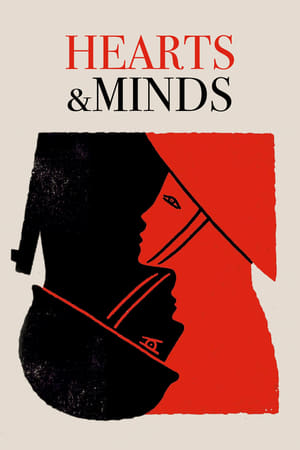
76%
Hearts and Minds(en)
1974-12-20
Many times during his presidency, Lyndon B. Johnson said that ultimate victory in the Vietnam War depended upon the U.S. military winning the "hearts and minds" of the Vietnamese people. Filmmaker Peter Davis uses Johnson's phrase in an ironic context in this anti-war documentary, filmed and released while the Vietnam War was still under way, juxtaposing interviews with military figures like U.S. Army Chief of Staff William C. Westmoreland with shocking scenes of violence and brutality.
100%
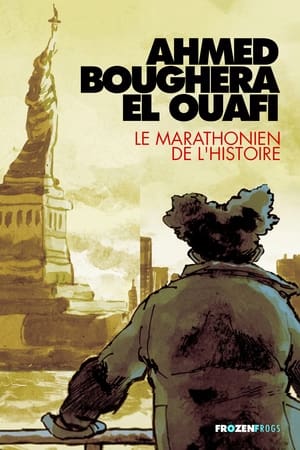
El Ouafi Boughera, The marathon runner of history(cn)
2018-11-11
On August 5, 1928, after 2 hours and 32 minutes of racing, the 71st rooster wearing the bib entered the Olympic stadium in Amsterdam. Ahmed El Ouafi Bouguéra wins the gold medal and becomes the first Olympic champion from the African continent. He achieved his feat under the tricolor flag. The start of his real marathon is underway. The history of sport extends to the history of Algeria and France. This documentary retraces the different stages of the life of this great champion, not only the history of sport but also the great story. Archival photographs and interviews mingle with the painted paintings. The series thus once again gives voice to this forgotten hero, one of the great heroes of immigration who defended France for more than a century.

0%
One, Two, Three – Viva l’Algérie !(fr)
2022-10-25
“One, Two, Three, Viva l’Algérie!” is the main theme of our film. But it is first a slogan, a link that acts in space and time: a few words scanded, inseparable from the history of Algerian football and therefore the relationship between France and Algeria. These encouragements born with the FLN team during the Revolutionary War and later repeated in the Algerian epic at the 2010 World Cup were taken out of the stadiums in 2019 to call for change.
65%
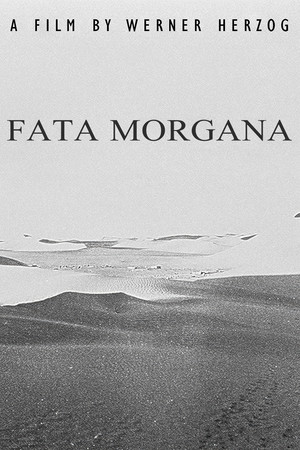
Fata Morgana(de)
1972-02-01
Shot under extreme conditions and inspired by Mayan creation theory, the film contemplates the illusion of reality and the possibility of capturing for the camera something which is not there. It is about the mirages of nature—and the nature of mirage.
100%
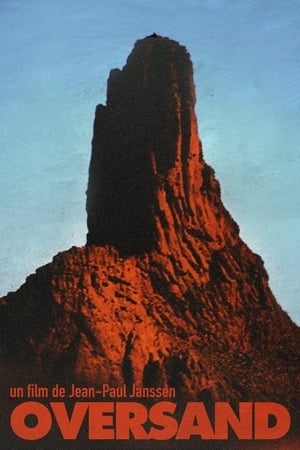
Oversand(fr)
1981-01-01
Oversand is one of the first films about free climbing, the third film in a series of three with "Overdon" and "Over-Ice". Directed by Jean-Paul Janssen, the film was shot in 35mm in Algeria, in the Sahara Desert, in the Tamanrasset region, on the walls of the majestic peaks of the Atakor massif, central sub-region of Hoggar, mountainous heart of Hoggar, a volcanic plateau of almost circular shape, whose average altitude is 2000 meters, and which culminates at Mount Tahat (2918m), the highest point in Algeria. The Atakor is distinguished by its spectacular volcanic peaks, its needles, and its rugged landscapes, resulting from the erosion of ancient volcanic chimneys, which make it the most emblematic summits of the Hoggar, such as the Assekrem, the Ilamane, or the Tizouyag, where climbers Patrick Edlinger, Patrick Bérhault, Bernard Gorgeon, Hugues Jaillet, Jacques Perrier, Stéphane Troussier and Odette Schoënleb evolve under the watchful eye of the Tuareg caravans.
40%
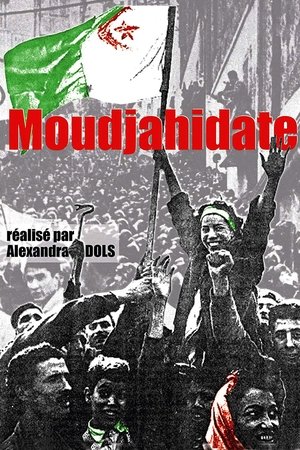
Moudjahidate(fr)
2008-11-03
100%
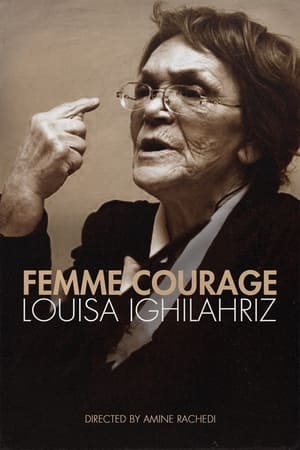
Woman of Courage - Louisa Ighilahriz(ar)
2003-01-21
The autobiographical account of the tormented life of a witness of the century: Louisa Ighilahriz, activist and leading figure in Algerian independence. A student, she joined the independence struggle at the age of 20, joining the ranks of the FLN on the eve of the Battle of Algiers in late 1956 under the name Lila. She took part in the high school students' strike, then fled into the maquis when she was actively sought after. She was part of the French FLN support network of "suitcase carriers" during the Battle of Algiers. Seriously wounded alongside her network leader, Saïd Bakel, during an ambush in 1957, hospitalized and then imprisoned, she suffered numerous tortures in French prisons. She will be saved from certain death by an anonymous person, she will seek, for forty years, to find him just to show him her gratitude... Emblematic of the painful Franco-Algerian history, Louisa's story is poignant and imbued with humanism.