Loading Page

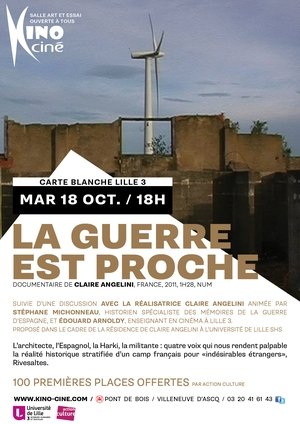
War is Looming(2011)
Status: Released
Date: 2011-04-01
0%
0 Votes
Time: 1h 20m
Overview:
This film takes a look at the French concentration camp at Rivesaltes. It does not deal with the site of memory but rather memories of the site through the concrete and physical data visible on the ground perceived as a holed-out space mined by disappearance, in particular the buildings, which subsist as ruins. This film is less preoccupied with drawing lessons from history than fuelling the present with a history that, like a blinding mirror, is of the utmost concern.
Languages: French.
Countries:
Movie: War is Looming
Top 4 Billed Cast
HomePage
Overview
This film takes a look at the French concentration camp at Rivesaltes. It does not deal with the site of memory but rather memories of the site through the concrete and physical data visible on the ground perceived as a holed-out space mined by disappearance, in particular the buildings, which subsist as ruins. This film is less preoccupied with drawing lessons from history than fuelling the present with a history that, like a blinding mirror, is of the utmost concern.
Release Date
2011-04-01
Average
0
Rating:
0.0 startsTagline
Genres
Languages:
FrançaisKeywords
Recommendations Movies

76%
Night Will Fall(en)
2014-06-07
When Allied forces liberated the Nazi concentration camps in 1944-45, their terrible discoveries were recorded by army and newsreel cameramen, revealing for the first time the full horror of what had happened. Making use of British, Soviet and American footage, the Ministry of Information’s Sidney Bernstein (later founder of Granada Television) aimed to create a documentary that would provide lasting, undeniable evidence of the Nazis’ unspeakable crimes. He commissioned a wealth of British talent, including editor Stewart McAllister, writer and future cabinet minister Richard Crossman – and, as treatment advisor, his friend Alfred Hitchcock. Yet, despite initial support from the British and US Governments, the film was shelved, and only now, 70 years on, has it been restored and completed by Imperial War Museums under its original title "German Concentration Camps Factual Survey".
69%
Wormwood(en)
2017-10-22
In this genre-bending tale, Errol Morris explores the mysterious death of a U.S. scientist entangled in a secret Cold War program known as MK-Ultra.
70%
Drew: The Man Behind the Poster(en)
2013-07-19
A documentary on legendary movie-poster artist Drew Struzan.
83%
Night and Fog(fr)
1956-01-29
Filmmaker Alain Resnais documents the atrocities behind the walls of Hitler's concentration camps.
77%
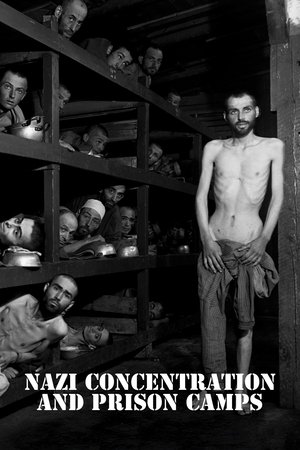
Nazi Concentration Camps(en)
1945-11-29
Produced and presented as evidence at the Nuremberg war crimes trial of Hermann Göring and twenty other Nazi leaders, this film consists primarily of dead and surviving prisoners and of facilities used to kill and torture during the World War II.
65%
Heart of a Dog(en)
2015-10-21
Lyrical and powerfully personal essay film that reflects on the deaths of her husband Lou Reed, her mother, her beloved dog, and such diverse subjects as family memories, surveillance, and Buddhist teachings.

71%
The Class of ‘92(en)
2013-12-01
A detailing of the rise to prominence and global sporting superstardom of six supremely talented young Manchester United football players (David Beckham, Nicky Butt, Ryan Giggs, Paul Scholes, Phil and Gary Neville). The film covers the period 1992-1999, culminating in Manchester United's European Cup triumph.
67%
Birth of the Living Dead(en)
2013-10-18
A behind the scenes look into George Romero's groundbreaking horror classic Night of the Living Dead.

80%
My Mom Jayne(en)
2025-06-20
Through deeply personal interviews with her siblings and an examination of the photographs, letters, and belongings left behind, Mariska assembles a new portrait of her mother Jayne Mansfield, an extraordinary and complex woman.

71%
In the Realms of the Unreal(en)
2004-01-15
In the Realms of the Unreal is a documentary about the reclusive Chicago-based artist Henry Darger. Henry Darger was so reclusive that when he died his neighbors were surprised to find a 15,145-page manuscript along with hundreds of paintings depicting The Story of the Vivian Girls, in What is Known as the Realms of the Unreal, of the Glodeco-Angelinnian War Storm, Cased by the Child Slave Rebellion.
66%
Champs(en)
2015-03-13
A documentary about the sport of boxing, as seen through the eyes of champions Mike Tyson, Evander Holyfield and Bernard Hopkins.
75%
Above Majestic(en)
2018-10-30
A look at the origins, history and conspiracies behind the "Majestic 12", a clandestine group of military and corporate figureheads charged with reverse-engineering extraterrestrial technology.

77%
Woman(fr)
2020-03-01
The film is based on interviews with 2,000 women from 50 countries, and covers the status of women all over the world. The topics covered include forced marriages, sexual assault, female genital mutilation, acid attacks, motherhood, sexuality, menstruation, education and the professional success of women.
70%
News from Home(fr)
1977-05-20
Impersonal and beautiful images of Akerman's life in New York are combined with letters from her loving but manipulative mother, read by Akerman herself.
74%
More Brains! A Return to the Living Dead(en)
2011-10-18
Retrospective documentary about the making of the horror cult classic "The Return of the Living Dead."

67%
The U.S. vs. John Lennon(en)
2006-09-15
A documentary on the life of John Lennon, with a focus on the time in his life when he transformed from a musician into an antiwar activist.

65%
Downloaded(en)
2013-06-20
A documentary that explores the downloading revolution; the kids that created it, the bands and the businesses that were affected by it, and its impact on the world at large.
75%
Listen to Me Marlon(en)
2015-07-29
With exclusive access to his extraordinary unseen and unheard personal archive including hundreds of hours of audio recorded over the course of his life, this is the definitive Marlon Brando cinema documentary. Charting his exceptional career as an actor and his extraordinary life away from the stage and screen with Brando himself as your guide, the film will fully explore the complexities of the man by telling the story uniquely from Marlon's perspective, entirely in his own voice. No talking heads, no interviewees, just Brando on Brando and life.
71%
End Game(en)
2018-01-21
Filmed and edited in intimate vérité style, this movie follows visionary medical practitioners who are working on the cutting edge of life and death and are dedicated to changing our thinking about both.
Similar Movies
73%
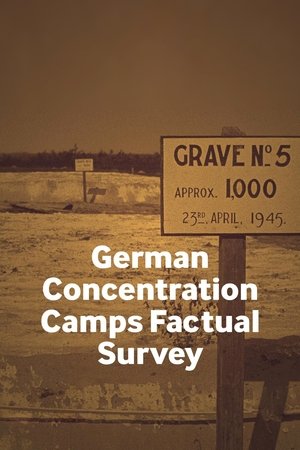
German Concentration Camps Factual Survey(en)
2017-01-06
On the 29th September 1945, the incomplete rough cut of a brilliant documentary about concentration camps was viewed at the MOI in London. For five months, Sidney Bernstein had led a small team – which included Stewart McAllister, Richard Crossman and Alfred Hitchcock – to complete the film from hours of shocking footage. Unfortunately, this ambitious Allied project to create a feature-length visual report that would damn the Nazi regime and shame the German people into acceptance of Allied occupation had missed its moment. Even in its incomplete form (available since 1984) the film was immensely powerful, generating an awed hush among audiences. But now, complete to six reels, this faithfully restored and definitive version produced by IWM, is being compared with Alain Resnais’ Night and Fog (1955).
68%
Reunion(fr)
1946-01-02
Live footage from concentration camps after the liberation, and the complex transport and lodging of masses of prisoners of war and other deported people back to their home countries, at the end of World War II. A 45min 35mm print also exists (shown at Cinémathèque française in 2023).
75%
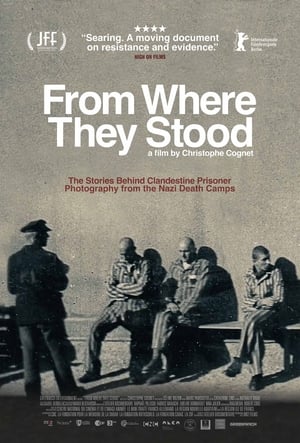
From Where They Stood(fr)
2023-03-15
A handful of prisoners in WWII camps risked their lives to take clandestine photographs and document the hell the Nazis were hiding from the world. In the vestiges of the camps, director Christophe Cognet retraces the footsteps of these courageous men and women in a quest to unearth the circumstances and the stories behind their photographs, composing as such an archeology of images as acts of defiance.
100%
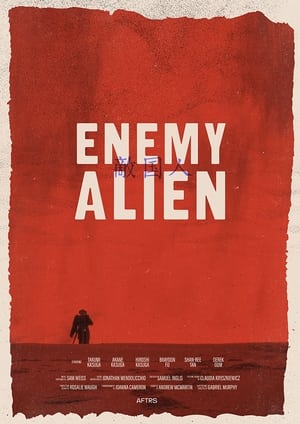
Enemy Alien(en)
2022-10-14
A poetic retelling of the experiences of Joseph Murakami, a fourteen-year-old boy from Darwin, who is summarily rounded up and interned by his government on the basis of his ethnicity, leaving wounds unhealed to this day.
80%
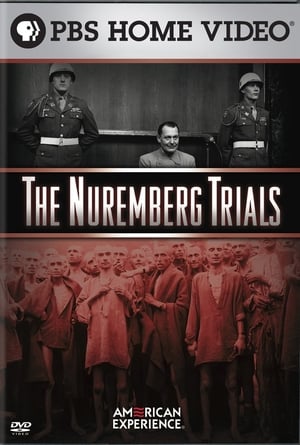
The Nuremberg Trials(en)
2006-01-30
One journalist described it as a chance "to see justice catch up with evil." On November 20, 1945, the twenty-two surviving representatives of the Nazi elite stood before an international military tribunal at the Palace of Justice in Nuremberg, Germany; they were charged with the systematic murder of millions of people. The ensuing trial pitted U.S. chief prosecutor and Supreme Court judge Robert Jackson against Hermann Göring, the former head of the Nazi air force, whom Adolf Hitler had once named to be his successor. Jackson hoped that the trial would make a statement that crimes against humanity would never again go unpunished. Proving the guilt of the defendants, however, was more difficult than Jackson anticipated. This American Experience production draws upon rare archival material and eyewitness accounts to recreate the dramatic tribunal that defines trial procedure for state criminals to this day.

66%
Adolf Island(en)
2019-06-23
Caroline Sturdy Colls, a world leader in the forensic investigation of Nazi crime scenes, is chasing clues to an unsolved case: a concentration camp that existed on the British island of Alderney. Witnesses and survivors claimed that thousands died there, but only 389 bodies have ever been found. Under heavy restrictions imposed by the local government, which may not want its buried secrets revealed, Colls must uncover the truth using revolutionary techniques and technologies.

75%
D-Day to Berlin: A Newsnight Special(en)
1985-05-07
George Stevens's remarkable film is acclaimed by historians as the most important colour footage taken during the war. Milestones covered include the liberation of Paris, the link-up between the Russian and American armies on the River Elbe and the Allied capture of the Dachau concentration camp.

70%
The Liberation of Auschwitz(de)
1986-08-13
This chilling, vitally important documentary was produced to mark the 40th anniversary of the liberation of Auschwitz Concentration Camp. The film contains unedited, previously unavailable film footage of Auschwitz shot by the Soviet military forces between January 27 and February 28, 1945 and includes an interview with Alexander Voronsov, the cameraman who shot the footage. The horrifying images include: survivors; camp visit by Soviet investigation commission; criminal experiments; forced laborers; evacuation of ill and weak prisoners with the aid of Russian and Polish volunteers; aerial photos of the IG Farben Works in Monowitz; and pictures of local people cleaning up the camp under Soviet supervision. - Written by National Center for Jewish Film
100%
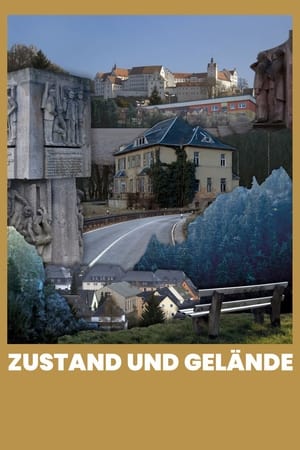
Status and Terrain(de)
2019-07-13
Exploring the mechanisms of the Nazi seizure of power and focusing on forgotten sites in Saxony and Thuringia, the film investigates early "wild" concentration camps established after 1933 for the suppression of political opponents.
50%
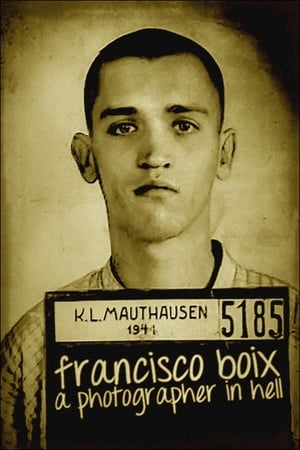
Francisco Boix: A Photographer in Hell(es)
2000-01-01
In 1939, just finished the Spanish Civil War, Spanish republican photographer Francesc Boix escapes from Spain; but is captured by the Nazis in 1940 and imprisoned in the Mauthausen concentration camp, in Austria, a year later. There, he works as a prisoner in the SS Photographic Service, hiding, between 1943 and 1945, around 20,000 negatives that later will be presented as evidence during several trials conducted against Nazi war criminals after World War II.
75%
Nazi Death Camp: The Great Escape(en)
2014-05-12
The secret Nazi death camp at Sobibor was created solely for the mass extermination of Jews. But on the 14th October 1943, in one of the biggest and most successful prison revolts of WWII, the inmates fought back.
69%
The Pearl Button(es)
2015-10-15
The ocean contains the history of all humanity. The sea holds all the voices of the earth and those that come from outer space. Water receives impetus from the stars and transmits it to living creatures. Water, the longest border in Chile, also holds the secret of two mysterious buttons which were found on its ocean floor. Chile, with its 2,670 miles of coastline and the largest archipelago in the world, presents a supernatural landscape. In it are volcanoes, mountains and glaciers. In it are the voices of the Patagonian Indigenous people, the first English sailors and also those of its political prisoners. Some say that water has memory. This film shows that it also has a voice.
78%
Every Face Has a Name(sv)
2015-02-20
Recalls the day when Holocaust survivors took their first steps into freedom, unaware of their future. Every Face Has a Name puts a name on those nameless faces and lets them recount their feelings of that day, the 28th of April, 1945.
45%
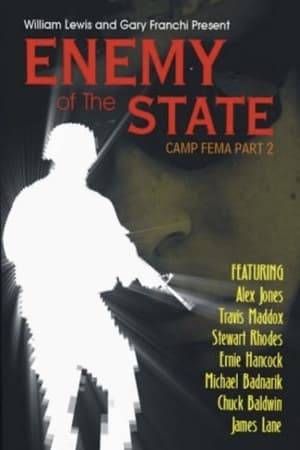
Enemy of The State: Camp FEMA Part 2(en)
2010-11-02
Panics, orchestrated crises, media hype and propaganda have been used in the name of “protecting the people” for generations. CNN, the Southern Poverty Law Center and other media outlets air special reports and name call anyone who questions the government as conspiracy theorists in an effort to suppress information. Yet, with the de-classification of decades-old documents, it can be found that many of these “conspiracy theories” are not so theoretical after all. This film takes a look at the government and media manipulation of an unwitting public, and plans that have been laid out through legislation, Executive Orders and Presidential Directives that pave the way for the elimination of many, if not all, of our most basic rights. Enemy of The State: Camp FEMA Part 2 thrashes out the mission of a police state and the implementation of martial law.
20%
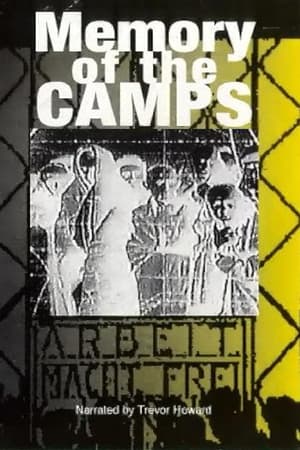
Memory of the Camps(en)
1985-05-07
In 1945, Allied troops invaded Germany and liberated Nazi death camps. They found unspeakable horrors which still haunt the world’s conscience. A film was made by British and American film crews who were with the troops liberating the camps. It was directed in part by Alfred Hitchcock and was broadcast for the first time in its entirety on PBS FRONTLINE in 1985.
80%
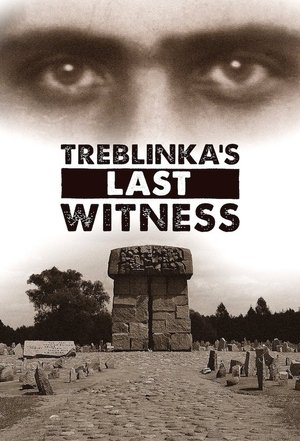
Treblinka's Last Witness(en)
2012-08-15
Samuel Willenberg and Kalman Taigman, the last two survivors of the Nazi extermination camp Treblinka, recount the horrors they experienced during the war and talk about their lives after their escape in a prisoner uprising in 1943. Willenberg would go on to become a hero of the 1944 Warsaw uprising while Taigman would be called as a witness during the infamous trial of Adolf Eichmann.