Loading Page
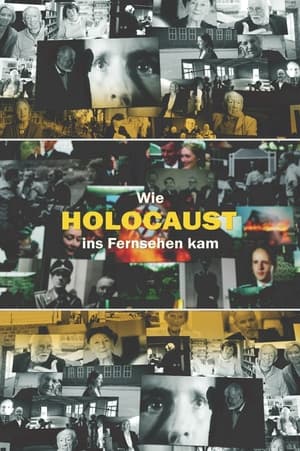
How Holocaust came to Television
Top 10 Billed Cast
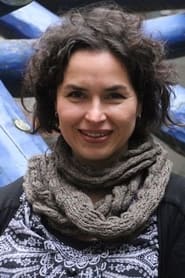
Nadja Schulz-Berlinghoff
Narrator

Rosemary Harris
Self

Blanche Baker
Self
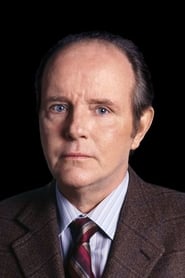
Michael Moriarty
Self
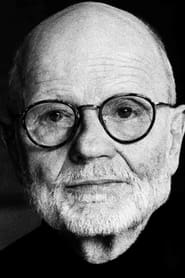
Günter Rohrbach
Self
Loading Trailer Videos...
HomePage
Overview
At the beginning of 1979, after more than 30 years of collective repression, a dramatized and emotional US television miniseries ensured that the German population was suddenly reminded of the terrible Nazi crimes against the Jews. What is now expressed with the hitherto unknown word Holocaust, hits many millions of people in the heart. The unexpected echo and the audience reactions were fierce. Even before the TV broadcast neo-Nazis blasted in vain transmitting towers in Germany to prevent this. From the creation and the shooting over the broadcast to the tremendous reactions, documentary filmmaker Alice Agneskirchner tells the story of this emotional television event, which led to a paradigm shift in the perception of German Nazi crimes.
Release Date
2019-01-14
Average
0
Rating:
0.0 startsTagline
Genres
Languages:
DeutschEnglishKeywords
Similar Movies
57%
Golda Maria(fr)
2022-02-09
In 1994, film producer Patrick Sobelman recorded the testimony of his grandmother Golda Maria Tondovska, a Polish Jewish survivor of the Shoah.
45%
Human Lampshade: A Holocaust Mystery(en)
2012-09-29
This story follows one man's quest to uncover the origins and reveal the mysteries of a possible Holocaust artifact some historians now say never existed: lampshades made of human skin. When the flood waters of Hurricane Katrina receded, they left behind a wrecked New Orleans and a strange looking lamp that an illicit dealer claimed was 'made from the skin of Jews.'
0%
The 43 Group: The Unfinished War(en)
2000-09-02
The 43 Group was an English anti-fascist group set up by Jewish ex-servicemen in the immediate wake of World War II when, on their return to London, they encountered British fascist organisations such as Jeffrey Hamm’s “British League of Ex-Servicemen” and later Oswald Mosley’s reformed fascist party, the Union Movement.
0%
Elie Wiesel Goes Home(hu)
1997-02-12
A documentary chronicling the adolescent years of Elie Wiesel and the history of his sufferings. Eliezer was fifteen when Fascism brutally altered his life forever. Fifty years later, he returns to Sighetu Marmatiei, the town where he was born, to walk the painful road of remembrance - but is it possible to speak of the unspeakable? Or does Auschwitz lie beyond the capacity of any human language - the place where words and stories run out?
58%
The Dead Nation(ro)
2017-08-25
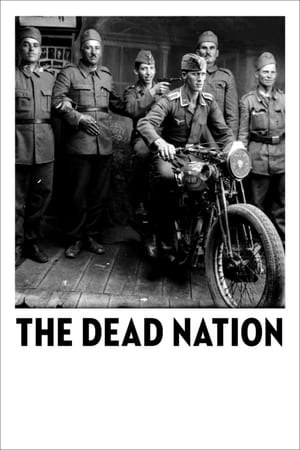
A documentary-essay which shows Costică Axinte's stunning collection of pictures depicting a Romanian small town in the thirties and forties. The narration, composed mostly from excerpts taken from the diary of a Jewish doctor from the same era, tells the rising of the antisemitism and eventually a harrowing depiction of the Romanian Holocaust.
68%
Warsaw: A City Divided(pl)
2019-05-11
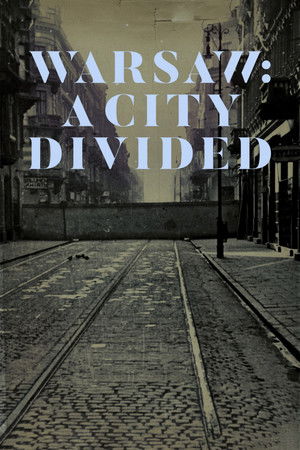
The history of the Warsaw Ghetto (1940-43) as seen from both sides of the wall, its legacy and its memory: new light on a tragic era of division, destruction and mass murder thanks to the testimony of survivors and the discovery of a ten-minute film shot by Polish amateur filmmaker Alfons Ziółkowski in 1941.
0%
Chaja & Mimi(de)
2013-06-22
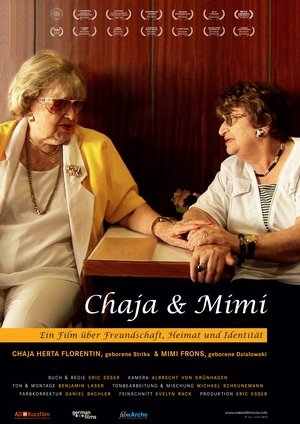
Chaja Florentin and Mimi Frons have been best friends for 83 years. Born and raised in Berlin, they had to escape from the Nazis to Palestine with their families in 1934. They talk about their complicated relationship with Berlin in a Tel Aviv café where they meet everyday. A film about friendship, homeland and identity.
63%
After Auschwitz(en)
2017-03-25
For six female Holocaust survivors, liberation from the camps marked the beginning of a lifelong struggle.
73%
Hitler & Stalin: Portrait of Hostility(de)
2009-04-08
A double portrait of two dictators who were thousands of miles apart but were constantly fixated on each other.
80%
The Death Train(fr)
2019-11-23
In Iasi, Romania, from June 28 to July 6, 1941, nearly 15 000 Jews were murdered in the course of a horrifying pogrom. At the time, the programmed extermination of European Jews had not yet began. After the war, the successive communist governments did all they could to ensure the Iasi pogrom would be forgotten. It was not until November of 2004 that Romania recognized for the first time its direct responsibility in the pogrom. All that remains of this massacre are about a hundred photographs taken as souvenirs by german and romanian soldiers, and a few remaining survivors.
0%
Stalin: Man of Steel(en)
2003-01-01
Emmy Awards nominee for "Outstanding Individual Achievement in a Craft: Research: Multi-faceted portrait of the man who succeeded Lenin as the head of the Soviet Union. With a captivating blend of period documents, newly-released information, newsreel and archival footage and interviews with experts, the program examines his rise to power, deconstructs the cult of personality that helped him maintain an iron grip over his vast empire, and analyzes the policies he introduced, including the deadly expansion of the notorious gulags where he banished so many of his countrymen to certain death.
75%
Nazi Death Camp: The Great Escape(en)
2014-05-12
The secret Nazi death camp at Sobibor was created solely for the mass extermination of Jews. But on the 14th October 1943, in one of the biggest and most successful prison revolts of WWII, the inmates fought back.
63%
How the Holocaust Began(en)
2023-01-23
Historian James Bulgin reveals the origins of the Holocaust in the German invasion of the Soviet Union, exploring the mass murder, collaboration and experimentation that led to the Final Solution.
42%
Naked Rose(en)
2013-04-24
Among the millions of victims of the Nazi madness during the Second World War, Pierre Seel was charged with homosexuality and imprisoned in the Schirmeck concentration camp. He survived this terrifying experience of torture and humiliation, and after the war he married, had three children, and tried to live a normal life. In 1982, however, he came to terms with his past and his true nature and decided to publicly reveal what he and thousands of other homosexuals branded with the Pink Triangle had undergone during the Nazi regime. Il Rosa Nudo (Naked Rose), inspired by the true story of Pierre Seel, depicts in a theatrical and evocative way the Homocaust, focusing on the scientific theories of SS Physician Carl Peter Værnet for the treatment of homosexuality, which paved the way for the Nazi persecution of gay men.
66%
What Our Fathers Did: A Nazi Legacy(en)
2015-04-19
Can you imagine what it means to grow up as the child of a mass murderer? Hans Frank and Otto von Wächter were indicted as war criminals for their roles in WWII. Nazi Governors and consultants to Hitler himself, the two are collectively responsible for thousands of deaths. But what stood out to Philippe Sands were the impressions they left on their sons. While researching the Nuremberg trials, the human rights lawyer came across two men who re-focused his studies: Niklas Frank and Horst von Wächter. The men hold polar opposite views on the men who raised them.
0%
The Terezin Gravediggers(cs)
2020-06-09
0%
Autoritratto Auschwitz. L'occhio è per così dire l'evoluzione biologica di una lagrima(it)
2007-09-04
In the film we find some scrap of slow motion they see a Monica Vitti trying to cry, a meeting between Antonioni and Grifi, a film shot in the concentration camp of Auschwitz with a survivor who recounts those awful moments, a glimpse of Palestine today, Grifi's reflections on the prison.
74%
Vita Activa: The Spirit of Hannah Arendt(en)
2015-06-30
The life and work of German political philosopher of Jewish descent Hannah Arendt (1906-75), who caused a stir when she coined a subversive concept, the banality of evil, in her 1963 book on the trial of Nazi war criminal Adolph Eichmann (1906-62), held in Israel in 1961, which she covered for the New Yorker magazine.
58%
Absent(ro)
2015-11-10
For over a hundred years, Mărculești was a vibrant Jewish agricultural and mercantile community in Bessarabia (now present-day Moldova). In July 1941, the village was the site of an unimaginable atrocity. Seventy-three years later, few speak honestly or completely about what happened. ABSENT is a cinematic portrait of the ghost village of Mărculești, its current inhabitants, and their very complex relationship to their own history. Filmed entirely on location, the film documents one of Europe's poorest, most remote, and least-visited places.
75%
Witnesses(pl)
1987-07-01
On July 4th, 1946, the crowd in Kielce, Poland, slaughtered forty-two Jews and wounded many others. Forty years later, in 1987, Marcel Łoziński visited those places and met some witnesses of the carnage.