
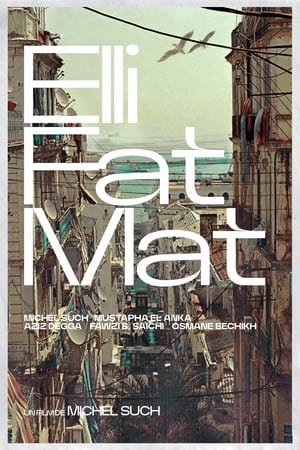

Movie: Elli Fat Mat
Top 5 Billed Cast





HomePage
Overview
27 years after 1962, Antoine returns to Algiers...
Release Date
1989-11-15
Average
10
Rating:
5.0 startsTagline
Genres
Languages:
العربيةFrançaisKeywords
Recommendations Movies
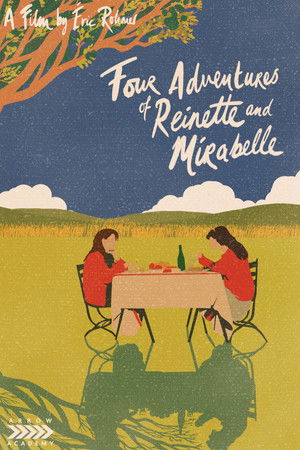
Four Adventures of Reinette and Mirabelle(fr)
Two young girls meet, Reinette from the countryside and Mirabelle from Paris, and decide to take a flat together in Paris where they attend University. Four successive stories about their daily lives illustrate the very different views, characters and relation to the world of these two friends.
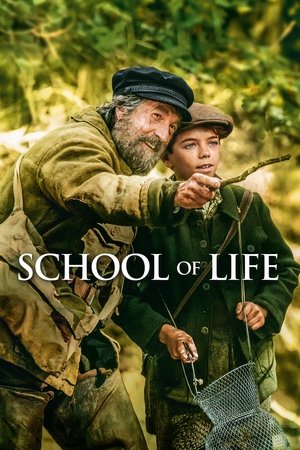
School of Life(fr)
Paris 1930. Paul has only ever had one and the same horizon: the high walls of the orphanage, an austere building in the Parisian working class suburbs. Entrusted to a joyful country woman, Célestine, and her husband, Borel, the rather stiff gamekeeper of a vast estate in Sologne, the city child, recalcitrant and stubborn, arrives in a mysterious and disturbing world, that of a sovereign and wild region. The huge forest, misty ponds, heaths, and fields all belong to the Count de la Fresnaye, an elderly taciturn man who lives alone in his manor.
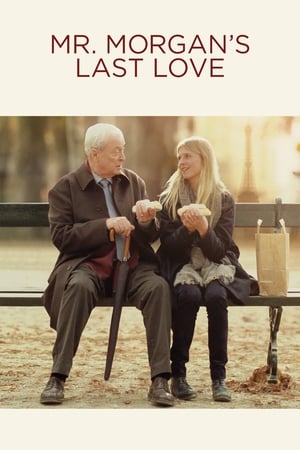
Mr. Morgan's Last Love(en)
A widowed professor living in Paris develops a special relationship with a younger French woman.

Alice and the Mayor(fr)
The mayor of Lyon, Paul Théraneau, is in a delicate position. After 30 years in politics, he is running out of ideas and is faced with a feeling of existential emptiness. To overcome this, Paul hires a young and brilliant philosopher, Alice Heimann. Then follows a dialogue between two diametrically opposed personalities who will turn their certainties upside down.

Skies of Lebanon(fr)
In the fifties, young Alice leaves her natal Swiss mountains for the sunny and vibrant shores of Beirut. She falls madly in love with Joseph, a quirky astrophysicist intent on sending the first Lebanese national into space. Alice quickly fits in among his relatives, but after years of bliss, the civil war threatens their Garden of Eden.
Case 137(fr)
Stéphanie, a police officer working for Internal Affairs, is assigned to a case involving a young man severely wounded during a tense and chaotic demonstration in Paris. While she finds no evidence of illegitimate police violence, the case takes a personal turn when she discovers the victim is from her hometown.

My Old Lady(en)
Mathias Gold is a down-on-his-luck New Yorker who inherits a Parisian apartment from his estranged father. But when he arrives in France to sell the vast domicile, he's shocked to discover a live-in tenant who is not prepared to budge. His apartment is a viager—an ancient French real estate system with complex rules pertaining to its resale—and the feisty Englishwoman Mathilde Girard, who has lived in the apartment with her daughter Chloé for many years, can by contract collect monthly payments from Mathias until her death.
My Own Love Song(en)
A wheelchair-bound singer and her best friend embark on a roadtrip to Memphis.

The President's Wife(fr)
When she arrived at the Elysée Palace, Bernadette Chirac expected to finally get the place she deserved, she who had always worked in the shadow of her husband to make him president. Put aside because she was considered too old-fashioned, Bernadette decided to take her revenge by becoming a major media figure.

Bye Bye Morons(fr)
When 43-year-old hairdresser Suze Trappet finds out that she's seriously ill, she decides to go looking for a child she was forced to abandon when she was only 15. On her madcap bureaucratic quest she crosses paths with JB, a 50-year-old man in the middle of a burnout, and Mr. Blin, a blind archivist prone to overenthusiasm. The unlikely trio set off on a hilarious and poignant helterskelter journey across the city in search of Suze's long-lost child.
What the Day Owes the Night(fr)
Algeria, the 1930s. Younes is nine years old when he is put in his uncle's care in Oran. Rebaptized Jonas, he grows up among the Rio Salado youths, with whom he becomes friends. Emilie is one of the gang; everyone is in love with her. A great love story develops between Jonas and Emilie, which is soon unsettled by the conflicts troubling the country.

Chocolat(fr)
Chocolat the clown, the first black stage performer in France, goes from anonymity to fame after forming an unprecedented duo with fellow performer Footit in the very popular in Belle Epoque Paris. But easy money, gambling, and discrimination take their toll on their friendship and Chocolat's career.

Arab Blues(fr)
Selma, a psychoanalyst, deals with a cast of colorful new patients after returning home to Tunisia to open a practice.

On Tour(fr)
After leaving France in search of a better life in America, a television producer returns with a group of burlesque dancers to take the Paris club scene by storm.

Meet the Leroys(fr)
A man takes his wife and their teenage children on a road trip down memory lane while facing divorce.
The Other Sister(en)
A mentally challenged girl proves herself to be every bit as capable as her "perfect" sister when she moves into an apartment and begins going to college.

SubUrbia(en)
A group of suburban teenagers try to support each other through the difficult task of becoming adults.

Quartet(en)
Cissy, Reggie, and Wilf are in a home for retired musicians. Every year, there is a concert to celebrate Composer Giuseppe Verdi's birthday and they take part. Jean, who used to be married to Reggie, arrives at the home and disrupts their equilibrium. She still acts like a diva, but she refuses to sing. Still, the show must go on, and it does.

Peace, Love & Misunderstanding(en)
A conservative lawyer named Diane takes her two teenage children Jake and Zoe to meet their estranged, hippie grandmother in Woodstock after her husband asks for a divorce.

You Will Meet a Tall Dark Stranger(en)
Two married couples find only trouble and heartache as their complicated lives unfold. After 40 years of marriage, Alfie leaves his wife to pursue what he thinks is happiness with a call girl. His wife, Helena, reeling from abandonment, decides to follow the advice of a psychic. Sally, the daughter of Alfie and Helena, is unhappy in her marriage and develops a crush on her boss, while her husband, Roy, falls for a woman engaged to be married.
Similar Movies
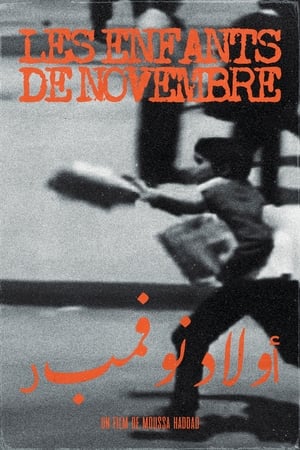
Les Enfants de Novembre(ar)
In the streets of the Casbah of Algiers, an FLN fighter pursued by the colonial police hands over confidential documents to Mourad, an Algerian child shouting newspapers who must at all costs pass them on to the resistance. But the police are on their trail and will do anything to get them back.
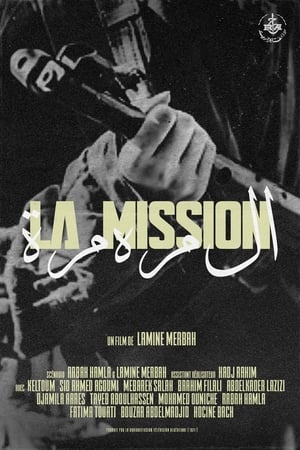
La Mission(ar)
An Algerian peasant (fellah), crushed by the soldiers of the French colonial army, decides to resist. His young wife finds herself, despite herself, also enlisted in the Algerian resistance to flee the atrocities of harsh colonial persecution.

Children of the Casbah(ar)
In a house in the heart of the Casbah of Algiers, a family is torn apart by the weight of war. Three divided brothers, caught up in the contradictions of a country in struggle, gradually unite around a single cause: the liberation of Algeria. Ibna El Casbah is a tense, emotionally-charged behind-closed-doors story that captures the moment when intimacy becomes history.
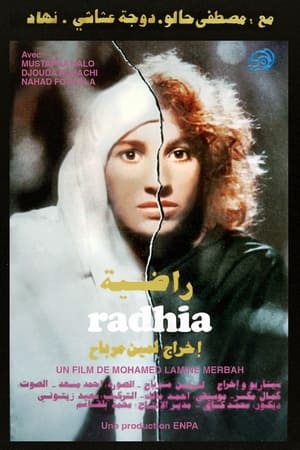
Radhia(ar)
The story of a family divided ideologically and politically in Algeria in the 1990s, under the helpless gaze of the mother, played by the brilliant Doudja Achachi, the bearer of centuries-old traditions.
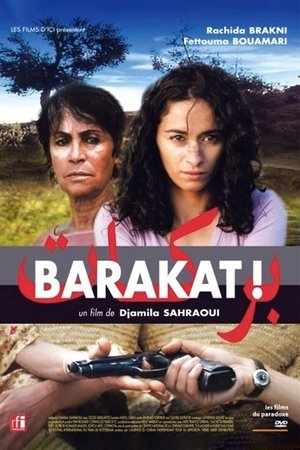
Enough!(ar)
Set amidst the civil war of Algeria in the 1990s, Enough! is the story of two women. Emel is a Westerner whose husband, a journalist, is missing - perhaps kidnapped or even killed for articles he's written.
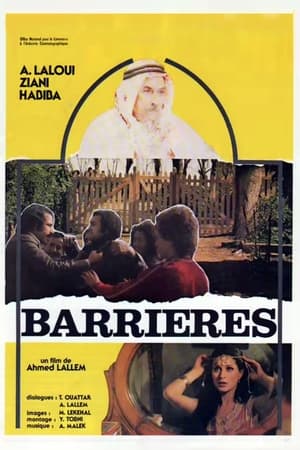
Barrières(ar)
Tahar, son of a wealthy family, is trying to preserve his privileged status despite the social changes brought about by the revolution. Tinted with historical symbolism, the film tells of the disaggregation of a feudal family when the father died.

Lumières(ar)
Long quest for a director specializing in commissioned films, who after a depression rediscovers his loved ones, his Casbah district, himself. Taken in hand, for a while, by his Islamist neighbor, it is above all the meeting with an old projectionist giving him a censored history of cinema and Algeria, which helps him to change, and to accept his own fantasies, embodied by Marilyn Monroe and the Andalusian.
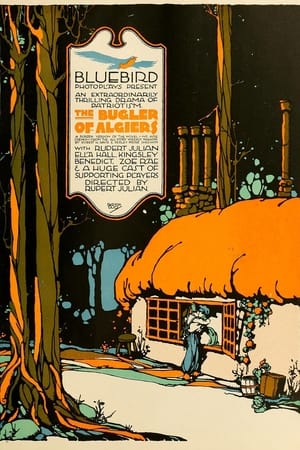
The Bugler of Algiers(en)
Gabrielle Picard (Elda Hall) and Pierre Dupont (Rupert Julian) are lovers in a small French village in the early 1870s; Gabrielle's brother Anatole (Kingsley Benedict) is Pierre's best friend. The two young men are called to service by their country and go to Algiers. Anatole becomes the bugler and one day when he is commanded to sound the retreat, he sounds for the troops to charge instead. Anatole becomes a hero because of his action, but when the two men make their victorious return home, they find the Picard home ransacked and Gabrielle gone.
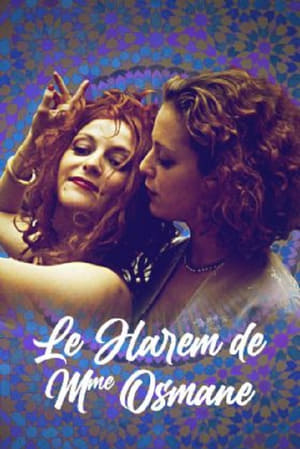
The Harem of Madame Osmane(fr)
In Algiers in 1993, while the civil war is starting, Mrs Osmane's tenants have to endure her bad temper. Her husband left her and the fear to lose her respectability haunt her. The former member of the Resistance during the Independence War persists in controlling the slightest moves of the households rather than struggle against her own frustrations. Learning her daughter is in love, the possibility of finding herself alone will push her to the limit: The symbolical Mrs Osmane "harem" is about to collapse.
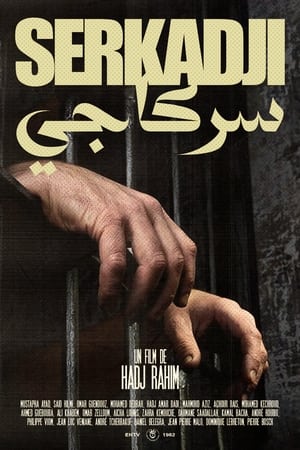
Serkadji(ar)
In 1982, Hadj Rahim directed "Serkadji", a fiction film about the men's quarters of the Barberousse military prison in Algiers, where hundreds of FLN fighters were incarcerated and executed during the war of independence. Algeria between 1954 and 1962.
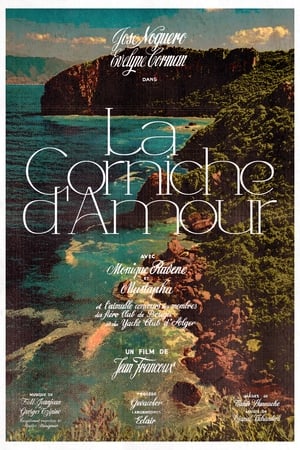
La Corniche d'Amour(fr)
Two rich tourists, a photographer and a painter, meet during a walk in Kabylia. Their wanderings are an opportunity to highlight the many tourist and picturesque places on the Algerian coast. This film commissioned by the Defense Communication and Audiovisual Production Establishment (ECPAD), attempts to sell a tourist destination when Algeria was in flames with the outbreak of the Algerian national liberation war. Filmed with the colonial lens of the time, the natives are only one element of a picturesque setting, and the final kiss between a French woman and an Arab man is an attempt to demonstrate a pacified country. Despite everything, the film constitutes a precious archive for Béjaïa, which is the subject for the first time of a film which immortalizes a moment in its history, and to introduce the work of Tahar Hannache, actor, cinematographer and director, one of the pioneers of Algerian cinema.
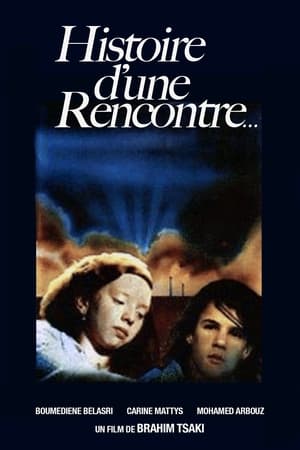
Tale of an Encounter(fr)
Two deaf and dumb children. She is the daughter of an American Oil engineer. He is the son of an Algerian farmer. They meet and manage to communicate, transcending all the cultural barriers that separate them.
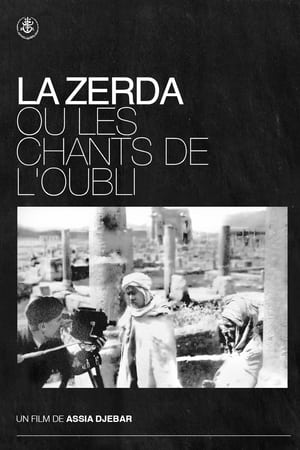
The Zerda or the Songs of Forgetting(fr)
“La Zerda and the songs of oblivion” (1982) is one of only two films made by the Algerian novelist Assia Djebar, with “La Nouba des femmes du mont Chenoua” (1977). Powerful poetic essay based on archives, in which Assia Djebar – in collaboration with the poet Malek Alloula and the composer Ahmed Essyad – deconstructs the French colonial propaganda of the Pathé-Gaumont newsreels from 1912 to 1942, to reveal the signs of revolt among the subjugated North African population. Through the reassembly of these propaganda images, Djebar recovers the history of the Zerda ceremonies, suggesting that the power and mysticism of this tradition were obliterated and erased by the predatory voyeurism of the colonial gaze. This very gaze is thus subverted and a hidden tradition of resistance and struggle is revealed, against any exoticizing and orientalist temptation.
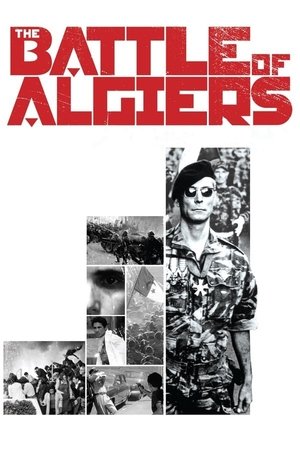
The Battle of Algiers(it)
Paratrooper commander Colonel Mathieu, a former French Resistance fighter during World War II, is sent to Algeria to reinforce efforts to squelch the uprisings of the Algerian War. There he faces Ali la Pointe, a former petty criminal who, as the leader of the Algerian Front de Liberation Nationale, directs terror strategies against the colonial French government occupation. As each side resorts to ever-increasing brutality, no violent act is too unthinkable.
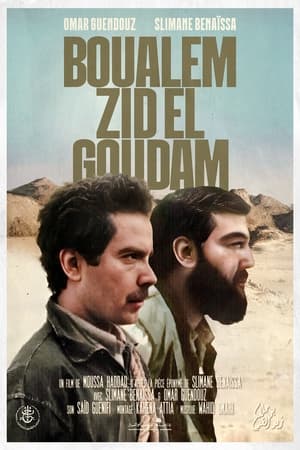
Boualem Zid El Goudam(ar)
Two travelers, Boualem and Sekfali, cross the hostile and endless desert. Boualem pulls a cart on which old books, pictures, relics and memories of Sekfali are piled up. Two men, two attitudes towards life, two visions of the world. Where do they come from, where are they going? The journey would be completely calm and happy if each of them were not inhabited by their pasts, determining their different visions of the future. Boualem's childhood was marked by the Algerian war of liberation. His dream is to achieve a socialist society, which is for him the only path to salvation. Sekfali, who tries to dissuade Boualem from continuing the journey, has the attitude of an aristocrat. For him, socialism is a heresy and people do not like responsibility, they only act if a leader gives them the injunction.
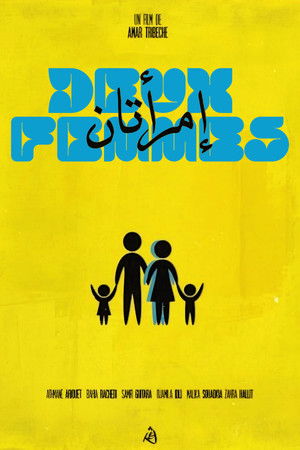
Deux Femmes(ar)
An Algerian social satire that tells the story of Boujemaa, who marries a second wife in addition to his first wife, who is ill and with whom he has a son and a daughter. Living all under the same roof, the new wife imposes her authority in the house. The lives of the family members are then turned upside down.
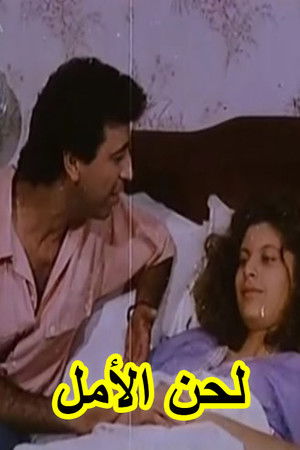
لحن الأمل (Lahn El-Almel)(ar)
Abderrahim is a mechanic and singer in his spare time. One day, he receives a car to repair, driven by a very beautiful girl. It's love at first sight. They want to get married and start a family, but the girl's parents do not view this love favorably. They decide to marry their daughter to another man. Subsequently, Abderrahim became a famous singer. The loss of her love leaves the young girl in a state of silence from which only Abderrahim can break her.
Dark Night, October 17, 1961(fr)
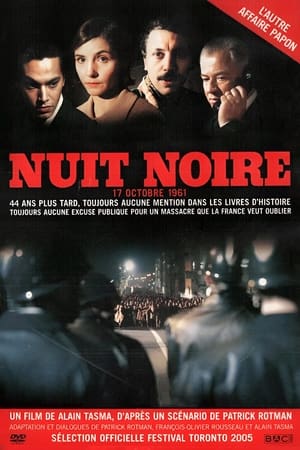
Parisian authorities clash with the Front de Libération Nationale (FLN) in director Alain Tasma’s recounting of one of the darkest moments of the Algerian War of Independence. As the war wound to a close and violence persisted in the streets of Paris, the FLN and its supporters adopted the tactic of murdering French policemen in hopes of forcing a withdrawal. When French law enforcement retaliated by brutalizing Algerians and imposing a strict curfew, the FLN organizes a peaceful demonstration that drew over 11,000 supporters, resulting in an order from the Paris police chief to take brutal countermeasures. Told through the eyes of both French policemen as well as Algerian protestors, Tasma’s film attempts to get to the root of the tragedy by presenting both sides of the story.
Wind from the South(ar)
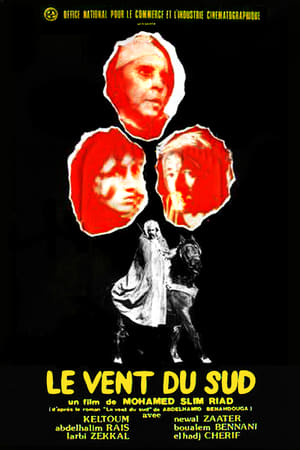
Néfissa, a student in Algiers, returns to her village in the south in the summer. Her father wants her to marry the mayor but she wants to continue her studies. Confronting her father and the opinion of the villagers who do not understand her, she decides to flee to Algiers. The shepherd Rabah discovering her wounded and lost in the mountains, has her treated by her mother. In contact with Nefissa, Rabat becomes aware of his exploited condition and discovers the possibilities offered to him by the cooperatives of the agrarian revolution. The two young people will go through the decisive stage together which will allow them to escape obscurantism and exploitation. Based on the novel "Le vent du sud" by Abdelhamid Benahouga