Loading Page
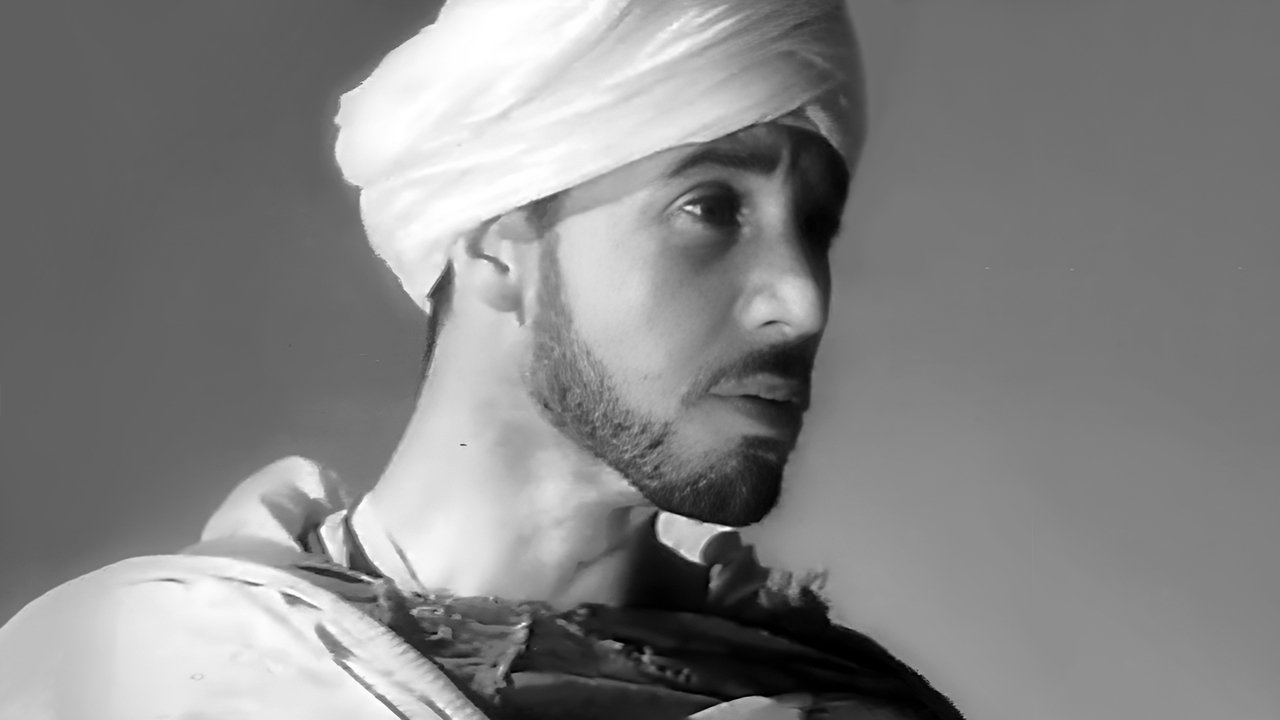

Southern Cross(1932)
Status: Released
Date: 1932-05-13
100%
1 Votes
Time: 1h 30m
Overview:
In the Sahara, Algeria, the leader of the Tuaregs, Aftan, saves a girl from the hands of a caravan of pillars. Madeleine falls in love with her savior and their marriage is decided. But Aftan understands that he will never be assimilated with Europeans, and he goes back to find the beautiful poet Dassine whom he had loved before.
Languages: Arabic, French.
Countries:
Movie: Southern Cross
Top 8 Billed Cast
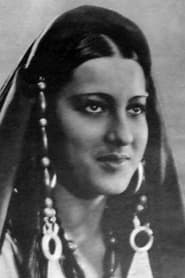
Kaissa Robba
Dassine

Suzanne Christy
Madeleine Ménard

Charles De Rochefort
Aftan

Alexandre Mihalesco
Arbi

Tahar Hannache
Le Chef Nomade Taha Badawi

Jean Toulout
Le professeur Ménard

Christian-Jaque
Un Lieutenant
HomePage
Overview
In the Sahara, Algeria, the leader of the Tuaregs, Aftan, saves a girl from the hands of a caravan of pillars. Madeleine falls in love with her savior and their marriage is decided. But Aftan understands that he will never be assimilated with Europeans, and he goes back to find the beautiful poet Dassine whom he had loved before.
Release Date
1932-05-13
Average
10
Rating:
5.0 startsTagline
Genres
Languages:
العربيةFrançaisKeywords
Recommendations Movies
60%
The King of Algiers(fr)
2023-05-24
Omar, better known as Omar the Strawberry, is an old-fashioned bandit. Forced to flee to Algeria, he makes a living out of petty crime, accompanied by his famous sidekick Roger. After decades of ruling the French criminal underworld, they must come to terms with their new life together, which until now has been one of debauchery and violence.
69%
The Little Soldier(fr)
1963-01-25
Despite his lack of political convictions, photojournalist Bruno Forestier is roped into a paramilitary group waging a shadow war in Geneva against the Algerian independence movement.
68%
The Stranger(fr)
2025-10-29
Algiers, 1938. Meursault, a quiet and unassuming employee in his early thirties, attends his mother's funeral without shedding a tear. The next day, he begins a casual affair with Marie, a work colleague. He quickly slips back into his usual routine.
61%
A Far Off Place(en)
1993-03-12
Thrown together under incredible circumstances, two strangers must discover courage and strength when they begin a journey across the treacherous African desert! Equipped only with their wits and the expertise of a native bushman who befriends them, they are determined to triumph over impossible odds and reach their destination. But along the way, the trio face a primitive desert wilderness.
71%
The Thief of Bagdad(en)
1940-02-19
When Prince Ahmad is blinded and cast out of Bagdad by the nefarious Jaffar, he joins forces with the scrappy thief Abu to win back his royal place, as well as the heart of a beautiful princess.

66%
Young Black Stallion(en)
2003-12-25
When courageous young Neera becomes separated from her family in the desert, she chances upon a wild colt. Together they find friendship, trust, and their way back home only to discover her family is about to lose everything!
65%
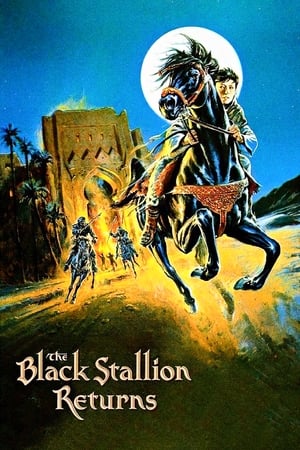
The Black Stallion Returns(en)
1983-03-25
"Black" is a stunning fire-and-silk stallion celebrated the world over. But to his young American owner, Alec Ramsay, he's much more. So, when the amazing animal is stolen, Alec will stop at nothing to get him back. Alec finally unravels the mystery of Black's theft...only to discover that he must overcome even greater odds to reclaim his beloved horse.
63%
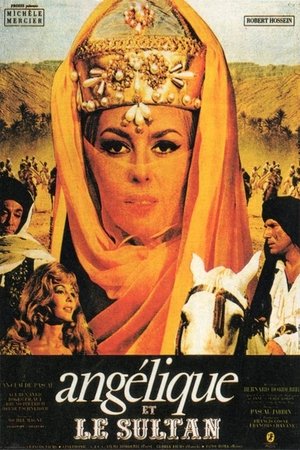
Angelique and the Sultan(fr)
1968-03-13
Angélique is in a North African Muslim kingdom where she is now part of the Sultan's harem. She refuses to be bedded as her captors try to beat sense into her. She finally decides to escape with the help of two Christian prisoners.
60%
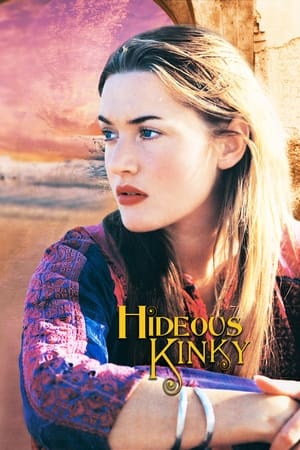
Hideous Kinky(en)
1999-02-05
In 1972, disenchanted about the dreary conventions of English life, 25-year-old Julia heads for Morocco with her daughters, six-year-old Lucy and precocious eight-year-old Bea.
68%
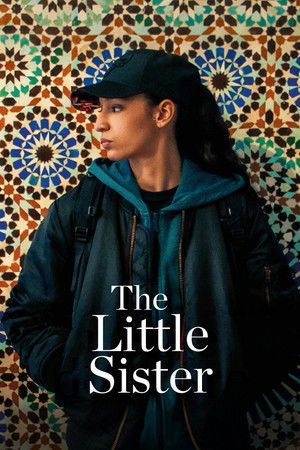
The Little Sister(fr)
2025-10-22
Fatima, 17, the youngest daughter of a French-Algerian family in a Paris suburb, leaves school for a prestigious prep class. She plays football, has a secret boyfriend, but hides that she loves women. In Paris, new freedoms clash with family tradition and faith, forcing her to find her own path.

59%
A View of Love(fr)
2010-12-15
Happily married with a daughter, Marc is a successful real estate agent in Aix-en-Provence. One day, he has an appointment with a woman to view a traditional country house. A few hours later, Marc finally puts a name to her face. It's Cathy, the girl he was in love with growing up in Oran, Algeria, in the last days of the French colonial regime. Marc hurries to her hotel. They spend the night together. Then she's gone again. And Marc's mother tells him Cathy never left Algeria. She was killed with her father in a bombing just before independence...
64%
Suddenly(fr)
2023-12-06
Ben and Laura are a passionate but volatile couple who embark on a round-the-world sailing adventure to give their relationship a new start. During their trip, they decide to explore a vast deserted island which they discover off the coast of Chile. Caught in a violent storm, they shelter in an abandoned whaling station for the night but wake up the next morning to find their boat has disappeared. Stranded in a hostile environment with no means of communication, dwindling supplies and winter approaching they must work together in a life and death battle for survival, that will challenge their feelings and change their relationship forever.

72%
Pépé le Moko(fr)
1937-01-28
Pépé le Moko, one of France's most wanted criminals, hides out in the Casbah section of Algiers. He knows police will be waiting for him if he tries to leave the city. When Pépé meets Gaby, a gorgeous woman from Paris who is lost in the Casbah, he falls for her.
77%
What the Day Owes the Night(fr)
2012-09-12
Algeria, the 1930s. Younes is nine years old when he is put in his uncle's care in Oran. Rebaptized Jonas, he grows up among the Rio Salado youths, with whom he becomes friends. Emilie is one of the gang; everyone is in love with her. A great love story develops between Jonas and Emilie, which is soon unsettled by the conflicts troubling the country.
62%
Disgrace(en)
2008-09-06
Disgrace is the story of a South African professor of English who loses everything: his reputation, his job, his peace of mind, his good looks, his dreams of artistic success, and finally even his ability to protect his cherished daughter. After having an affair with a student, he moves to the Eastern Cape, where he gets caught up in a mess of post-apartheid politics.
80%
Lawrence of Arabia(en)
1962-12-11
During World War I, English officer Thomas Edward 'T.E.' Lawrence sets out to unite and lead the diverse, often warring, Arab tribes to fight the Turks.

65%
King Solomon's Mines(en)
1950-11-09
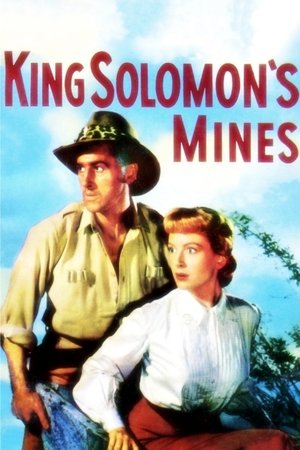
Fortune hunter Allan Quatermain teams up with a resourceful woman to help her find her missing husband lost in the wilds of 1900s Africa while being pursued by hostile tribes and a rival German explorer.

63%
Babe(en)
1995-07-18
Babe is a little pig who doesn't quite know his place in the world. With a bunch of odd friends, like Ferdinand the duck who thinks he is a rooster and Fly the dog he calls mum, Babe realises that he has the makings to become the greatest sheep pig of all time, and Farmer Hoggett knows it. With the help of the sheep dogs, Babe learns that a pig can be anything that he wants to be.
Similar Movies

60%
Many Beautiful Things(en)
2015-10-17
In an age when women were incapable of joining the artistic dialogue, Lilias Trotter managed to win the favour of celebrated critics.
0%
The Bugler of Algiers(en)
1916-11-27
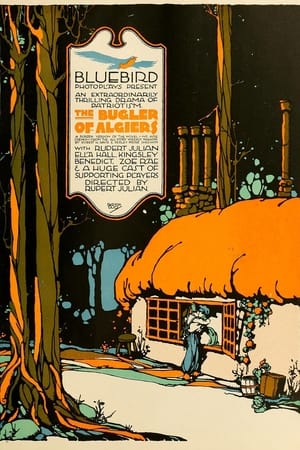
Gabrielle Picard (Elda Hall) and Pierre Dupont (Rupert Julian) are lovers in a small French village in the early 1870s; Gabrielle's brother Anatole (Kingsley Benedict) is Pierre's best friend. The two young men are called to service by their country and go to Algiers. Anatole becomes the bugler and one day when he is commanded to sound the retreat, he sounds for the troops to charge instead. Anatole becomes a hero because of his action, but when the two men make their victorious return home, they find the Picard home ransacked and Gabrielle gone.
100%
Cheb Hasni, Je vis encore !(fr)
2008-01-02
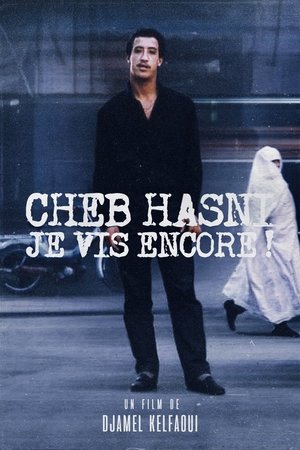
Director Djamel Kelfaoui pays tribute to the great singer Cheb Hasni, king of sentimental raï, who became cult in Algeria and beyond its borders, and who was murdered in the street in September 1994 in Oran, at the age of 26. Unique and last interview filmed a few months before the assassination of the singer considered the king of “raï love” or “sentimental song”. Cheb Hasni had recorded more than 150 cassettes during his career. His memory remains very alive in the Maghreb and Arab world and its diaspora throughout the world. A transgenerational icon, he will be posthumously decorated with the National Merit medal at the rank of Achir.
0%
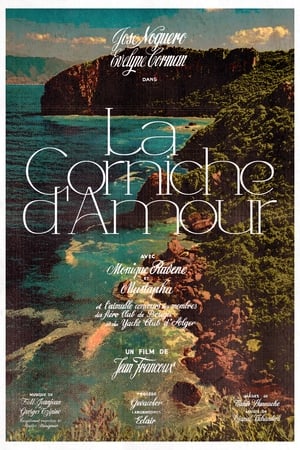
La Corniche d'Amour(fr)
1955-01-01
Two rich tourists, a photographer and a painter, meet during a walk in Kabylia. Their wanderings are an opportunity to highlight the many tourist and picturesque places on the Algerian coast. This film commissioned by the Defense Communication and Audiovisual Production Establishment (ECPAD), attempts to sell a tourist destination when Algeria was in flames with the outbreak of the Algerian national liberation war. Filmed with the colonial lens of the time, the natives are only one element of a picturesque setting, and the final kiss between a French woman and an Arab man is an attempt to demonstrate a pacified country. Despite everything, the film constitutes a precious archive for Béjaïa, which is the subject for the first time of a film which immortalizes a moment in its history, and to introduce the work of Tahar Hannache, actor, cinematographer and director, one of the pioneers of Algerian cinema.
56%
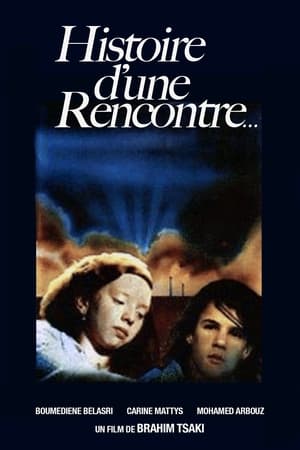
Tale of an Encounter(fr)
1985-01-02
Two deaf and dumb children. She is the daughter of an American Oil engineer. He is the son of an Algerian farmer. They meet and manage to communicate, transcending all the cultural barriers that separate them.
76%
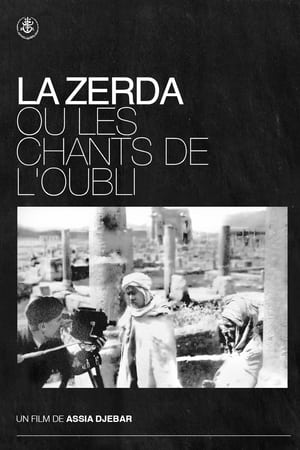
The Zerda or the Songs of Forgetting(fr)
1983-02-27
“La Zerda and the songs of oblivion” (1982) is one of only two films made by the Algerian novelist Assia Djebar, with “La Nouba des femmes du mont Chenoua” (1977). Powerful poetic essay based on archives, in which Assia Djebar – in collaboration with the poet Malek Alloula and the composer Ahmed Essyad – deconstructs the French colonial propaganda of the Pathé-Gaumont newsreels from 1912 to 1942, to reveal the signs of revolt among the subjugated North African population. Through the reassembly of these propaganda images, Djebar recovers the history of the Zerda ceremonies, suggesting that the power and mysticism of this tradition were obliterated and erased by the predatory voyeurism of the colonial gaze. This very gaze is thus subverted and a hidden tradition of resistance and struggle is revealed, against any exoticizing and orientalist temptation.

100%
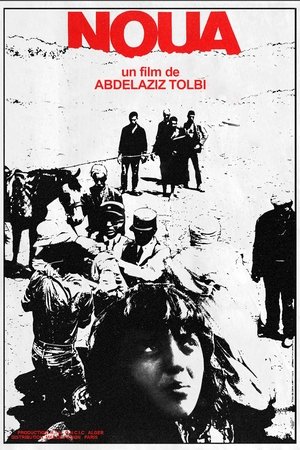
Bouzareah(fr)
1950-01-01
Arriving aboard the liner “Ville d’Alger”, young French citizens go to Bouzareah to follow a one-year professional training course at the École Normale. After acquiring the basics of the Arabic language and culture, the future teachers are trained to teach the population the basics of modern agriculture, manual work and hygiene. A study trip concludes the training. The teachers are then sent to the regions of their choice, where they will put their knowledge at the service of the inhabitants.
100%
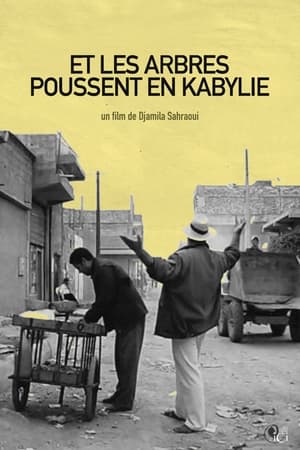
Et les arbres poussent en Kabylie(fr)
2003-08-25
A warm, attentive chronicle of everyday life in a small Algerian town, with the backdrop of the inhabitants' development and beautification of one of the neighborhoods. We meet an amateur mechanic, a retired man from France, a doctor, old women and young men. Everyone plays... in front of the camera of one of the youngsters. Even when the riots in Kabylia disrupt the course of daily life in the Cité des Martyrs.

60%
Glimpses of Morocco and Algiers(en)
1951-08-04
This FitzPatrick Traveltalk short visits the cities of Casablanca, Rabat, and Marrakesh in Morocco, as well as the city of Algiers in Algeria.
100%
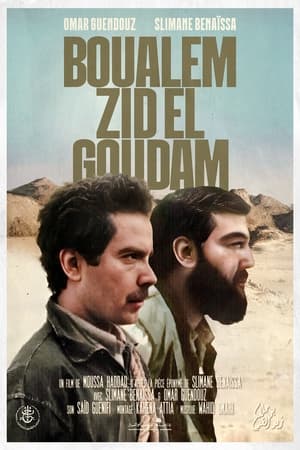
Boualem Zid El Goudam(ar)
1980-01-01
Two travelers, Boualem and Sekfali, cross the hostile and endless desert. Boualem pulls a cart on which old books, pictures, relics and memories of Sekfali are piled up. Two men, two attitudes towards life, two visions of the world. Where do they come from, where are they going? The journey would be completely calm and happy if each of them were not inhabited by their pasts, determining their different visions of the future. Boualem's childhood was marked by the Algerian war of liberation. His dream is to achieve a socialist society, which is for him the only path to salvation. Sekfali, who tries to dissuade Boualem from continuing the journey, has the attitude of an aristocrat. For him, socialism is a heresy and people do not like responsibility, they only act if a leader gives them the injunction.
75%
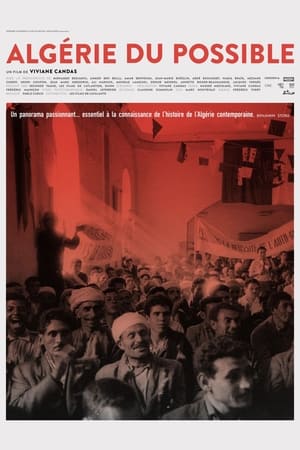
Algérie du possible(fr)
2016-12-07
By meeting his former comrades in combat, the film follows the journey of Yves Mathieu, anti-colonialist in Black Africa then lawyer for the FLN. When Algeria became independent, he drafted the Decrees of March on vacant property and self-management, promulgated in 1963 by Ahmed Ben Bella. Yves Mathieu's life is punctuated by his commitments in an Algeria that was then called "The Lighthouse of the Third World". The director, who is his daughter, returns to the conditions of his death in 1966.
100%
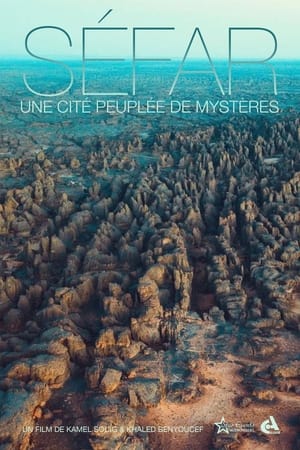
Séfar, A City of Mysteries(fr)
2021-11-20
Séfar (in Arabic: سيفار) is an ancient city in the heart of the Tassili n'Ajjer mountain range in Algeria, more than 2,400 km south of Algiers and very close to the Libyan border. Séfar is the largest troglodyte city in the world, with several thousand fossilized houses. Very few travelers go there given its geographical remoteness and especially because of the difficulties of access to the site. The site is full of several paintings, some of which date back more than 12,000 years, mostly depicting animals and scenes of hunting or daily life which testify that this hostile place has not always been an inhabited desert. Local superstition suggests that the site is inhabited by djins, no doubt in connection with the strange paintings found on the site.
57%
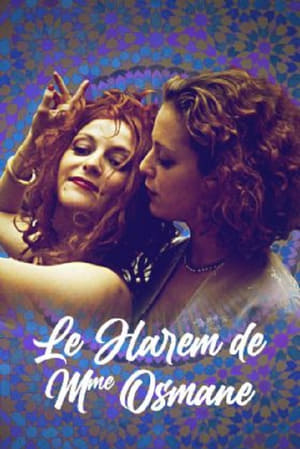
The Harem of Madame Osmane(fr)
2000-07-12
In Algiers in 1993, while the civil war is starting, Mrs Osmane's tenants have to endure her bad temper. Her husband left her and the fear to lose her respectability haunt her. The former member of the Resistance during the Independence War persists in controlling the slightest moves of the households rather than struggle against her own frustrations. Learning her daughter is in love, the possibility of finding herself alone will push her to the limit: The symbolical Mrs Osmane "harem" is about to collapse.
70%
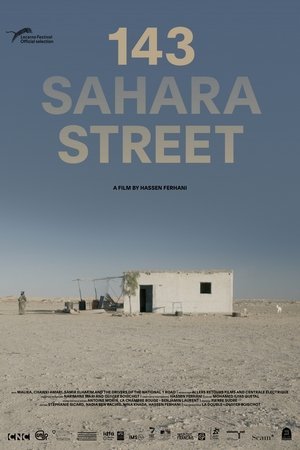
143 Sahara Street(fr)
2021-06-16
Alone in a small white house on the edge of national road 1, the Trans-Saharan road, which connects Algiers to Tamanrasset crossing the immensity of the desert, Malika, 74, one day opened her door to the director Hassen Ferhani, who came there to scout with his friend Chawki Amari, journalist at El Watan and author of the story Nationale 1 which relates his journey on this north-south axis of more than 2000 km. The Malika of Amari's novel, which Ferhani admits to having first perceived as a "literary fantasy", suddenly takes on an unsuspected human depth in this environment naturally hostile to man. She lends herself to the film project as she welcomes her clients, with an economy of gestures and words, an impression reinforced by the mystery that surrounds her and the rare elements of her biography which suggest that she is not from the region, that she left the fertile north of Algeria to settle in the desert where she lives with a dog and a cat.

60%
The Panafrican Festival in Algiers(ar)
1969-01-01
Festival panafricain d'Alger is a documentary by William Klein of the music and dance festival held 40 years ago in the streets and in venues all across Algiers. Klein follows the preparations, the rehearsals, the concerts… He blends images of interviews made to writers and advocates of the freedom movements with stock images, thus allowing him to touch on such matters as colonialism, neocolonialism, colonial exploitation, the struggles and battles of the revolutionary movements for Independence.
100%
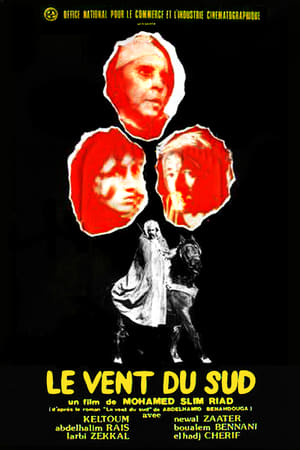
Wind from the South(ar)
1975-01-02
Néfissa, a student in Algiers, returns to her village in the south in the summer. Her father wants her to marry the mayor but she wants to continue her studies. Confronting her father and the opinion of the villagers who do not understand her, she decides to flee to Algiers. The shepherd Rabah discovering her wounded and lost in the mountains, has her treated by her mother. In contact with Nefissa, Rabat becomes aware of his exploited condition and discovers the possibilities offered to him by the cooperatives of the agrarian revolution. The two young people will go through the decisive stage together which will allow them to escape obscurantism and exploitation. Based on the novel "Le vent du sud" by Abdelhamid Benahouga
72%
Pépé le Moko(fr)
1937-01-28
Pépé le Moko, one of France's most wanted criminals, hides out in the Casbah section of Algiers. He knows police will be waiting for him if he tries to leave the city. When Pépé meets Gaby, a gorgeous woman from Paris who is lost in the Casbah, he falls for her.
100%
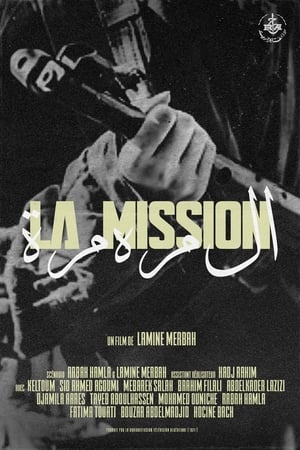
La Mission(ar)
1971-01-02
An Algerian peasant (fellah), crushed by the soldiers of the French colonial army, decides to resist. His young wife finds herself, despite herself, also enlisted in the Algerian resistance to flee the atrocities of harsh colonial persecution.