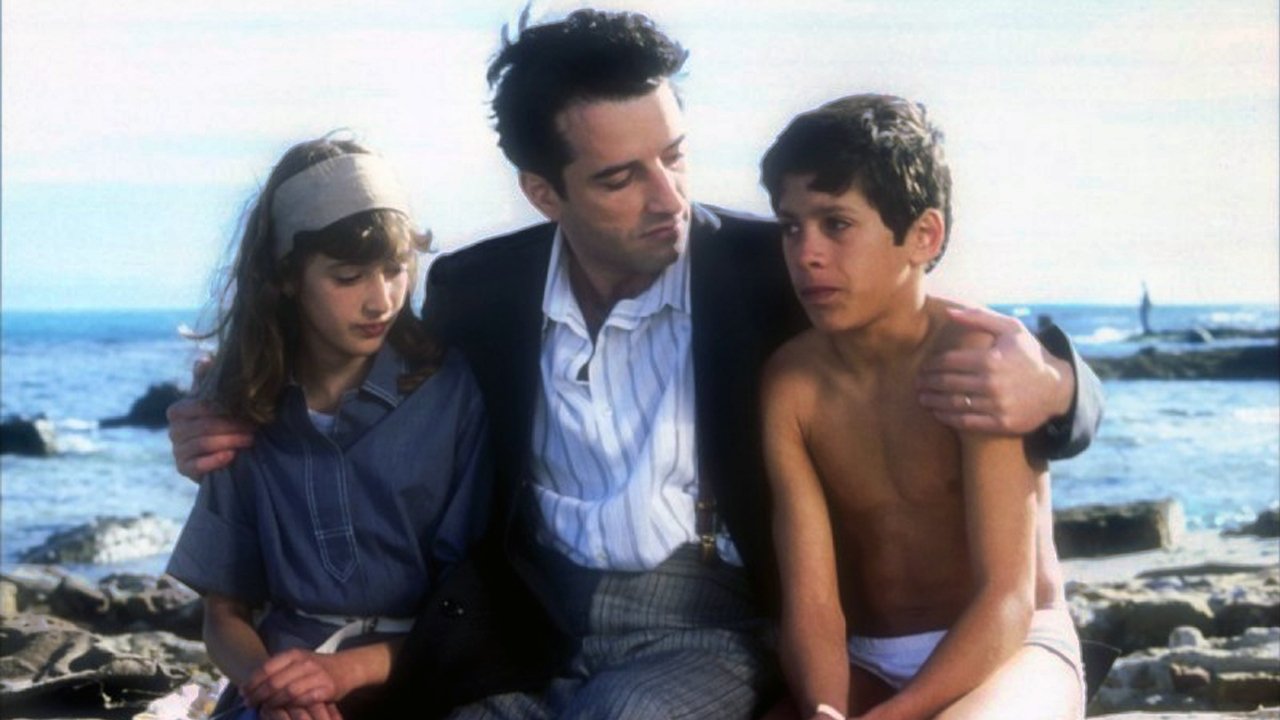
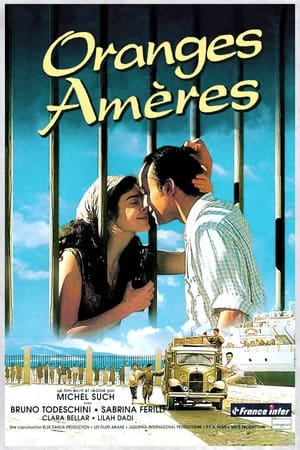
Oranges Amères(1997)
Recognizing no boundaries to her love, Angele manages to foment riots, rages and tragedy in colonial Algeria. Angele, an Algerian colonist with impeccably French origins, has fallen in love with Said, the assistant in her brother-in-law's bakery shop. Said is conscious of his Arab origins and traditions, and Angele has her work cut out for her if she wants to persuade him to marry her. Once she does, all hell breaks loose, as neither her European-origin peers nor Said's conservative Arab family approve of the union. When word of the proposed marriage gets out, strikes, violence and murder quickly follow, ruining not only Angele's life, but the lives of those around her. Her brother-in-law Paco, meanwhile, has been doggedly trying to get along and raise his family in an increasingly chaotic and difficult situation.


Movie: Oranges Amères
Top 10 Billed Cast

Saïd

Angèle

Paco

Alice
Grandfather Tomani

Filomène

Sauveur

Gosset

Conchita

Bastos
HomePage
Overview
Recognizing no boundaries to her love, Angele manages to foment riots, rages and tragedy in colonial Algeria. Angele, an Algerian colonist with impeccably French origins, has fallen in love with Said, the assistant in her brother-in-law's bakery shop. Said is conscious of his Arab origins and traditions, and Angele has her work cut out for her if she wants to persuade him to marry her. Once she does, all hell breaks loose, as neither her European-origin peers nor Said's conservative Arab family approve of the union. When word of the proposed marriage gets out, strikes, violence and murder quickly follow, ruining not only Angele's life, but the lives of those around her. Her brother-in-law Paco, meanwhile, has been doggedly trying to get along and raise his family in an increasingly chaotic and difficult situation.
Release Date
1997-04-16
Average
6
Rating:
3.0 startsTagline
Genres
Languages:
العربيةFrançaisKeywords
Recommendations Movies

The Little Soldier(fr)
Despite his lack of political convictions, photojournalist Bruno Forestier is roped into a paramilitary group waging a shadow war in Geneva against the Algerian independence movement.
The Stranger(fr)
Algiers, 1938. Meursault, a quiet and unassuming employee in his early thirties, attends his mother's funeral without shedding a tear. The next day, he begins a casual affair with Marie, a work colleague. He quickly slips back into his usual routine.

The King of Algiers(fr)
Omar, better known as Omar the Strawberry, is an old-fashioned bandit. Forced to flee to Algeria, he makes a living out of petty crime, accompanied by his famous sidekick Roger. After decades of ruling the French criminal underworld, they must come to terms with their new life together, which until now has been one of debauchery and violence.
What the Day Owes the Night(fr)
Algeria, the 1930s. Younes is nine years old when he is put in his uncle's care in Oran. Rebaptized Jonas, he grows up among the Rio Salado youths, with whom he becomes friends. Emilie is one of the gang; everyone is in love with her. A great love story develops between Jonas and Emilie, which is soon unsettled by the conflicts troubling the country.
The Kick of Sirocco(fr)
A shady Parisian tries to take advantage of a family of French-descended Algerians forced to move to France.

The Divide(fr)
Raf and Julie, a couple on the verge of breaking up, find themselves in an emergency ward bordering on collapse on the evening of a Parisian Yellow Vest protest. Their encounter with Yann, an angry and injured demonstrator, will shatter each person's certainties and prejudices. Outside, the tension escalates.

The Rays and Shadows(fr)
Jean and Otto, a French newspaperman and a young German Francophile, are fighting for peace in Europe. Jean’s daughter, Corinne, is launching a brilliant acting career in the film world, but war breaks out and France is occupied. The two friends have a major role to play in this new France. Jean becomes a big press baron and an ardent advocate of collaboration with the occupying forces, while Otto becomes the Reich’s ambassador in Paris. Corinne, meanwhile, finds herself thrown into the lion’s pit.

Promises(fr)
Clémence, the fearless mayor of a town near Paris, is completing the final term of her political career. With her faithful right-hand man Yazid, she has long fought for this town plagued by inequality, unemployment and slumlords. However, when Clémence is approached to become Minister, her ambition arises, questioning her devotion and commitment to her citizens. Will her political integrity and election promises survive her newly found ambition?

A View of Love(fr)
Happily married with a daughter, Marc is a successful real estate agent in Aix-en-Provence. One day, he has an appointment with a woman to view a traditional country house. A few hours later, Marc finally puts a name to her face. It's Cathy, the girl he was in love with growing up in Oran, Algeria, in the last days of the French colonial regime. Marc hurries to her hotel. They spend the night together. Then she's gone again. And Marc's mother tells him Cathy never left Algeria. She was killed with her father in a bombing just before independence...
The Passengers of the Night(fr)
On election night in 1981, celebrations spill out onto the street and there is an air of hope and change throughout Paris. But for Elisabeth, her marriage is coming to an end and she will now have to support herself and her two teenage children. She finds work at a late-night radio show and encounters a troubled teenager named Talulah whom she invites into her home.

A California Christmas: City Lights(en)
Follows Callie and Joseph one year after they fell in love, now running a dairy farm and winery, but their romance is threatened when business and family obligations call Joseph back to the city.

El Chicano(en)
A pair of twin brothers from East L.A. choose to live their lives differently and end up on opposite sides of the law.

Out of Love(fr)
When Jeanne, a meticulous insurance assessor, is suddenly left to care for her estranged sister’s two children after their mother vanishes, her carefully ordered life begins to unravel. Confronted with unexpected responsibilities, she must balance the fragile task of earning the children’s trust while also tending to her own relationship with her girlfriend, who struggles to adjust to Jeanne’s new role. As grief, uncertainty, and shifting loyalties mount, Jeanne finds herself redefining what family and love truly mean.

The Minister(fr)
Transport Minister Bertrand Saint-Jean is awoken in the middle of the night by his head of staff. A bus has gone off the road into a gully. He has no choice but to go to the scene of the accident. Thus begins the odyssey of a politician in a world that is increasingly more complex and hostile.
Case 137(fr)
Stéphanie, a police officer working for Internal Affairs, is assigned to a case involving a young man severely wounded during a tense and chaotic demonstration in Paris. While she finds no evidence of illegitimate police violence, the case takes a personal turn when she discovers the victim is from her hometown.


Next Stop, Christmas(en)
Angie wonders what her life would be like if she had married a former boyfriend who became a famous sportscaster. She takes the train home to spend Christmas with her family and inexplicably finds herself 10 years in the past. With the advice of the train's enigmatic conductor, Angie has the chance to revisit that Christmas and learn what — and who — is truly important to her.

The Little Sister(fr)
Fatima, 17, the youngest daughter of a French-Algerian family in a Paris suburb, leaves school for a prestigious prep class. She plays football, has a secret boyfriend, but hides that she loves women. In Paris, new freedoms clash with family tradition and faith, forcing her to find her own path.
Similar Movies

Lumières(ar)
Long quest for a director specializing in commissioned films, who after a depression rediscovers his loved ones, his Casbah district, himself. Taken in hand, for a while, by his Islamist neighbor, it is above all the meeting with an old projectionist giving him a censored history of cinema and Algeria, which helps him to change, and to accept his own fantasies, embodied by Marilyn Monroe and the Andalusian.
Les Enfants de Novembre(ar)
In the streets of the Casbah of Algiers, an FLN fighter pursued by the colonial police hands over confidential documents to Mourad, an Algerian child shouting newspapers who must at all costs pass them on to the resistance. But the police are on their trail and will do anything to get them back.
Krim Belkacem(ar)
This film retraces the combat journey of Krim Belkacem, one of the leading figures of the Algerian War. When he left the Dellys barracks in October 1945, the day after the Second World War, Krim Belkacem was 23 years old. He is a man revolted by the May massacres in Sétif, Guelma, Kherrata and several other localities in the ravaged country. But it is also and above all a young Algerian who questions the future of Algeria. On March 21, 1947, Krim at the age of 25, he dug up his "Sten" submachine gun, he took action against the boss of his douar who was none other than his cousin. He goes into hiding with six companions. He meshes this entire part of Algeria with a dense and dense network with the sole objective of taking action which will lead to the outbreak of the armed struggle on November 1, 1954.
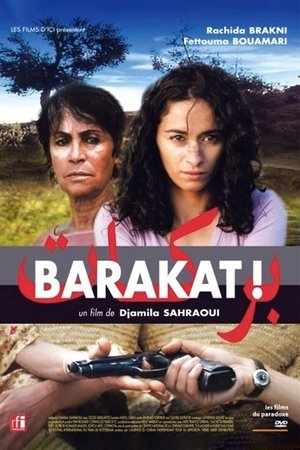
Enough!(ar)
Set amidst the civil war of Algeria in the 1990s, Enough! is the story of two women. Emel is a Westerner whose husband, a journalist, is missing - perhaps kidnapped or even killed for articles he's written.
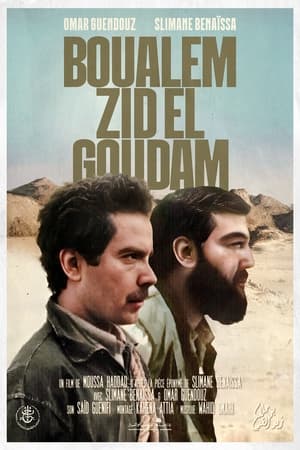
Boualem Zid El Goudam(ar)
Two travelers, Boualem and Sekfali, cross the hostile and endless desert. Boualem pulls a cart on which old books, pictures, relics and memories of Sekfali are piled up. Two men, two attitudes towards life, two visions of the world. Where do they come from, where are they going? The journey would be completely calm and happy if each of them were not inhabited by their pasts, determining their different visions of the future. Boualem's childhood was marked by the Algerian war of liberation. His dream is to achieve a socialist society, which is for him the only path to salvation. Sekfali, who tries to dissuade Boualem from continuing the journey, has the attitude of an aristocrat. For him, socialism is a heresy and people do not like responsibility, they only act if a leader gives them the injunction.
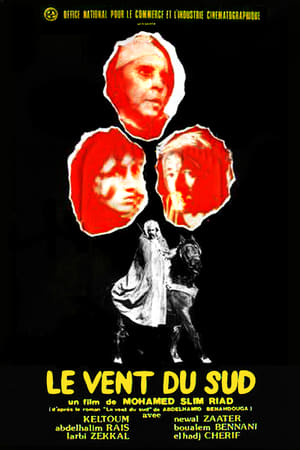
Wind from the South(ar)
Néfissa, a student in Algiers, returns to her village in the south in the summer. Her father wants her to marry the mayor but she wants to continue her studies. Confronting her father and the opinion of the villagers who do not understand her, she decides to flee to Algiers. The shepherd Rabah discovering her wounded and lost in the mountains, has her treated by her mother. In contact with Nefissa, Rabat becomes aware of his exploited condition and discovers the possibilities offered to him by the cooperatives of the agrarian revolution. The two young people will go through the decisive stage together which will allow them to escape obscurantism and exploitation. Based on the novel "Le vent du sud" by Abdelhamid Benahouga
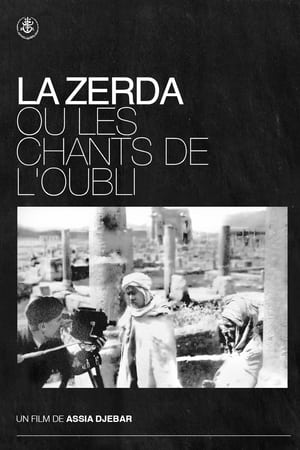
The Zerda or the Songs of Forgetting(fr)
“La Zerda and the songs of oblivion” (1982) is one of only two films made by the Algerian novelist Assia Djebar, with “La Nouba des femmes du mont Chenoua” (1977). Powerful poetic essay based on archives, in which Assia Djebar – in collaboration with the poet Malek Alloula and the composer Ahmed Essyad – deconstructs the French colonial propaganda of the Pathé-Gaumont newsreels from 1912 to 1942, to reveal the signs of revolt among the subjugated North African population. Through the reassembly of these propaganda images, Djebar recovers the history of the Zerda ceremonies, suggesting that the power and mysticism of this tradition were obliterated and erased by the predatory voyeurism of the colonial gaze. This very gaze is thus subverted and a hidden tradition of resistance and struggle is revealed, against any exoticizing and orientalist temptation.
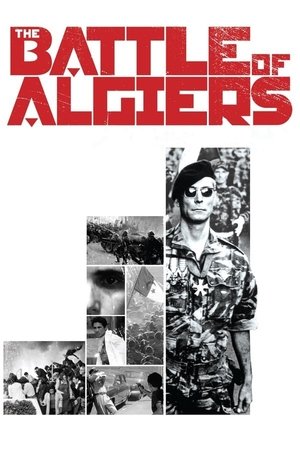
The Battle of Algiers(it)
Paratrooper commander Colonel Mathieu, a former French Resistance fighter during World War II, is sent to Algeria to reinforce efforts to squelch the uprisings of the Algerian War. There he faces Ali la Pointe, a former petty criminal who, as the leader of the Algerian Front de Liberation Nationale, directs terror strategies against the colonial French government occupation. As each side resorts to ever-increasing brutality, no violent act is too unthinkable.
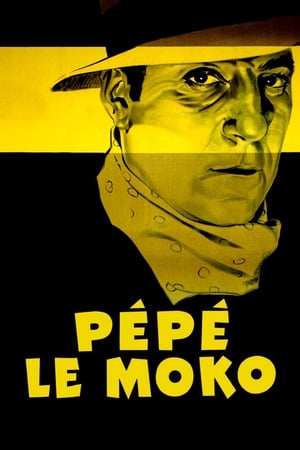
Pépé le Moko(fr)
Pépé le Moko, one of France's most wanted criminals, hides out in the Casbah section of Algiers. He knows police will be waiting for him if he tries to leave the city. When Pépé meets Gaby, a gorgeous woman from Paris who is lost in the Casbah, he falls for her.
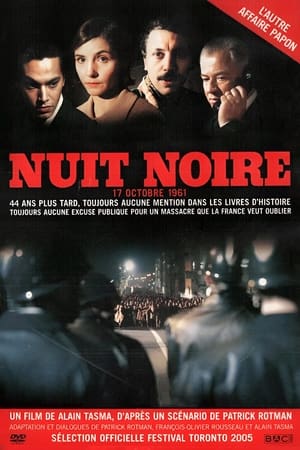
Dark Night, October 17, 1961(fr)
Parisian authorities clash with the Front de Libération Nationale (FLN) in director Alain Tasma’s recounting of one of the darkest moments of the Algerian War of Independence. As the war wound to a close and violence persisted in the streets of Paris, the FLN and its supporters adopted the tactic of murdering French policemen in hopes of forcing a withdrawal. When French law enforcement retaliated by brutalizing Algerians and imposing a strict curfew, the FLN organizes a peaceful demonstration that drew over 11,000 supporters, resulting in an order from the Paris police chief to take brutal countermeasures. Told through the eyes of both French policemen as well as Algerian protestors, Tasma’s film attempts to get to the root of the tragedy by presenting both sides of the story.

Baya's Mountain(ar)
Set in the 1800s among the Berbers of North Africa, this 1997 Algerian feature concerns a noble widow who receives a customary purse of gold coins from the enemy tribe that murdered her husband; the gift puts her in conflict with her kinsmen, who want the money to buy back land taken by the enemy in cahoots with French colonials.
Machaho(ar)
In Kabylie, rude mountain region in the north of Algeria. Arezki finds the young Larbi exhausted, buried under the snow. He takes him in and nurses him until he's recovered. The host seduces Arezki's daughter. She is pregnant. This is an unsupportable shame to the father of the female sinner. Arezki claims vengeance. He leaves his house and takes the oath not to come back before having killed Larbi who betrayed him under his own roof.
The Charcoal Maker(ar)
Film describes the miserable existence of a charcoal-burner who is barely able to feed his family. His search for work in town ends in failure and he is forced to return to his village.
The King of Algiers(fr)
Omar, better known as Omar the Strawberry, is an old-fashioned bandit. Forced to flee to Algeria, he makes a living out of petty crime, accompanied by his famous sidekick Roger. After decades of ruling the French criminal underworld, they must come to terms with their new life together, which until now has been one of debauchery and violence.

End of Trip, Sahara(es)
In the 1970s, groups of young Europeans ventured into the Sahara Desert with the intention of crossing it and experiencing “an adventure”. Unprepared, reckless and ignorant of the terrain they were crossing, they faced extreme situations with unexpected consequences. From the passion of these young people for adventure, the most famous rally in the world was born. “End of the Journey, Sahara” tells the story of one of these adventures.
The Bugler of Algiers(en)
Gabrielle Picard (Elda Hall) and Pierre Dupont (Rupert Julian) are lovers in a small French village in the early 1870s; Gabrielle's brother Anatole (Kingsley Benedict) is Pierre's best friend. The two young men are called to service by their country and go to Algiers. Anatole becomes the bugler and one day when he is commanded to sound the retreat, he sounds for the troops to charge instead. Anatole becomes a hero because of his action, but when the two men make their victorious return home, they find the Picard home ransacked and Gabrielle gone.
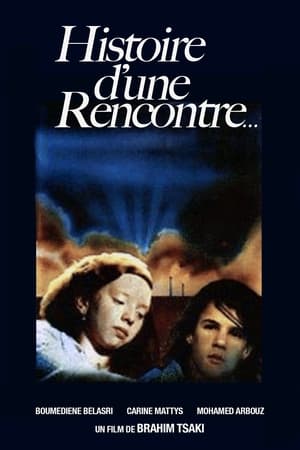
Tale of an Encounter(fr)
Two deaf and dumb children. She is the daughter of an American Oil engineer. He is the son of an Algerian farmer. They meet and manage to communicate, transcending all the cultural barriers that separate them.
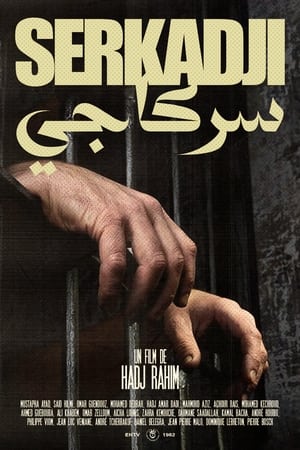
Serkadji(ar)
In 1982, Hadj Rahim directed "Serkadji", a fiction film about the men's quarters of the Barberousse military prison in Algiers, where hundreds of FLN fighters were incarcerated and executed during the war of independence. Algeria between 1954 and 1962.